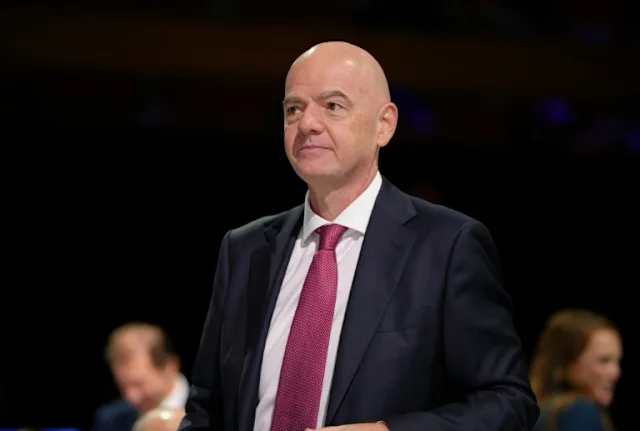
FIFA President Gianni Infantino has reaffirmed that Iran will play its scheduled matches in the United States at the 2026 FIFA World Cup, dismissing speculation that the fixtures could be moved due to escalating geopolitical tensions.
The Iranian Football Federation had earlier revealed it was in discussions with FIFA about relocating its group-stage matches to Mexico, citing security concerns linked to the ongoing conflict involving the United States and Israel. Mexico’s President, Claudia Sheinbaum, also indicated her country’s readiness to host Iran’s games if necessary.

However, Infantino made it clear on Tuesday that no such changes are planned.
“The matches will be played where they are supposed to be, according to the draw,” he said.
The 2026 World Cup, co-hosted by the United States, Mexico, and Canada, kicks off on June 11. Iran is scheduled to open its Group G campaign against New Zealand in Los Angeles on June 15, before facing Belgium in the same city on June 21. Their final group match is set for June 27 in Seattle against Egypt.
Iran’s participation had come under scrutiny following the outbreak of war involving the US and Israel on February 28, raising concerns over safety and diplomatic tensions. Despite this, Infantino moved to reassure fans and stakeholders that Iran will be part of the tournament.
“Iran will be at the World Cup… That’s why we’re here,” Infantino told AFP during a visit to Iran’s friendly match against Costa Rica in Turkiye.
“We’re delighted because they’re a very, very strong team. I’m very happy.”
He added that he had personally met with the players and coaching staff, emphasizing that “everything is fine.”
The situation has been further complicated by conflicting political signals. Infantino initially suggested that former US President Donald Trump had assured that Iran’s team would be welcomed. However, Trump later warned that Iran should avoid traveling to the tournament “for their own life and safety.”
Iran responded firmly, insisting that “no one can exclude Iran’s national team from the World Cup.”
Earlier in March, Infantino reiterated FIFA’s commitment to ensuring the tournament proceeds as planned with all qualified teams participating.
“FIFA can’t solve geopolitical conflicts, but we are committed to using the power of football… to build bridges and promote peace,” he said during a FIFA Council meeting.
Meanwhile, Iran’s national team has continued preparations, recently playing friendlies in Turkiye. In a poignant gesture, players wore black armbands and paid tribute to victims of a deadly airstrike on a primary school in the southern city of Minab, which reportedly killed at least 170 people, including children and teachers.
According to a report by The New York Times, preliminary findings from a US military investigation suggest the strike may have been caused by a targeting error involving a Tomahawk cruise missile.
Despite the mounting tensions and emotional backdrop, FIFA appears determined to keep football separate from politics, maintaining that the World Cup will proceed as scheduled—with Iran firmly part of the global stage.