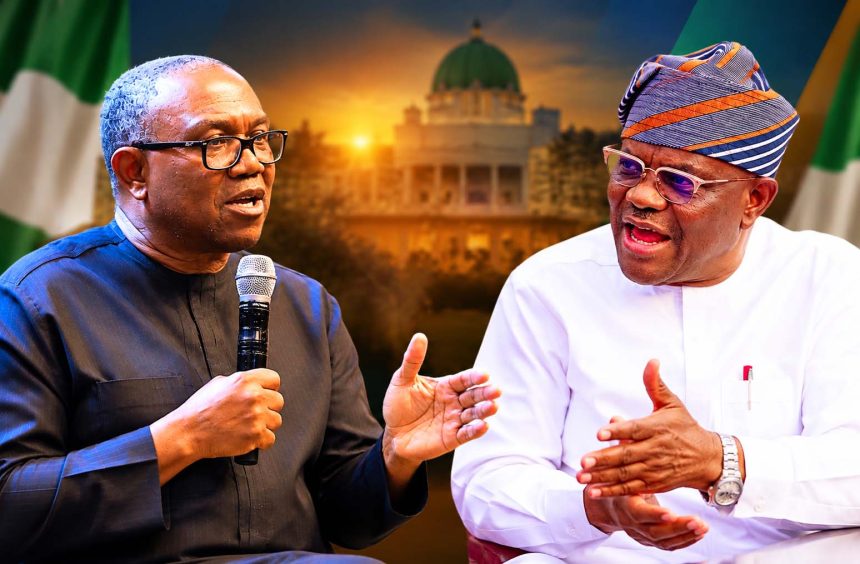
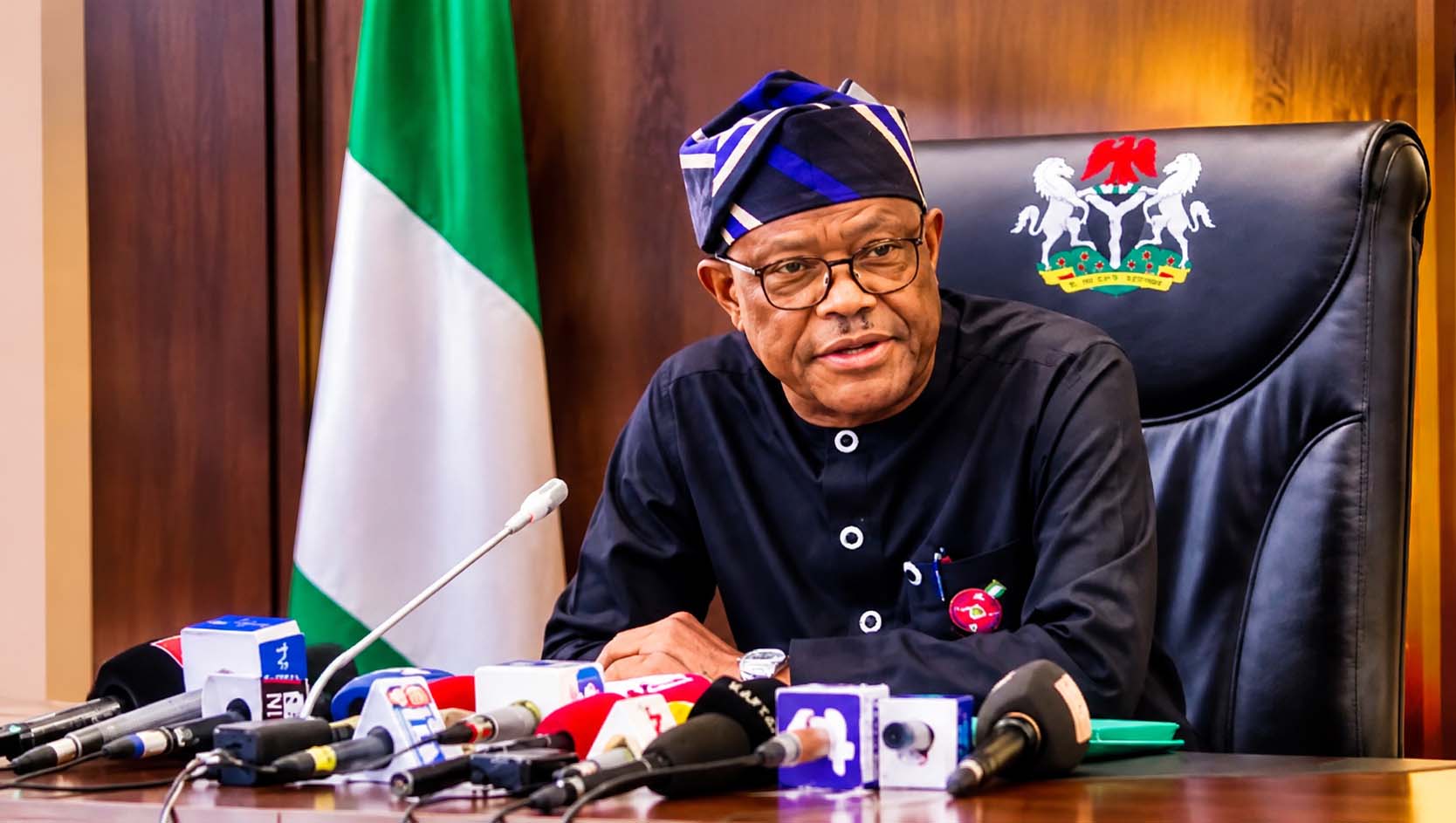
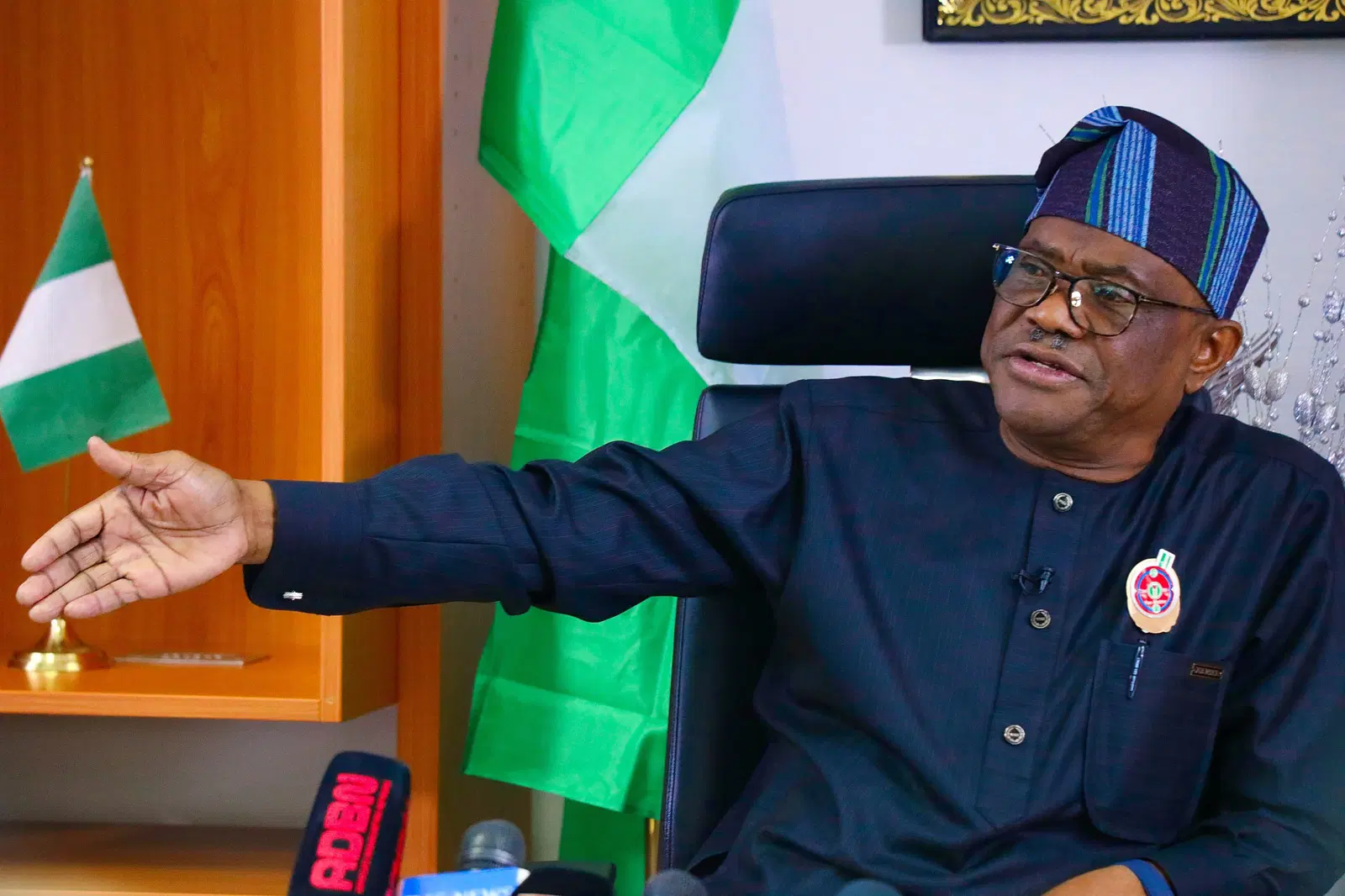
ABUJA, Nigeria — Minister of the Federal Capital Territory (FCT), Nyesom Wike, has questioned the humility of Peter Obi, presidential candidate of the Nigeria Democratic Congress (NDC), over his visits to internally displaced persons (IDP) camps across Nigeria, alleging that some politicians use public displays of compassion to attract voters ahead of the 2027 general elections.
Wike made the remarks on Thursday, October 15, at the inaugural Idoma Hall of Fame induction ceremony, organized in collaboration with Ochetoha K’Idoma as part of the Idoma Centenary Plus celebration in Abuja.
Speaking on the theme, “People, Politics and Power in Nigeria: The Agitation for Equity, Fairness and Justice,” the minister urged Nigerians to look beyond political appearances and carefully assess the intentions of those seeking public office.
According to Wike, some politicians adopt public displays of modesty and concern for vulnerable citizens when pursuing political power, warning that Nigerians should not be misled by what he described as political gimmicks.
More Read

Wike Challenges Obi’s Humanitarian Visits
Taking an apparent swipe at Obi, the FCT minister questioned why the former Anambra State governor had not celebrated his birthday at an IDP camp while in office but had visited such facilities while pursuing the presidency.
“Politicians can tell lies. Yes. A man who did not celebrate his birthday when he was a governor now wants to be president and wants to celebrate his birthday in IDP camps? And you say, ‘Oh, he is very humble’. Which humility is that?” Wike asked.
Obi, however, has a documented history of visiting displaced persons. In July 2023, he said he marked his 62nd birthday with a visit to Bungha Pilot School in Mangu Local Government Area of Plateau State, which he described at the time as the state’s largest IDP camp.
More Read

More recently, the NDC presidential candidate disclosed that he had visited 12 IDP camps across the country in recent weeks.
On September 30, 2026, Obi shared photographs of himself interacting with children at the Ramin Kura IDP camp in Sokoto State, describing the visit as his 12th to an IDP camp.
During his visits, Obi called on the government to improve living conditions for displaced Nigerians and address the challenges confronting vulnerable communities.
He also urged President Bola Tinubu and other political office holders to spend their holidays in Nigeria to witness firsthand the hardships experienced by citizens, particularly those affected by insecurity and displacement.
Wike Criticizes Politicians’ Public Displays
Beyond Obi’s visits to IDP camps, Wike also criticized politicians who, according to him, suddenly begin engaging in activities intended to portray them as ordinary citizens when seeking political office.
The minister cited examples of politicians publicly buying roasted corn and groundnuts or visiting filling stations to comment on petrol prices, questioning the sincerity of such gestures.
More Read
“You see a man who has never bought corn on the road suddenly buying corn and groundnuts in public. Who are you deceiving?” he asked.
Although Wike did not mention any politician by name in this part of his remarks, his comments appeared to allude to former Minister of Transportation Rotimi Amaechi, an African Democratic Congress (ADC) chieftain and vice-presidential candidate, who was seen eating corn and interacting with supporters in a video circulated in February during political activities ahead of the last FCT area council election.
Wike’s comments come as political figures and parties position themselves ahead of the 2027 general elections, with public engagements, outreach to vulnerable communities and discussions about economic hardship featuring prominently in the political conversation.
Minister Defends Tinubu Administration
The FCT minister also defended the Federal Government’s handling of Nigeria’s economic and security challenges, arguing that the administration’s performance should be assessed in the context of the conditions that existed before it assumed office.
Acknowledging that Nigerians remain dissatisfied with the country’s current situation, Wike maintained that efforts to improve the economy and address security concerns should also be considered.
“Nobody is happy that we are where we are. But if we are to trace our steps back to where we are coming from, are there attempts to improve the situation? So, I will take this opportunity to let you know: don’t listen to gamblers,” he said.
He urged Nigerians to be cautious of politicians he described as “gamblers,” warning against allowing political calculations and public displays to determine their assessment of candidates.
2027 Elections: Public Service and Accountability in Focus
Wike’s remarks have brought renewed attention to the role of humanitarian outreach in Nigerian politics, particularly as politicians engage with communities affected by insecurity, poverty and displacement ahead of the next general election.
While the minister questioned the motives behind some politicians’ public engagements, Obi has maintained that visits to IDP camps should draw attention to the difficult conditions faced by displaced Nigerians and the need for government intervention.
The debate raises broader questions about how political leaders demonstrate compassion, how their actions are evaluated against their records in public office, and what standards Nigerians should use when assessing those seeking elected positions.
As the country moves towards the 2027 elections, voters will have opportunities to examine candidates’ previous records, policy proposals, public statements and approaches to addressing the challenges facing the nation.
For millions of Nigerians affected by displacement and economic hardship, the central issue remains whether political attention translates into meaningful improvements in living conditions, security and access to essential services.