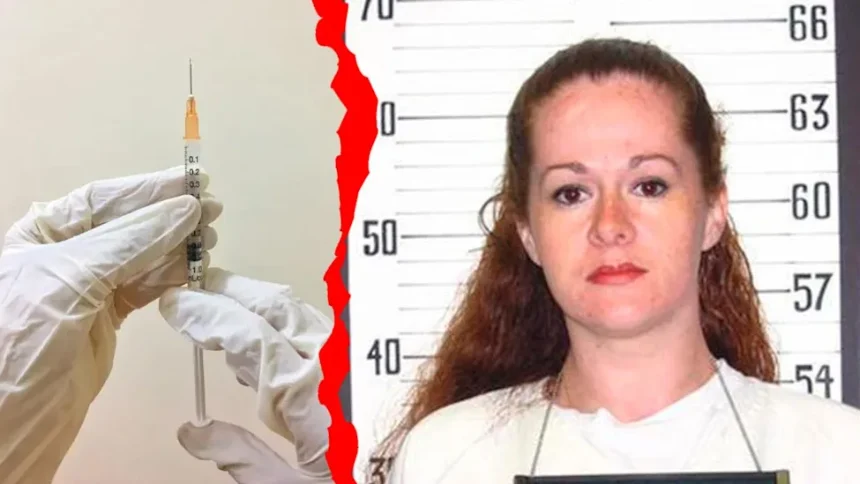
Warning: This article contains details that readers may find distressing
NASHVILLE, Tennessee — Tennessee death row inmate Christa Pike remains critically ill in hospital after authorities failed to execute her by lethal injection, according to court filings by her lawyers.
Pike, 50, was scheduled to be executed by lethal injection on Wednesday after being convicted of the 1995 murder of 19-year-old Colleen Slemmer. Authorities administered two doses of the execution drug pentobarbital, but Pike survived and was subsequently transported by ambulance to a hospital in the Nashville area.
Her lawyers said in an emergency court filing that Pike was unconscious, intubated and being kept on a ventilator on Thursday night as medical staff worked to treat her and clear the drug from her system.
The defence team is now seeking to have Pike’s death sentence commuted and has asked the court to order the preservation of all physical, written and electronic evidence connected to the failed execution.
More Read


Lawyers Allege Problems With IV Access
According to Pike’s attorneys, execution officials struggled to establish intravenous access, allegedly using at least seven needles during the procedure.
The filing claims that one needle was bent at approximately a 90-degree angle when it was removed and that Pike eventually offered guidance about where officials could attempt another insertion.
More Read

Her lawyers further allege that Pike could be heard crying, whimpering and breathing heavily during the procedure.
They contend that members of the execution team did not recognise that the IV lines had failed or that the veins had ruptured, potentially resulting in the pentobarbital entering surrounding tissue rather than reaching the bloodstream as intended.
Those allegations have not been independently established in court.
Questions Over How the Drug Entered Pike’s Body
Dr Joel Zivot, an anaesthesiologist advising Pike’s defence team, said in the court filings that two doses of pentobarbital would ordinarily have been sufficient to cause death if the drug had entered the bloodstream normally.
Zivot suggested that Pike’s survival could indicate that the drug did not reach a sufficiently high concentration in her bloodstream.
He also pointed to reported blisters on Pike’s arm as potentially consistent with a ruptured vein and suggested that some of the drug may have spread into tissue beneath the skin.

Pike’s lawyers had previously warned that her medical condition, including thrombocytosis — a condition involving an abnormally high platelet count — and her small veins could increase the risk of complications during lethal injection.
Zivot also identified the possibility of degradation of the drug as another potential explanation, although no official finding has established that pentobarbital used in the execution attempt was defective or improperly stored.
Tennessee Orders Review
Tennessee Governor Bill Lee ordered an independent review of the failed execution and halted executions in the state for the remainder of the year.
The Tennessee Department of Correction has defended the procedure, saying its execution protocol did not permit additional procedures beyond those carried out during Pike’s execution attempt.
Officials have not publicly explained what caused the lethal injection to fail or announced whether they intend to make another attempt to execute Pike.
The failed execution occurred after several last-minute legal challenges from Pike’s attorneys. The US Supreme Court rejected two separate attempts to halt the execution, while Governor Lee also denied Pike’s clemency request.
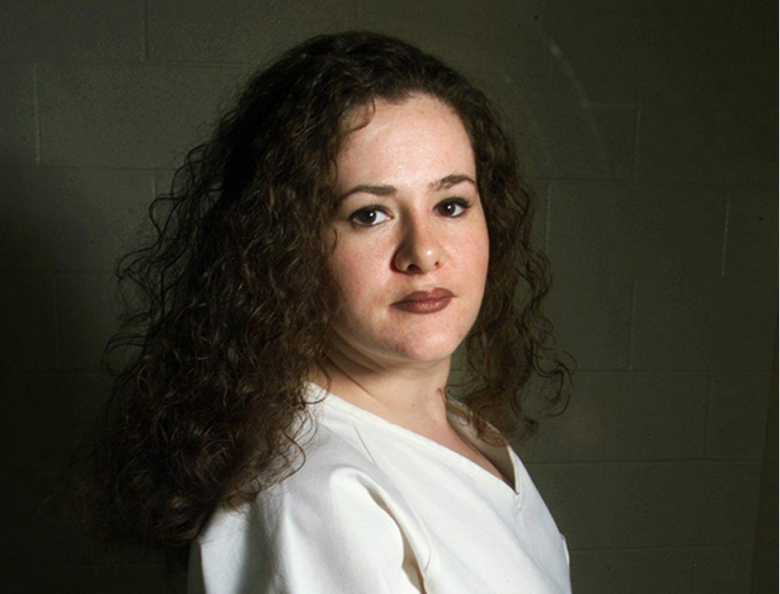
The Crime That Put Pike on Death Row
Pike was 18 when she and her then-boyfriend, Tadaryl Shipp, were involved in the killing of Slemmer in Knoxville, Tennessee, in 1995.
According to court records, Pike and Shipp attacked and killed Slemmer after Pike accused the teenager of insulting her and attempting to take her boyfriend.
Pike was sentenced to death in 1996.
Shipp was 17 at the time of the crime and therefore was not eligible for the death penalty under Tennessee law. He received a life sentence with the possibility of parole and remains incarcerated.
Pike’s case has attracted renewed attention following the failed execution, with her lawyers arguing that the circumstances surrounding the attempt warrant further legal review.
For now, Pike remains in hospital under intensive medical care while questions surrounding the execution attempt are investigated.