Negotiations at the United Nations COP31 climate summit in Antalya, Turkey, have entered a second day of overtime, with countries divided over fossil fuels, climate finance and the increasingly urgent battle to limit global warming.
Negotiators at the United Nations COP31 climate summit are struggling to reach a consensus on a new global climate agreement as talks extend beyond their scheduled deadline, amid deep divisions over fossil fuels and financial support for vulnerable nations.
A revised draft agreement released in the early hours of Sunday is aimed at bridging differences among participating countries, but concerns remain over whether the proposed text is strong enough to address the climate crisis.
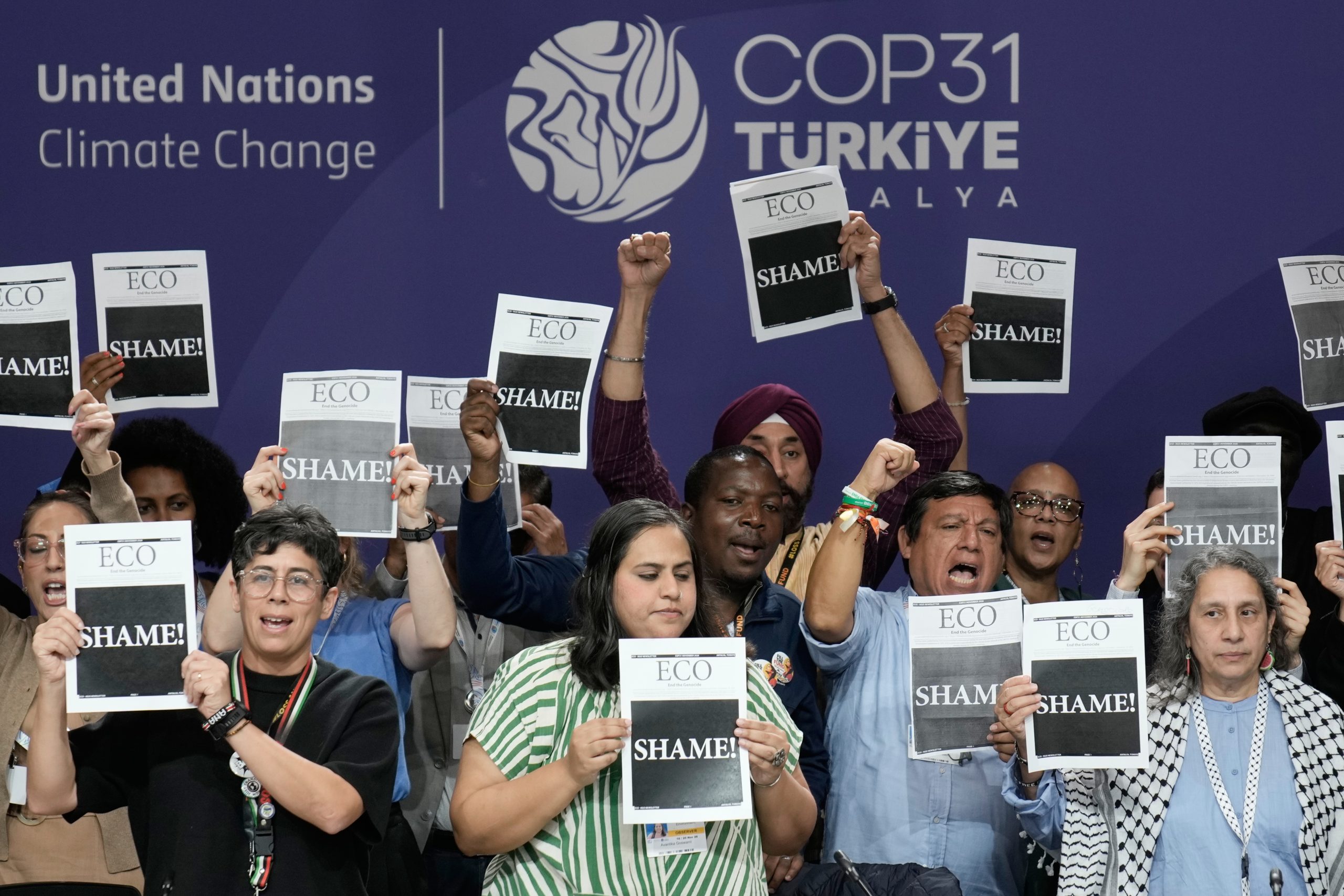
The latest draft does not explicitly call for a transition away from fossil fuels, a key demand from several countries that had threatened to reject earlier versions of the agreement. However, it acknowledges a previous international commitment made three years ago to move away from fossil fuel dependence.The draft also recognizes, for the first time, that the world is on course to exceed the critical target of limiting global temperature rise to 1.5 degrees Celsius above pre-industrial levels.
More Read

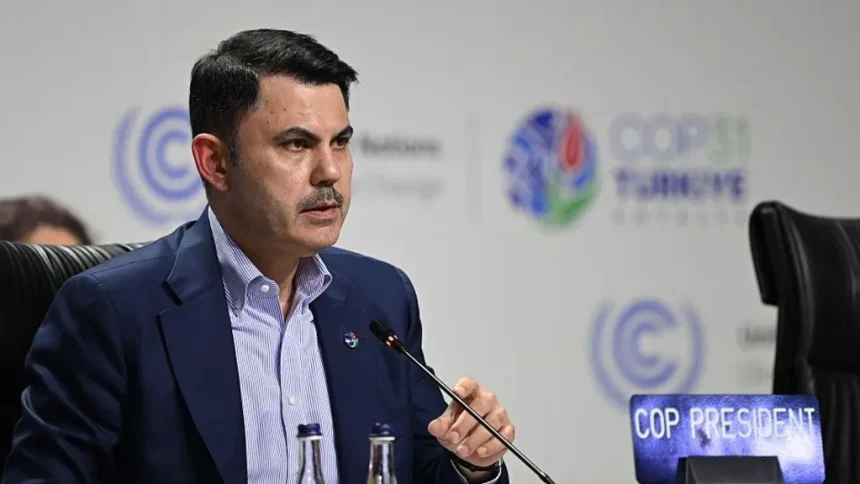
COP31 President and Turkey’s Environment Minister, Murat Kurum, expressed optimism that negotiators could reach an agreement, saying he was hopeful of a breakthrough.
“We will be happy soon enough,” Kurum told the BBC as he arrived at the summit on Sunday.
He also urged delegates to carefully consider the latest draft, insisting that negotiations were closer than ever to resolving outstanding issues.
More Read

However, the European Union reportedly views the latest proposal as a step backwards, particularly because of the absence of stronger language on fossil fuel reduction.
The EU and several Pacific island nations have been pushing for a clear commitment to phase out fossil fuels, arguing that continued dependence on coal, oil and gas threatens efforts to prevent catastrophic climate change.
Fossil fuels remain a major sticking point
The future of fossil fuels has emerged as one of the most contentious issues at the summit.
Earlier drafts of the proposed agreement included language calling for an accelerated phase-out of fossil fuels. However, a revised version released on Thursday removed references to coal, oil and gas, triggering strong opposition from several countries.
Panama, Solomon Islands, Côte d’Ivoire and European Union representatives were among those demanding that a commitment to transition away from fossil fuels be restored.
More Read

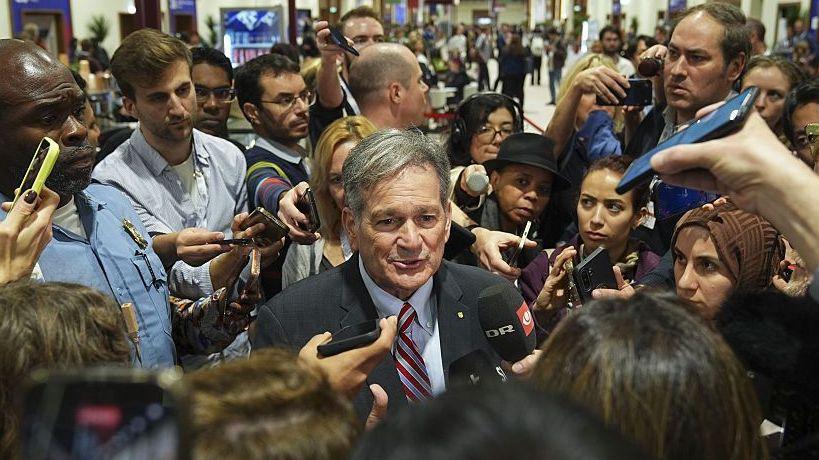
Panama’s Environment Minister, Juan Carlos Navarro, warned that an agreement without any mention of fossil fuels would be unacceptable.
Tuvalu’s Climate Minister, Maina Talia, also described the issue as a red line for his country, stressing that fossil fuels are at the heart of the climate crisis threatening vulnerable island nations.
Meanwhile, Australia’s Climate Change and Energy Minister, Chris Bowen, who is leading negotiations, argued that the summit should focus primarily on implementing existing commitments and accelerating the transition to cleaner energy sources.
Climate finance concerns persist
Financial support for developing countries remains another major unresolved issue.
Earlier versions of the agreement proposed increasing adaptation financing to $120 billion annually by 2035. However, the figure was subsequently removed from the draft, leaving developing countries concerned about the lack of concrete financial commitments.
African nations have expressed particular disappointment over the absence of a specific funding target for climate adaptation.
Ghana’s Environment Minister and chair of the African Group of Negotiators, Zanetor Agyeman Rawlings, criticised the lack of financial support, insisting that African countries were demanding justice rather than charity.
She said developing nations were seeking resources to protect their populations from the consequences of climate change, despite contributing relatively little to the emissions responsible for global warming.
Concerns over the 1.5°C target
The latest draft agreement also acknowledges that the world is on track to exceed the 1.5°C warming limit established under the Paris Climate Agreement.
Scientists have repeatedly warned that exceeding the target could significantly increase the risks of extreme heat, rising sea levels, flooding and other climate-related disasters, with millions of people potentially exposed to greater dangers.
The proposed agreement’s references to carbon capture, utilization and storage technologies have also drawn criticism from some European countries, which fear the technology could be used to justify continued fossil fuel production and consumption.
France’s Minister of Ecological Transition, Monique Barbut, expressed concern that the inclusion of such technologies could undermine meaningful climate action.
The latest draft reportedly reduces commitments relating to carbon capture technologies, potentially easing some of the concerns raised by the European Union.
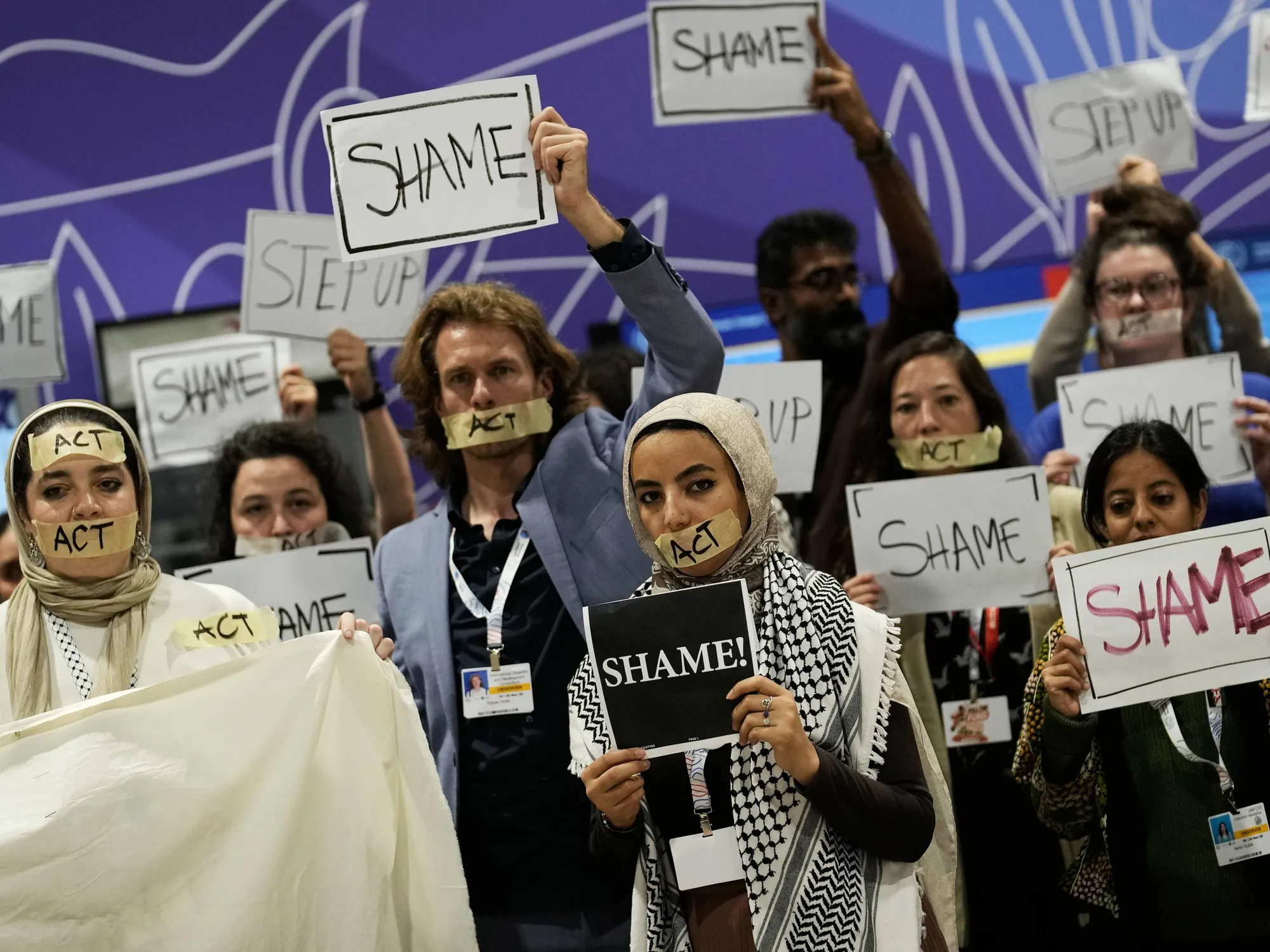
Negotiations continue beyond deadline
The summit in Antalya has already exceeded its original Friday deadline, with negotiators continuing discussions throughout the weekend.
A meeting expected to begin at 9:00 a.m. local time on Sunday to consider the proposed agreement was delayed further, raising uncertainty over when a final decision would be reached.
The prolonged negotiations are approaching the record for the longest-running COP climate summit.
Under the United Nations climate negotiation process, agreements require consensus among participating countries. Failure to achieve consensus could result in the negotiations being suspended until next year, an outcome that has occurred only once since the COP meetings began in 1995.
European Union Climate Commissioner Wopke Hoekstra had earlier warned that the bloc would not accept an agreement that failed to deliver the necessary climate action.
Despite the divisions, Britain’s chief negotiator and Energy Secretary, Miatta Fahnbulleh, said efforts were continuing to secure an agreement.
As negotiations intensify, the world is watching to see whether countries can overcome their differences and deliver a meaningful climate deal—or whether the summit will end without the consensus needed to advance global climate action.