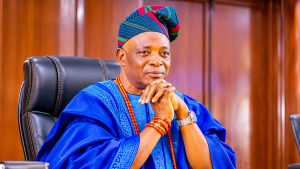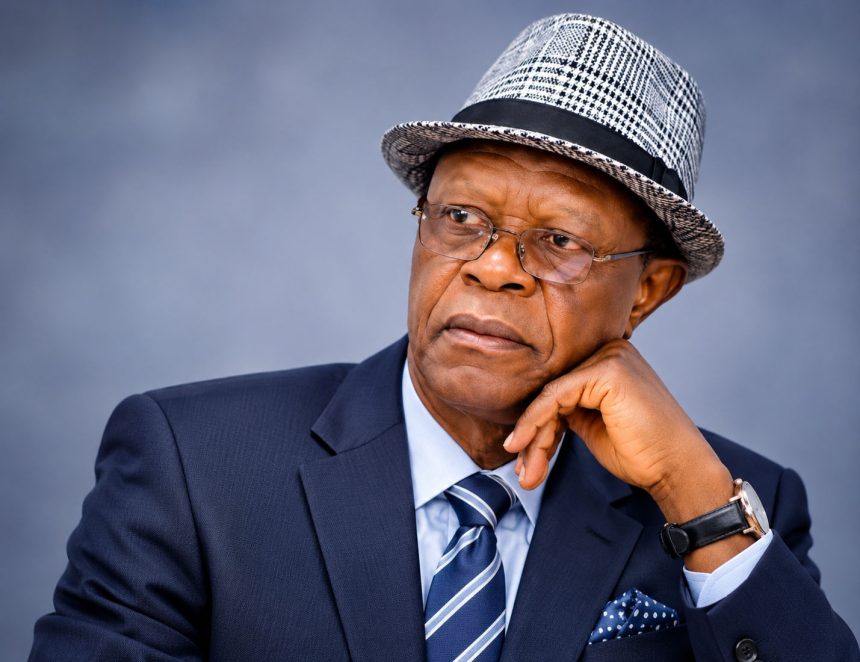
Former Benue State Deputy Governor, Chief Benson Abounu, has blamed the growing political discontent in the state on the failure of successive political leaders to institutionalise power rotation among the three senatorial districts, warning that the situation could threaten unity and development.
Abounu said the continued dominance of the Tiv people in the governorship position since the creation of Benue State has created feelings of marginalisation, particularly among people of Benue South Senatorial District, and contributed to unhealthy political divisions across the state.
In an interview, the former deputy governor argued that zoning remains an important political mechanism for ensuring fairness, inclusion and equitable distribution of political power, even though it is not formally enshrined in the Constitution.
He maintained that without an effective rotation arrangement, political power could become concentrated in the hands of particular groups, leaving others feeling excluded from governance.
According to Abounu, the absence of political rotation in Benue has generated what he described as “bad blood” between Benue South and the other senatorial districts, Benue North-West and Benue North-East.
More Read

He warned that the consequences extend beyond political disagreements, stressing that perceived exclusion could affect the state’s unity and development.
Zoning necessary for political harmony
Abounu said zoning emerged in Nigeria’s political system as a means of ensuring that different groups have opportunities to participate in governance and benefit from political representation.
He argued that political leaders naturally tend to surround themselves with people from their communities and political networks, making power rotation necessary to prevent the perpetuation of dominance by one group.
More Read
“ If you do not zone, you have a problem,” he said, stressing that zoning helps ensure that every section of society has an opportunity to participate in leadership.
The former deputy governor acknowledged that zoning is not constitutionally mandated but insisted that it has become an important political convention in Nigeria.
He said Benue State’s failure to establish a sustainable rotation arrangement has contributed to dissatisfaction among sections of the population, particularly in Zone C.
Abounu also argued that political appointments and opportunities should be based on competence, fairness and inclusiveness rather than ethnicity, language or geographical origin.
Warns against political exclusion
Abounu said the feeling of exclusion was not limited to the Idoma people, noting that some Tiv leaders and individuals had also expressed concerns about the consequences of political dominance and lack of inclusiveness.
He said political arrangements that promote fairness and allow qualified individuals from different parts of the state to participate in leadership could help strengthen harmony and accelerate development.
More Read
According to him, the growing dissatisfaction among communities should serve as a warning to political leaders that deliberate efforts are needed to promote inclusion.
He called for an arrangement that would allow all parts of Benue State to feel a sense of belonging, insisting that political leadership should not be monopolised by any particular group.
Calls against third term for Benue South Senate seat
On political representation in Benue South ahead of the 2027 elections, Abounu expressed support for zoning the senatorial seat between the Uju/Obi axis and the Apa/Agatu axis, describing such an arrangement as necessary for fairness, equity and justice.
He also cautioned against attempts by political officeholders to seek third or subsequent terms, arguing that prolonged occupation of political offices could create resentment among other communities.
Abounu specifically argued that an Idoma politician seeking a third term in the Senate would not be acting in the best interest of the Idoma nation.
He cited concerns among the Igede people, whom he said increasingly felt that the Senate seat was being monopolised by the Idoma, adding that such sentiments could worsen divisions among communities.
He urged political stakeholders to embrace rotation and avoid political arrangements capable of deepening resentment.
Abounu backs second term for Moro, says 2027 should favour Igede
Abounu also spoke about his relationship with the incumbent senator representing Benue South, Abba Moro, saying he had no personal animosity towards him despite disagreements and political developments in the past.
He recalled supporting Moro’s second-term ambition in 2023, saying it was in the interest of fairness and brotherhood within the Idoma nation.
Abounu said he had previously advised political stakeholders that the Igede people should be prepared to have an opportunity to produce the senator in 2027.
He maintained that political representation should be guided by fairness and the willingness of communities to accommodate one another.
He urged voters to carefully assess the antecedents of candidates, their records in public service, their commitment to development and their ability to listen to the people.
According to him, political offices should be occupied by individuals who are genuinely interested in the welfare of their constituents rather than personal enrichment.
Recounts failed 2023 governorship ambition
The former deputy governor also recounted his experience during the build-up to the 2023 Benue governorship election, alleging that several influential political leaders initially supported his ambition to succeed former Governor Samuel Ortom.
He said he was encouraged by prominent political figures, including former Senate President Iyorchia Ayu, former governor Gabriel Suswam and Professor Iorwuese Hagher, among others.
Abounu said political support appeared strong at the time, with some stakeholders reportedly backing his candidacy on the argument that it was the turn of Benue South to produce the governor.
However, he said the political situation changed and he eventually failed to secure the governorship ticket.
He also alleged that the party’s primary election was manipulated against him, claiming that ballot boxes were allegedly deployed and monitored in ways intended to prevent delegates from voting for him.
Despite the disappointment, Abounu said he held no grudge against Ortom or other political actors, attributing the eventual outcome to circumstances beyond his control.
He said he remained grateful for his political journey and had returned to private business following his departure from office in 2023.
Says politicians should have businesses outside politics
Abounu disclosed that he returned to his private business as a chartered engineer after leaving office, stressing that politicians should have other means of livelihood rather than depending entirely on political appointments and elected positions.
He described himself as an elder statesman who was currently observing developments in the country’s political landscape.
He expressed concern over what he described as attempts by some politicians to perpetuate themselves in office, saying political leadership should be about service and representation rather than the pursuit of wealth and influence.
The former deputy governor urged Benue South voters to make informed decisions in 2027 by prioritising fairness, competence, accountability and the welfare of the people.
He maintained that equitable political representation and genuine inclusion remain critical to ensuring peaceful coexistence and the development of Benue State.