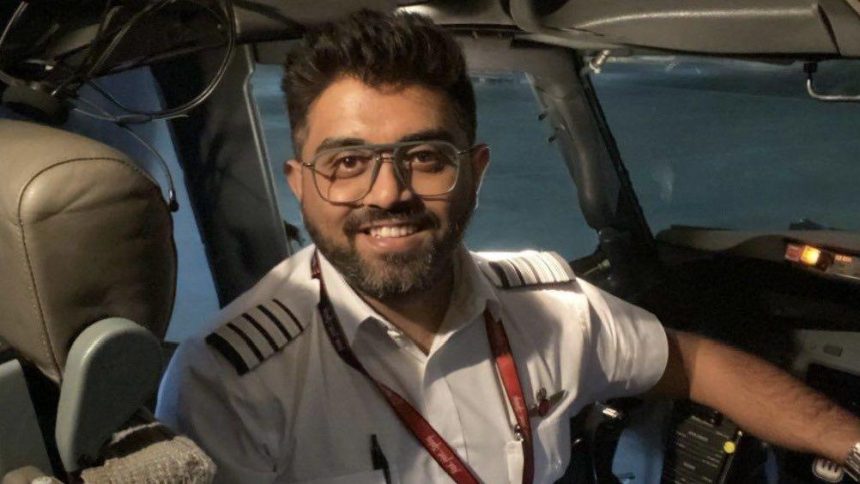
Indian pilot Captain Smit Machchhar has revealed how he made a desperate final effort to open the cockpit door after being stabbed by his co-pilot during a Flydubai flight, allowing passengers and other crew members to intervene and prevent what could have become a major aviation disaster.
Machchhar, who was seriously injured during the attack, said he was lying on the cockpit floor when he realised the aircraft was rapidly losing altitude and that he needed to act—not only to save himself, but also the more than 170 people on board.
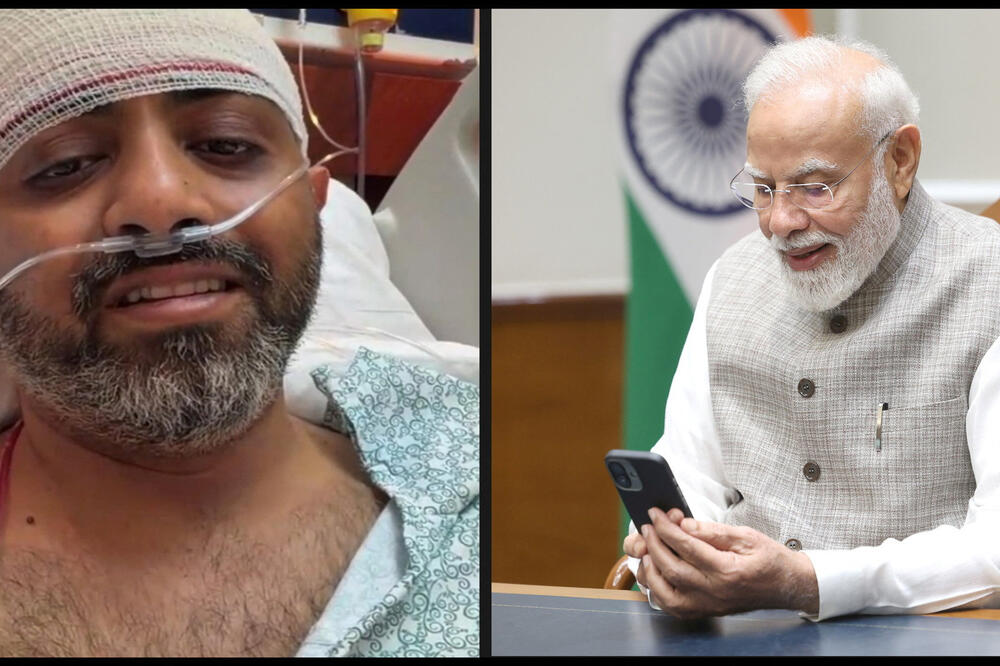
Speaking to Indian Prime Minister Narendra Modi in a video call from his hospital bed, Machchhar said: “I was lying on the floor injured but I told myself to go for one last push to open the door from inside.”
He added: “I was of course fighting for my own life but at the same time I knew I was not going to let others die.”
More Read

Flight plunged thousands of feet
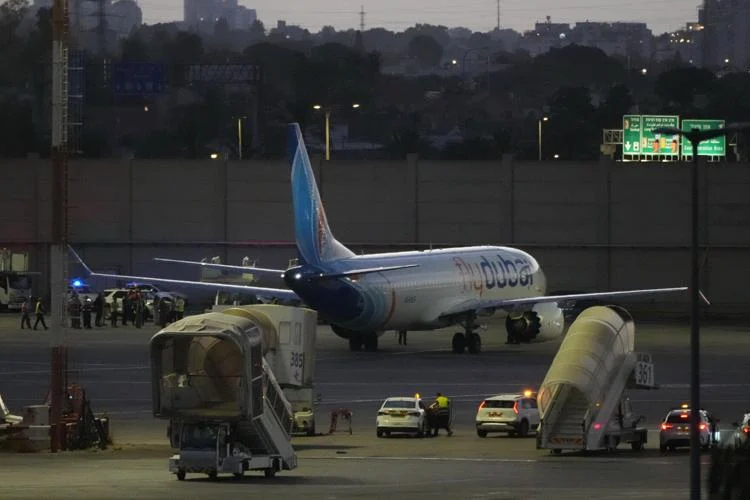
The dramatic incident happened aboard Flydubai Flight FZ1073, a Boeing 737 MAX 8 travelling from Dubai to Tel Aviv on September 30.
The aircraft was carrying 174 passengers when, approximately two and a half hours into the flight, it suddenly lost a significant amount of altitude during a violent confrontation inside the cockpit.
Reports indicate that the aircraft dropped roughly 17,000 feet in a very short period. The crew first transmitted an emergency signal before the aircraft’s transponder was reportedly switched to squawk 7500, the internationally recognised code indicating a hijacking.
More Read

Israeli officials said the two pilots became involved in a physical struggle and that the co-pilot allegedly stabbed Machchhar before attempting to take control of the aircraft.
Israeli Prime Minister Benjamin Netanyahu subsequently said the incident appeared to involve an attempt to crash the aircraft.
Wounded captain opened cockpit door
Despite his injuries, Machchhar managed to open the cockpit door.
That action proved crucial.
Passengers and crew members rushed into the cockpit and helped overpower the alleged attacker. Two reserve pilots who were travelling on the aircraft were then able to assist in taking control of the plane.
The aircraft was diverted to Tabuk Airport in north-western Saudi Arabia, where it landed safely.
More Read

The incident left Machchhar seriously injured. He was initially treated in Saudi Arabia before being transferred to Abu Dhabi, where he has been reported to be in stable condition and recovering.
The Indian Embassy in the United Arab Emirates subsequently said the captain was in good health and recovering well.
‘I Can Tell What Is Happening to the Plane’
Machchhar told Prime Minister Modi that he had been flying aircraft for 17 years and said his experience enabled him to understand what was happening even in extremely difficult circumstances.
His account has attracted widespread attention in India and internationally.
Modi praised the captain’s courage and quick decision-making, saying his actions helped save the lives of those aboard the aircraft.
Israeli Prime Minister Benjamin Netanyahu has also described Machchhar as a “true hero” following the incident.
Passengers also played a critical role
Machchhar stressed that other people aboard the aircraft also played an important role in bringing the situation under control.
Once the cockpit door was opened, passengers and crew members intervened and restrained the attacker, allowing other pilots on board to help regain control of the aircraft.
The successful landing in Saudi Arabia meant that the situation ended without the loss of passenger lives.
Investigation into the motive
Authorities in the region are continuing to investigate exactly what happened and why.
The United Arab Emirates has launched an investigation into whether the incident was connected to terrorist activity or another motive.
Netanyahu has alleged that the attacker was an Omani national and suggested that he had undergone what he described as Islamist radical indoctrination. Those claims remain part of the ongoing investigation, and authorities have yet to establish publicly all the circumstances surrounding the attack.
The focus of the investigation includes the alleged attack inside the cockpit, the aircraft’s rapid loss of altitude, the suspect’s background and whether the incident was connected to any wider terrorist purpose.
‘I Am Confident I Will Recover’
Despite the seriousness of his injuries, Machchhar said he remained focused on his recovery.
Rather than viewing his injuries simply as wounds, he described the recovery process as a journey that would take time.
“I am not looking at this wound like a wound because that would make my recovery even more difficult,” he said.
“I am looking at it as a journey which is slowly going on and will take time but I am confident that the recovery will be there and I will become fit and healthy again.”
For the passengers of Flight FZ1073, the sequence of events could have ended very differently.
Instead, the actions of an injured captain, passengers, crew members and reserve pilots helped bring a rapidly deteriorating situation under control and enabled the aircraft to reach the ground safely.
The investigation into the cockpit attack and its motive continues.