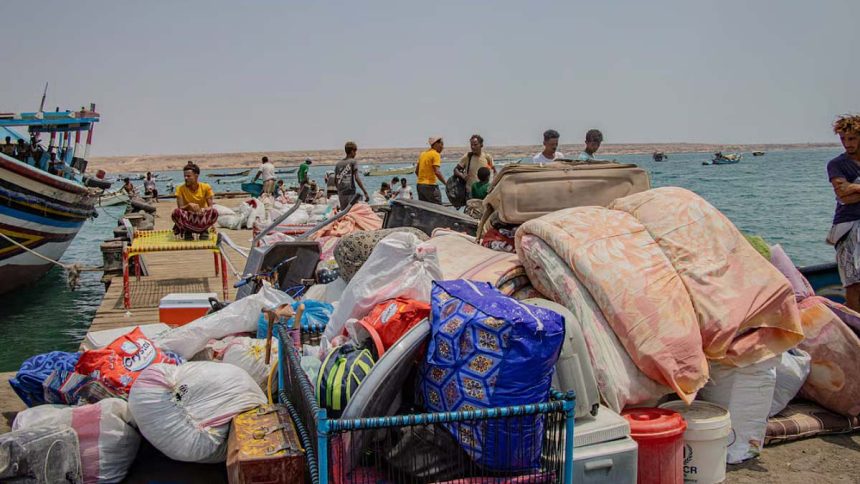
OBock, Djibouti — The sound of aircraft overhead has become a terrifying warning for families living along Yemen’s western coast, forcing thousands to abandon their homes and make dangerous journeys across the Bab el-Mandeb Strait to neighbouring Djibouti.
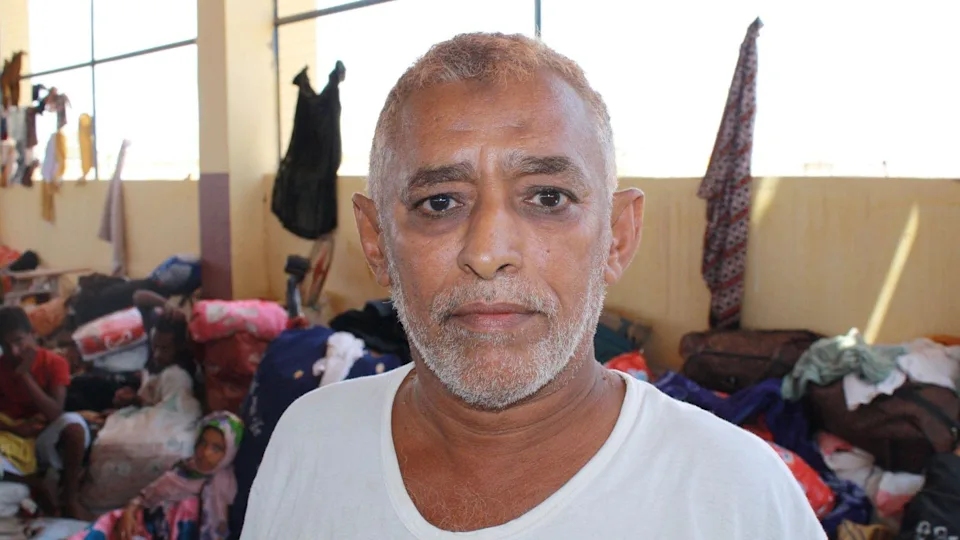
Among those who fled is 50-year-old Ibrahim Issa, a fisherman from the Yemeni coastal town of Dhubab, an area caught on the front lines of the fighting between the Houthi movement and forces aligned with Yemen’s internationally recognized government.
Today, Issa sits with his family on a tarpaulin spread across the sandy floor of a large open-sided warehouse at Markazi refugee village in Obock, northern Djibouti.
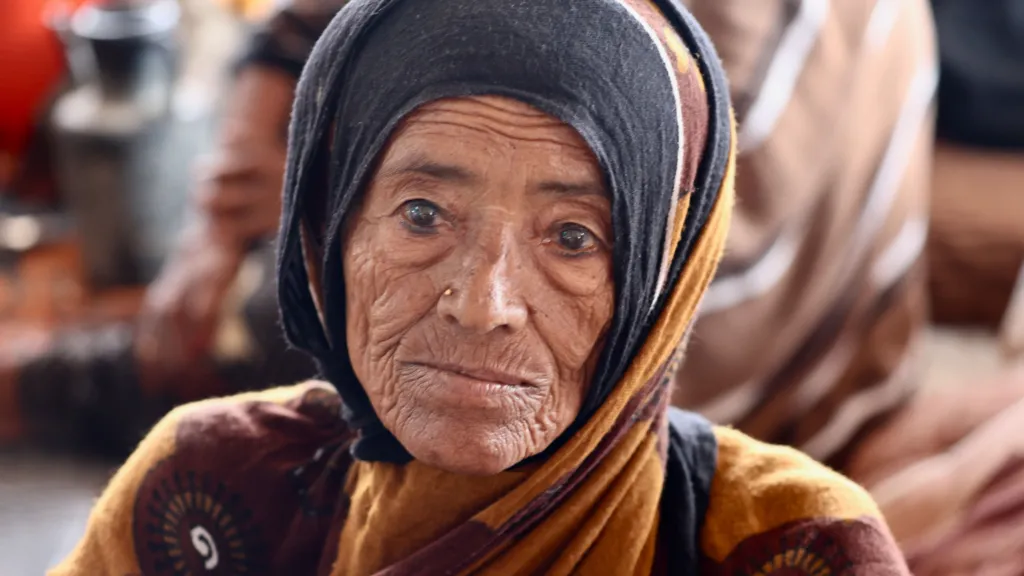
The camp has become a temporary refuge for Yemeni families escaping renewed violence along the Red Sea coast.
More Read

“How could I just sit there when my kids are screaming and shaking in terror?” Issa said, describing the moment aircraft began flying over his community.
“When the sound of the planes starts, and the kids hear the planes, they begin shouting and screaming. As parents it is our responsibility. What can you do when you see this? That is why we fled — to save them.”
A Dangerous Journey to Safety
Issa was among those fortunate enough to own a fishing boat capable of carrying his family across the narrow stretch of water separating Yemen from Djibouti.
More Read

He even managed to bring several of the family’s goats with him.
The animals now wander around the refugee settlement, searching for scraps among discarded cooking-gas containers and empty plastic bottles.
Other families were less fortunate.
Some arrived carrying small bundles of possessions, while others crossed the sea with little more than the clothes they were wearing.
The United Nations refugee agency, UNHCR, says nearly 3,000 people arrived in Djibouti in less than a week in September, following dangerous sea crossings from Yemen. More than half of the new arrivals are women and children.
The latest escalation has also displaced more than 100,000 people inside Yemen, according to UNHCR, with families uprooted from several parts of the country.
More Read

“We Don’t Care Which Side Is Attacking”
For many of the refugees at Markazi, political loyalties have little meaning.
Their immediate concern is survival.
“We don’t care which side it is that’s attacking,” is the message repeatedly heard from refugees at the camp.
“It is the bombs falling all around us that have caused us to flee.”
The latest violence comes amid a long-running conflict that has devastated Yemen and displaced millions of people.
The country has been divided by years of fighting between the Houthis and forces supporting Yemen’s internationally recognized government, with regional powers becoming deeply involved in the conflict.
The latest escalation along the western coast has generated fears of even more displacement if the fighting continues.
Djibouti Faces Growing Humanitarian Pressure
Djibouti, a small country in the Horn of Africa located across the Bab el-Mandeb Strait from Yemen, has kept its borders open to people fleeing the conflict.
New arrivals are transported from coastal landing points to Markazi refugee village, where they are registered and provided with assistance by Djiboutian authorities, UNHCR and humanitarian partners.
But the influx is rapidly putting pressure on available resources.
UNHCR says Markazi was designed to accommodate about 5,000 refugees, while thousands of people are already living there. Authorities and humanitarian agencies are preparing for the possibility of at least 10,000 additional arrivals.
Shelter, clean water, sanitation, health care and education are among the most urgent needs.
Many of the newly arrived children also require access to schools, adding further pressure to already crowded facilities.
Humanitarian agencies are providing temporary shelter, food, water, transportation, relief supplies, health care and protection services.
However, UNHCR has warned that the humanitarian response is already under severe pressure and requires additional international support.
“It Was the Planes”
Among those seeking safety in Djibouti is Qassim Abraham Abssy, another fisherman who fled Yemen with his family.
His identity card records his age as 100.
“What led us to come here?” he asks.
“It was the planes. The sounds of the planes — boom! That’s what made us flee, for the sake of our children.”
According to Abssy, the bombardment made it impossible for ordinary families to determine where the next attack would come from.
“We don’t know which side they are from. They are bombing everywhere,” he said.
For his family, the decision to leave was therefore not about politics.
It was about survival.
A Refugee for More Than a Decade
For some Yemenis, the latest arrivals represent another chapter in a story of repeated displacement.
Mohammed Abdullarim, a 63-year-old former tour guide from Aden, has lived in Djibouti since 2015.
He fled Yemen when the conflict first intensified between Houthi forces and the government of then-President Abdrabbuh Mansour Hadi.
More than a decade later, he remains in Djibouti.
As he spoke about the latest arrivals, the emotional weight of Yemen’s continuing crisis became overwhelming.
“Most of the people here are in the worst condition, inside the tents here,” he said.
“I am very touched. I’m crying for these people, for my people, for their suffering.”
He appealed to humanitarian organizations and the Djiboutian government to ensure that the refugees’ voices are heard.
“I am thankful to them for accepting us,” he said.
A Camp Running Out of Space
The growing number of arrivals has raised concerns over whether Djibouti’s refugee infrastructure can cope with another major influx.
UNHCR says Djibouti already hosts tens of thousands of refugees and asylum-seekers, mainly from Somalia, Ethiopia and Yemen.
The latest arrivals from Yemen are therefore placing additional pressure on communities and humanitarian services that are already operating with limited resources.
UNHCR says it is preparing additional emergency supplies and support, but warned that further deterioration of the security situation could quickly overwhelm existing capacity.
“We Left Everything Behind”
For Qassim Abssy and his wife, Aisha Abdulkadir Mohammed, returning home is possible only if peace comes back to Yemen.
“If the war continues then we’re not going back because we have peace here,” Abssy said.
His wife agreed.
“We are willing to go back in peace if peace returns to our country, and we are praying to God that peace does return,” she said.
“All we need is peace. Even for our children’s future, they get safety first, then food, water and an education.”
She paused before describing what the family had left behind.
“As you see, we just fled with our clothes, and left everything behind, because in Yemen there is no peace.”
For the families gathered at Markazi, the journey across the Bab el-Mandeb was not a search for a better life.
It was a desperate escape from war.
And for now, their hope is simple: that the fighting ends, that their children can grow up without the sound of aircraft overhead, and that one day they can return home in peace.