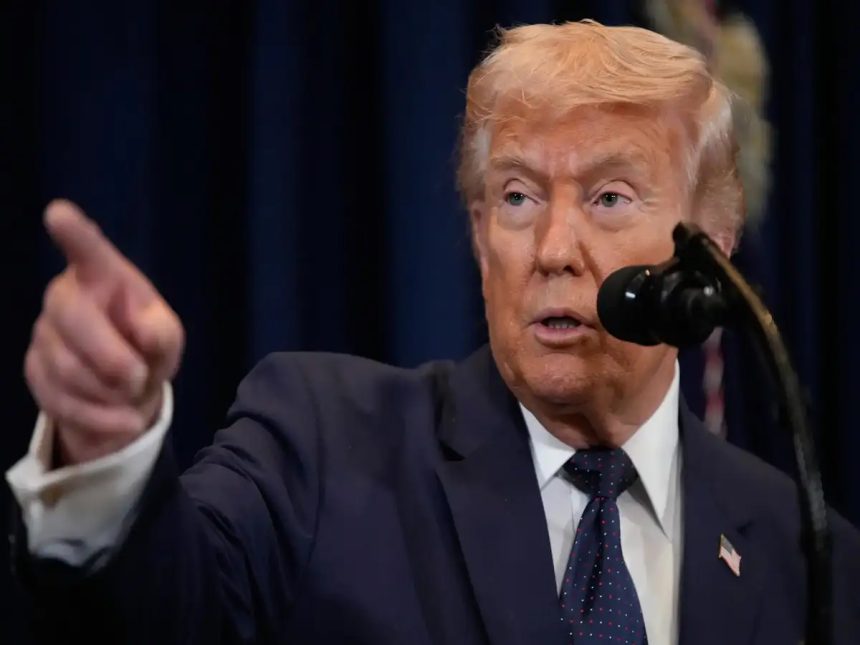
WASHINGTON — U.S. President Donald Trump has threatened to impose what he described as “very serious” tariffs on the European Union if the bloc moves forward with a proposal to make Canada its first-ever “associate member.”
Trump made the warning on Wednesday while speaking to reporters, describing the proposed EU-Canada arrangement as potentially a “hostile act” if he concludes that European leaders are pursuing it with negative intentions.
“If it’s a good intention, that’s fine. If it’s a bad intention, we’ll put very heavy tariffs on Europe,” Trump said.
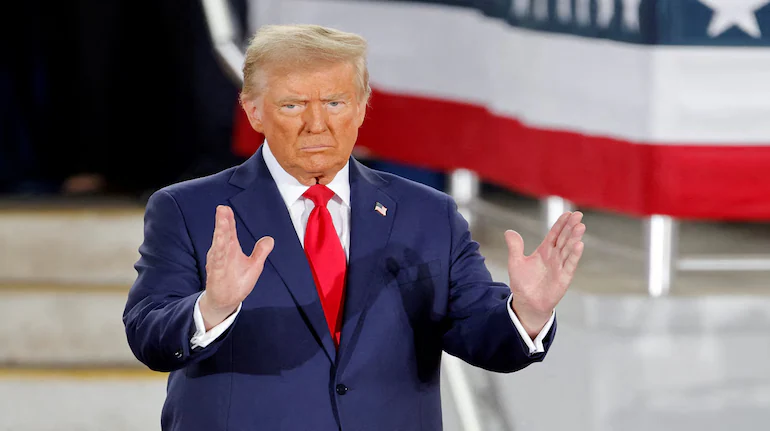
He also suggested that Washington could restrict or stop trade with Europe in some areas if the proposed arrangement is considered hostile to U.S. interests. Trump dismissed the prospect of Canada joining the EU as “laughable” and criticized Canada as a “terrible trade partner.”
EU Opens Door to Canada
The controversy follows an announcement by European Commission President Ursula von der Leyen, who invited Canadian Prime Minister Mark Carney to explore making Canada the European Union’s first associate member.
During her annual State of the European Union address in Strasbourg on Wednesday, von der Leyen said Europe and Canada should deepen their relationship beyond their existing trade arrangements.
More Read

She proposed what she called an “Alliance for the Future,” covering areas including advanced manufacturing, technology, defence, energy, critical minerals, artificial intelligence, cybersecurity and economic security.
The proposal comes as Canada seeks to strengthen economic and security relationships beyond the United States amid increasingly strained relations between Washington and Ottawa.
What Would Associate Membership Mean?
The proposal is significant because the European Union does not currently have a formal “associate membership” category under its existing structure.
More Read

Exactly what such a status would entail for Canada remains unclear and would require further negotiations and agreement among EU member states. Possible models could involve deeper economic and institutional cooperation without granting Canada the full rights of an EU member.
Canada is already closely connected to the EU through the Comprehensive Economic and Trade Agreement (CETA). The proposed new arrangement would seek to expand that relationship into areas such as defence, technology, energy and strategic resources.
Canada Seeks Closer European Ties
Carney has previously said Canada is not seeking full membership of the European Union, but wants what he describes as a “unique alliance” with the bloc.
His government has increasingly pursued stronger relationships with European countries as trade tensions with the United States have intensified. Carney was scheduled to address the European Parliament on Thursday as part of his push for closer Canada-EU cooperation.
The EU initiative also comes against the backdrop of Trump’s broader trade disputes with Canada and Europe, including U.S. tariff measures and disagreements over trade policy.
A New Flashpoint in Transatlantic Trade
Trump’s latest warning introduces another potential source of tension between Washington and Brussels.

The EU and United States reached a trade agreement that established a 15% U.S. tariff ceiling on most EU exports, while the bloc agreed to eliminate tariffs on U.S. industrial goods. Trump’s latest comments raise questions about whether additional trade restrictions could emerge if the EU proceeds with the Canada proposal.

For Canada, meanwhile, the proposed EU partnership could represent a significant expansion of its economic and strategic options at a time when its relationship with its largest trading partner, the United States, is under considerable strain.
For now, no associate-membership agreement has been finalized, and the precise terms of the proposed arrangement remain to be negotiated.
The developments have nevertheless opened a new front in the increasingly complicated trade and diplomatic relationship linking the United States, Canada and the European Union.