
The United States has announced a fresh wave of restrictions on Canadian imports, banning a range of products including alcoholic beverages, dairy goods and motorbikes, as Canada’s retaliatory tariffs on American products take effect.
In a series of executive orders signed on Tuesday, President Donald Trump accused Canada of discriminating against American businesses and announced that the new import bans would come into force on 29 September.
The latest measures mark another escalation in the months-long trade dispute between the two neighboring countries, traditionally among each other’s closest economic partners.

Canadian Prime Minister Mark Carney, in a video address on Tuesday, acknowledged that Canada’s efforts to reduce its dependence on the United States as its largest trading partner would carry economic costs.
More Read

“There’s always a cost to action. But it doesn’t come close to the cost of standing still,” Carney said.
Both Washington and Ottawa have expressed interest in reaching a new trade agreement, but negotiations have remained stalled since talks collapsed in late August.
Products targeted by Washington
The White House said Canada was restricting American goods while allowing comparable products from other countries to enter its market, describing the policy as discriminatory.
Among the Canadian products facing outright import bans from 29 September are:
More Read

- Dairy products, including whey
- Cane molasses
- Non-alcoholic beer
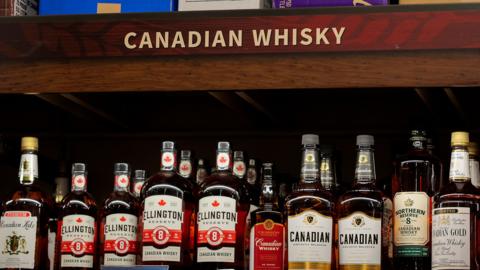
- Various wine, rum and vodka products
- Malt beer
- Motorbikes and mopeds
Other Canadian products will face increased import taxes, including various cheeses, raw hides and skins, paper, furniture and mattresses, aluminum and iron products, motorboats, golf carts, fishing-rod parts and accessories, and switchboards.
The White House’s measures come after Washington last month imposed 50% tariffs on about $20bn worth of Canadian goods, affecting industries including furniture, wine, sporting equipment and fishing-related businesses.
Canada has responded with matching tariffs on a range of US products, including steel, clothing and furniture.
Businesses and consumers brace for impact
Economists and businesses on both sides of the border have warned that the escalating trade restrictions could push up prices, reduce demand and disrupt deeply integrated supply chains.
More than two-thirds of Canada’s exports traditionally go to the United States, making the American market particularly important to Canadian businesses.
More Read

The US, meanwhile, counts Canada as its second-largest trading partner after Mexico, although the American economy has a more diversified export base.
Scott French, an economics lecturer at the University of New South Wales in Australia, said Washington’s decision to target Canada’s dairy sector was significant because of its political influence.
President Trump has repeatedly criticized Canada’s dairy system, which includes production quotas, regulated pricing and restrictions on imports of dairy, eggs and poultry. He has argued that the system unfairly disadvantages American farmers.
French warned that the latest measures could increase pressure on Canadian leaders while making it harder for both countries to reach a compromise.
The economic consequences, he said, would ultimately be felt by consumers on both sides of the border.

More restrictions possible
The dispute has also expanded beyond tariffs.
Trump on Monday warned Canadian aircraft manufacturer Bombardier that it could lose access to the US market unless it moves manufacturing operations to the United States.
The president has long argued that tariffs can help address America’s trade imbalances, but his aggressive trade policies have increasingly strained relations with traditional US allies.
In Canada, the dispute has also fuelled a consumer boycott of American products. Some US alcoholic beverages, for example, have reportedly disappeared from Canadian store shelves as consumers turn to domestic alternatives.
Trade expert Deborah Elms of the Hinrich Foundation said the new import bans could have a significant effect on Canadian businesses that depend on American buyers, although early estimates suggest the restrictions may initially affect about $1bn worth of goods.
She said Canada was likely to maintain its current position while adjusting support measures for affected businesses.
“The bigger question is what it will take for the two sides to sit back down together,” Elms said, warning that the language used in Washington’s latest proclamations could make a return to negotiations more difficult.
The escalating dispute comes despite the historically close relationship between the two countries, raising concerns that a prolonged trade war could cause lasting damage to one of the world’s most integrated cross-border economies.