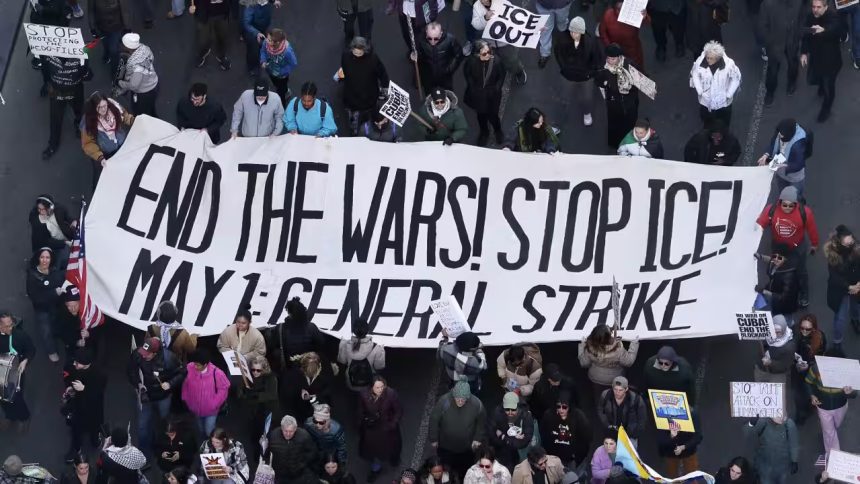
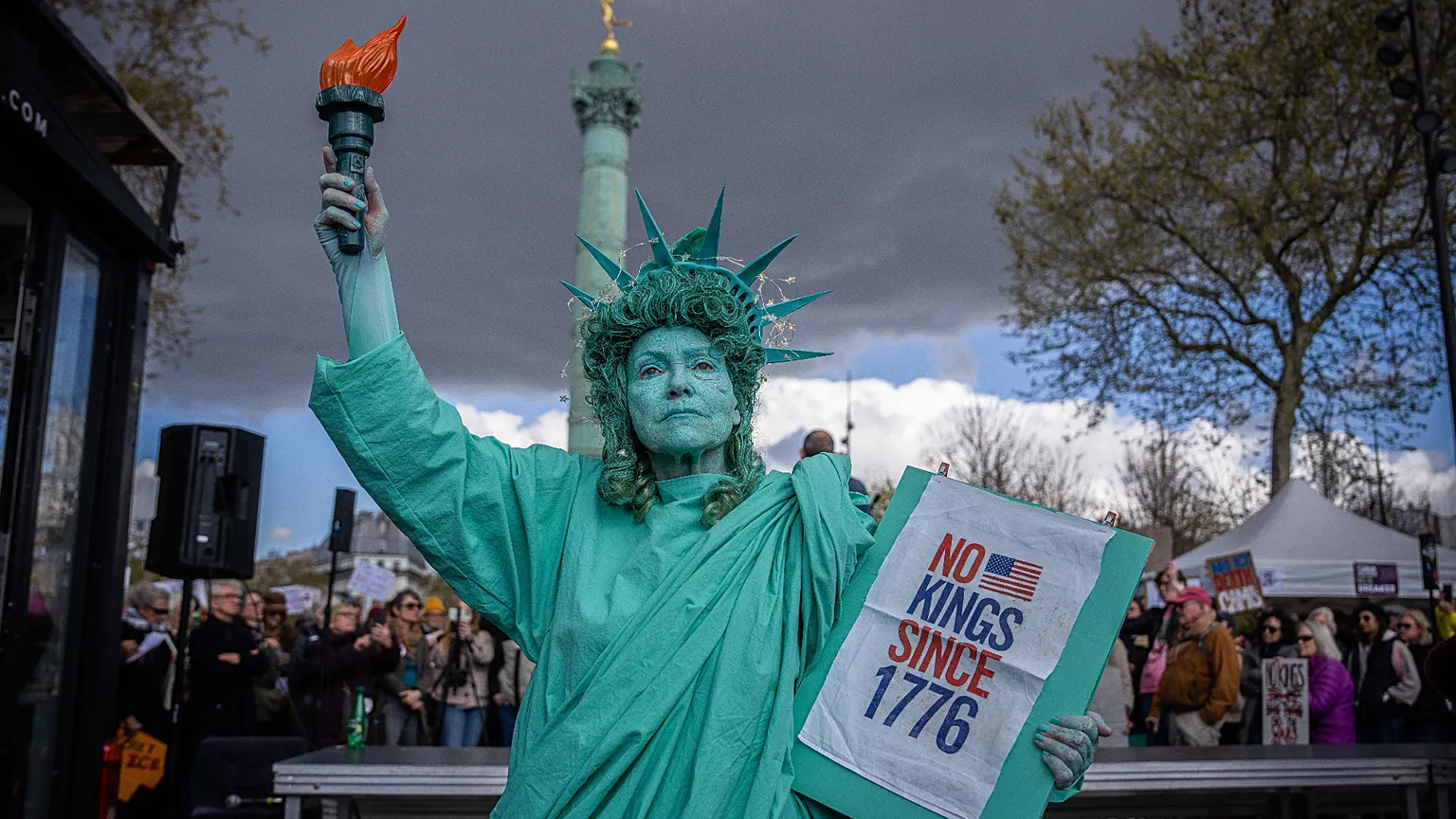
Large-scale protests swept across the United States on Saturday as demonstrators gathered in cities and towns nationwide for the third wave of “No Kings” rallies, a movement opposing President Donald Trump’s policies and leadership style.
Organisers say the protests, which have previously drawn millions, are aimed at challenging what they describe as increasingly authoritarian actions by the Trump administration. Key grievances include the administration’s stance on the war in Iran, aggressive federal immigration enforcement, and the rising cost of living.
“Trump wants to rule over us as a tyrant,” organisers said in a statement. “But this is America, and power belongs to the people—not to wannabe kings or their billionaire cronies.”
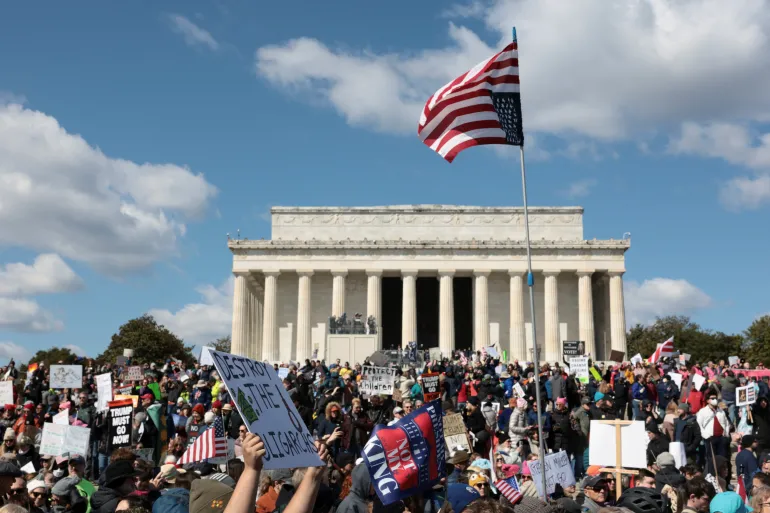
Demonstrations took place in nearly every major US city, including New York, Washington DC, and Los Angeles. In the nation’s capital, thousands marched through downtown streets, with crowds filling the National Mall and lining the steps of the Lincoln Memorial. Protesters carried signs, chanted slogans, and displayed effigies of Trump, Vice President JD Vance, and other administration officials, calling for their removal from office.
More Read

In New York City, tens of thousands gathered in Times Square and marched through Midtown Manhattan, prompting road closures as police worked to manage the crowds. Previous protests in the city reportedly drew over 100,000 participants across all five boroughs.
One of the most prominent rallies took place in St Paul, Minnesota, where demonstrators linked their protests to the deaths of two American citizens—Renee Nicole Good and Alex Pretti—who were killed by federal immigration agents earlier this year. Their deaths have become a rallying point for critics of Immigration and Customs Enforcement (ICE). Thousands gathered outside the State Capitol, where several high-profile Democratic figures addressed the crowd. Musician Bruce Springsteen also performed, debuting a song critical of immigration enforcement.
While organisers insisted the protests were peaceful, some incidents of unrest were reported. In Los Angeles, authorities said two people were arrested after allegedly assaulting federal officers near the Roybal Federal Building. The Department of Homeland Security claimed that officers were struck with cement blocks during clashes with a group it described as “rioters.” Elsewhere in the city, police made additional arrests after protesters failed to comply with dispersal orders near a federal prison.
More Read

In Dallas, minor scuffles broke out when counter-protesters disrupted a march, leading to further arrests.
Despite these incidents, officials and organisers alike said the majority of demonstrations remained orderly. Several states deployed National Guard units as a precaution, though no widespread violence was reported.
The White House dismissed the protests, with a spokesperson calling them “Trump Derangement Therapy Sessions” and suggesting that only media coverage was sustaining public interest.
Since returning to office in January 2025, President Trump has expanded the use of executive powers, including restructuring parts of the federal government and deploying National Guard troops to cities despite objections from some state governors. He has also urged law enforcement officials to pursue cases against his political opponents.
Critics argue these actions are unconstitutional and threaten democratic norms, while supporters maintain they are necessary steps to restore stability in a country facing economic and political challenges.
More Read
Trump has rejected accusations that he is behaving like a monarch. “They’re referring to me as a king. I’m not a king,” he said in a previous interview.
Beyond major urban centres, protests also spread to smaller communities such as Shelbyville, Kentucky, and Howell, Michigan, highlighting the breadth of the movement. Demonstrators held signs opposing both immigration enforcement and US foreign policy, particularly the conflict involving Iran.
The protests have also reached beyond US borders. American expatriates gathered in cities including Paris, London, and Lisbon, echoing calls for Trump’s impeachment and removal from office.
With more demonstrations expected in the coming days, the “No Kings” movement appears to be gaining momentum, underscoring deep political divisions and growing public mobilisation across the country.