ABUJA — The Independent National Electoral Commission, INEC, has issued a stern warning to political parties, candidates and campaign managers ahead of the 2027 general elections, declaring that no political ambition is worth the blood of any Nigerian.
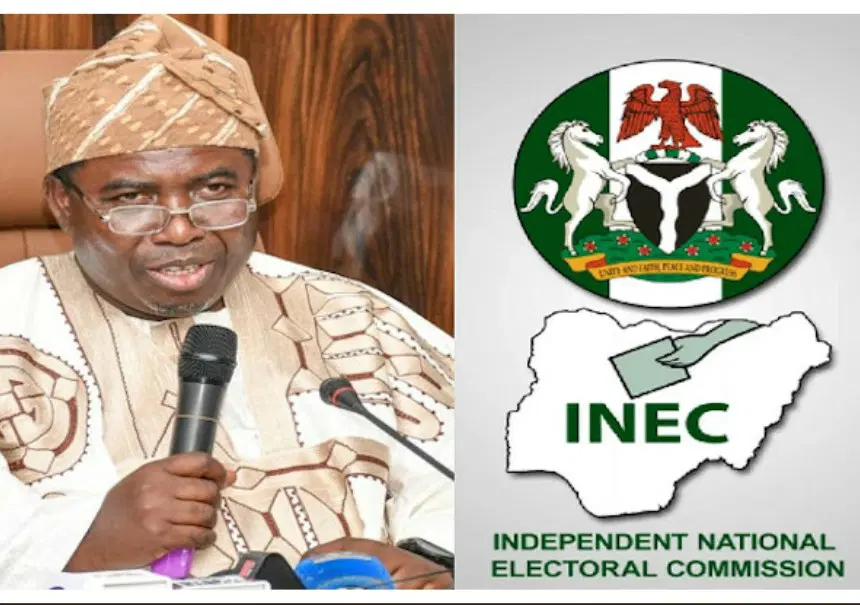
INEC Chairman, Professor Joash Amupitan, SAN, gave the warning in Abuja while speaking at a strategic workshop for editors organised by the Nigerian Guild of Editors, NGE, in collaboration with the electoral commission.
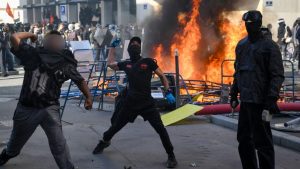
Amupitan said the commission would not allow the 2027 electoral process to degenerate into violence, intimidation, hate speech or other forms of electoral malpractice.
“As electioneering intensifies across the country, I must sound a clear note of warning to all political parties, candidates, and campaign managers: INEC will not stand by and allow political competition to devolve into violence, intimidation, or inflammatory rhetoric.
“Democracy thrives on the clash of ideas, not the clash of weapons or the proliferation of hate speech,” he said.
More Read

INEC activates early-warning system
The INEC chairman disclosed that the commission had activated an early-warning tracking framework through the Inter-Agency Consultative Committee on Election Security, ICCES, to monitor incidents capable of threatening the peaceful conduct of the elections.
According to him, the framework would track political violence, thuggery and dangerous campaign rhetoric as the election season gathers momentum.

He warned that political parties and candidates found to be involved in acts capable of undermining the electoral process would face sanctions.
“Any political party or candidate implicated in inciting violence, disrupting rivals’ rallies or deploying armed thugs will face direct statutory sanctions and swift prosecution.
“No political office in this country is worth the blood of a single Nigerian,” Amupitan declared.
Chairman raises alarm over alleged gun-wielding candidate
Departing from his prepared speech, the INEC chairman expressed concern over alleged incidents of political actors openly displaying firearms and making threats ahead of the elections.
He said he had been shown evidence shortly before his address involving an alleged NDC candidate in Kano State who was reportedly campaigning while brandishing a gun.
Amupitan also disclosed that another individual had allegedly threatened members of the commission with AK-47 rifles.
More Read

“Another person was threatening that with AK-47s, they will kill all of us in the commission. So, that is what elections have turned into in Nigeria of today,” he lamented.
He appealed to politicians and citizens to embrace patriotism and restraint, reminding Nigerians that elections are periodic processes for choosing leaders.
INEC declares war on vote-buying
On vote-buying, Amupitan said INEC would adopt an uncompromising approach to tackling the practice ahead of the 2027 general elections.
He described vote-buying as a major threat to the integrity of the electoral process, warning against treating citizens’ votes as commodities that could be purchased by politicians.
“The commission is taking an uncompromising stance against vote-buying in all its forms ahead of the 2027 general election,” he said.
The chairman disclosed that INEC was collaborating with the Federal Ministry of Justice, the Economic and Financial Crimes Commission, EFCC, the Independent Corrupt Practices and Other Related Offences Commission, ICPC, and the Nigerian Financial Intelligence Unit, NFIU, in efforts to tackle financial inducement and other forms of electoral malpractice.
Over 10.6 million new voters registered
Providing an update on the voter register, Amupitan disclosed that more than 10.6 million new voters were registered during the three phases of the Continuous Voter Registration, CVR.
He said Phase I, conducted from August 25 to December 10, 2025, recorded 2,611,266 registrants.
Phase II, which ran from January 5 to April 17, 2026, recorded another 4,121,835 registrants.
According to him, the third phase, conducted between May 11 and July 26, 2026, added 3,867,997 voters.
The three phases, he said, brought the total number of new registrants to more than 10.6 million.
INEC acquires 57,000 new BVAS devices
The commission has also strengthened its technological infrastructure ahead of the 2027 elections, with the acquisition of 57,000 new Bimodal Voter Accreditation System, BVAS, devices.
Amupitan said the new devices were acquired to enhance the efficiency and reliability of voter accreditation during the elections.
He also highlighted improvements to the electronic result management system, saying the enhanced eEC8A system would digitise polling unit result sheets, authenticate them cryptographically and facilitate their direct upload from polling units to the INEC Result Viewing Portal, IReV.
According to him, the system is designed to prevent manipulation of results at the polling unit level before figures are entered into the BVAS and transmitted to IReV.
INEC considers bulletproof vehicles for staff
The security of electoral officials also featured prominently during the chairman’s address.
Amupitan disclosed that during the commission’s North-West zonal engagement in Kaduna State, officials from Zamfara, Sokoto and other states raised concerns over insecurity and requested bulletproof vests and vehicles for personnel working in vulnerable areas.
He said INEC was considering the provision of bulletproof vehicles for staff operating in identified flashpoints.
The chairman added that the commission had completed physical readiness audits and staff engagements in the South-West and North-West geopolitical zones.
The exercises covered state office facilities, safe storage arrangements, security command protocols and logistics networks, while similar exercises are expected to take place in the remaining four geopolitical zones.
INEC announces new salary structure
On staff welfare, Amupitan disclosed that the commission had recently introduced the Consolidated Election Management Body Salary Structure, CEMBSS.
He said the new structure was accompanied by a 150 per cent increase in state office operational overheads, effective July 1, 2026.
“We are working on the cash backing to ensure immediate implementation,” he said.
Editors urged to protect electoral credibility
In his remarks, the President of the Nigerian Guild of Editors, Mr Eze Anaba, described the engagement with INEC as timely as Nigeria prepares for another general election.
Anaba said elections were not simply about casting ballots but also about building public confidence in the democratic process.
“Elections are not merely about casting ballots; they are about trust. They are about citizens believing that their votes will count, that the process will be transparent and that the institutions responsible for conducting elections will act fairly and professionally,” he said.
He stressed the important role of editors and the media in shaping public understanding of the electoral process.
According to him, editors have a responsibility to ensure that information reaching the public is accurate, fair, balanced and presented in the public interest.

NGE warns against misinformation and deepfakes
Anaba also highlighted the growing challenge posed by misinformation, disinformation, manipulated content, deepfakes and partisan narratives ahead of the 2027 elections.
He said the relationship between INEC and the media must therefore be built around openness, mutual respect and regular engagement.
“At the same time, we recognize that the media cannot perform this responsibility effectively without credible, timely and accessible information from the electoral management body,” he said.
The NGE president’s remarks underscored the need for stronger collaboration between electoral authorities and the media to ensure that Nigerians receive reliable information throughout the electoral cycle.
With the 2027 general elections drawing closer, INEC’s latest warnings signal a tougher approach to political violence, vote-buying, hate speech and other activities capable of undermining the credibility and peaceful conduct of the elections.