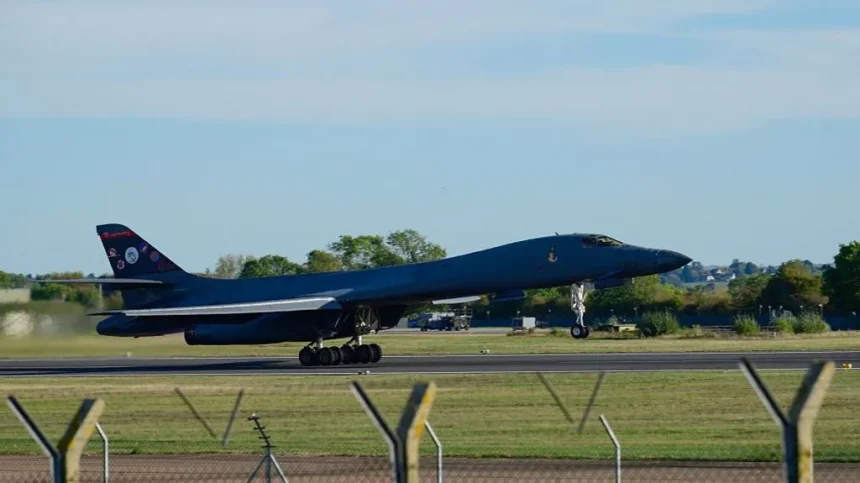
The United States has withdrawn all of its bomber aircraft from RAF Fairford in Gloucestershire, United Kingdom, following a security incident at the military base that is now being investigated by counter-terrorism police.
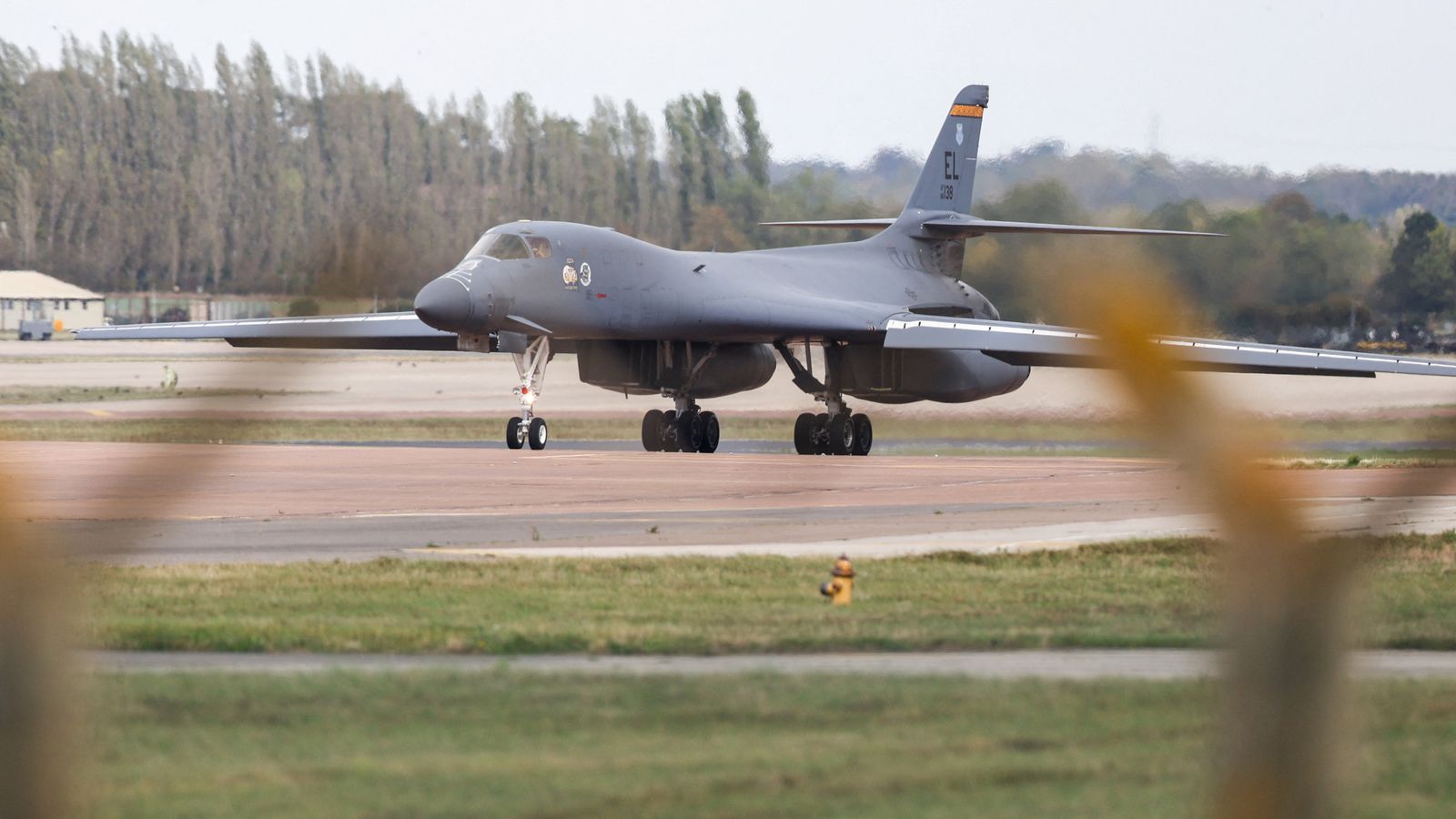
A Pentagon official confirmed on Sunday that the US military had moved its bombers — believed to include around a dozen B-1 aircraft — from RAF Fairford back to their home stations in the United States.
Although Washington has not publicly given a reason for the withdrawal, the decision comes days after a major security incident near the airbase and amid reports of new intelligence concerning a suspected Iran-backed threat.
British officials have not disputed reports that the withdrawal was linked to the security situation at RAF Fairford. According to sources cited by the BBC, the decision was made at an operational military level rather than as a political move and was communicated by US military authorities to their British counterparts.
The UK’s Ministry of Defence has so far declined to comment.
More Read

Security Alert Triggers Terror Investigation
The latest development follows an incident on 27 September, when police were alerted to three suspicious vehicles near RAF Fairford.
Five men, all UK nationals from London and aged between 23 and 25, were initially arrested on suspicion of explosives offences and later on suspicion of preparing a terrorist act.
More Read

However, all five were subsequently released on bail as part of what police described as an investigative decision based on operational experience and strategy.
A sixth man, a 25-year-old UK-Iranian national, was later arrested in London on suspicion of preparing terrorist acts. He too was subsequently released on bail.
The arrests have intensified scrutiny of security around RAF Fairford, a strategically important facility that has been used by the United States Air Force as a forward operating location for decades.
Fresh Threat Information Reported
The New York Times has reported that US commanders received new intelligence concerning an alleged Iran-backed plot targeting RAF Fairford.
According to the report, the information was connected to earlier threat warnings but contained more specific details that prompted US officials to act quickly.
Tracking websites subsequently showed B-1 bombers departing RAF Fairford on Sunday, with reports suggesting the aircraft began their journey back to the United States while aerial refuelling aircraft were being prepared to support their long-distance flights.
More Read

The development comes amid heightened tensions between Washington and Tehran.
Iran has strongly denied any involvement in the incident.
Days after the initial arrests, UK Prime Minister Andy Burnham said there were “strong indications” that Iran had played a role, although he did not provide further details.
US Secretary of State Marco Rubio also said the incident “clearly involved the hands of a foreign actor”, without publicly identifying the country involved.
US President Donald Trump, meanwhile, expressed surprise that the suspects had been released on bail, saying the United States knew “everything about them” and would not have released them under its own procedures.
RAF Fairford’s Strategic Importance
RAF Fairford has played an important role in US military operations from Europe for decades.
In recent months, the United States has operated B-1 and B-52 bombers from the base for missions connected to the Middle East, following British approval for US forces to use UK facilities for what London described as defensive strikes against Iranian capabilities.
The B-1 bombers operating from Fairford have reportedly carried precision-guided weapons, including bunker-busting bombs designed to penetrate hardened or underground targets, as well as air-to-surface missiles capable of striking heavily defended targets.
Their removal represents a significant change to the US military posture in the region, although Washington maintains that its long-range bomber force remains capable of conducting missions from bases inside the continental United States.
The US has previously demonstrated its ability to launch long-range bombing missions directly from American territory, including during Operation Midnight Hammer.
Iran Warns US Bases Could Become Targets
The withdrawal also comes against the backdrop of increasingly hostile rhetoric between Iran and the United States.
In July, Tehran warned that any military base used to launch attacks against Iranian territory could be considered a legitimate target for Iranian forces.
RAF Fairford therefore represents a potentially sensitive location because of its role in supporting US long-range bomber operations.
The base was used by the US Air Force’s Strategic Air Command during the Cold War and later played a role during the 1991 Gulf War.
More recently, B-52 bombers operated from the facility in March after the UK government approved the use of British bases for US defensive operations against Iranian military capabilities.

US Bombers Return to America
Despite the withdrawal, the Pentagon has stressed that US bomber aircraft remain capable of conducting operations “anywhere, anytime”, including missions launched and recovered from bases in the United States.
The movement of the B-1 bombers back to America therefore does not necessarily mean an end to US long-range strike capabilities in the Middle East.
However, removing the aircraft from RAF Fairford eliminates an important forward operating location for American bombers outside continental Europe and could complicate the logistics of future missions in the region.
The development comes as the wider Middle East remains tense following the outbreak of conflict after US and Israeli strikes against Iran on 28 February, followed by Iranian attacks against Israel and US-allied states in the Gulf.
For now, British counter-terrorism authorities continue to investigate the RAF Fairford incident, while Washington has provided no public explanation for the sudden withdrawal of its bomber fleet from the Gloucestershire base.