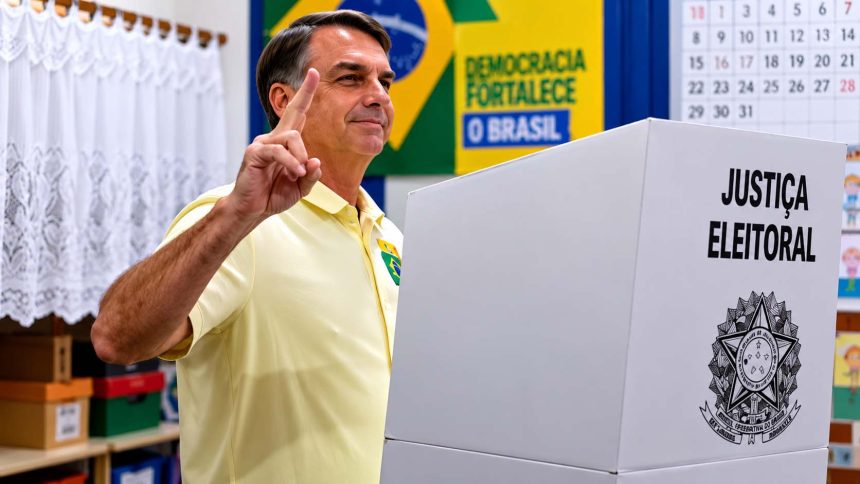
Brazil is heading for a dramatic presidential run-off after right-wing candidate Flávio Bolsonaro narrowly defeated incumbent President Luiz Inácio Lula da Silva in the first round of voting, but failed to secure the outright majority needed to win the presidency.
With almost all votes counted, Bolsonaro secured about 47 percent of the vote, compared with approximately 45 percent for Lula, setting the stage for a decisive second-round contest on 25 October.
The result has intensified political uncertainty in Latin America’s largest country and economy, with the election widely viewed as a major test of Brazil’s political direction and its relationship with the United States.
Flávio Bolsonaro, 45, is the eldest son of former President Jair Bolsonaro, who is currently serving a 27-year prison sentence after being convicted over his role in an alleged attempt to overturn the result of Brazil’s 2022 presidential election.
Jair Bolsonaro was barred from seeking another presidential term and subsequently endorsed his son Flávio as the right-wing candidate.
More Read

Following Sunday’s vote, Flávio Bolsonaro expressed confidence that he could defeat Lula in the run-off.
“I am very happy with the real possibility that, three weeks from now, Brazil will give a definitive answer by choosing a modern government,” Bolsonaro said, according to AFP.
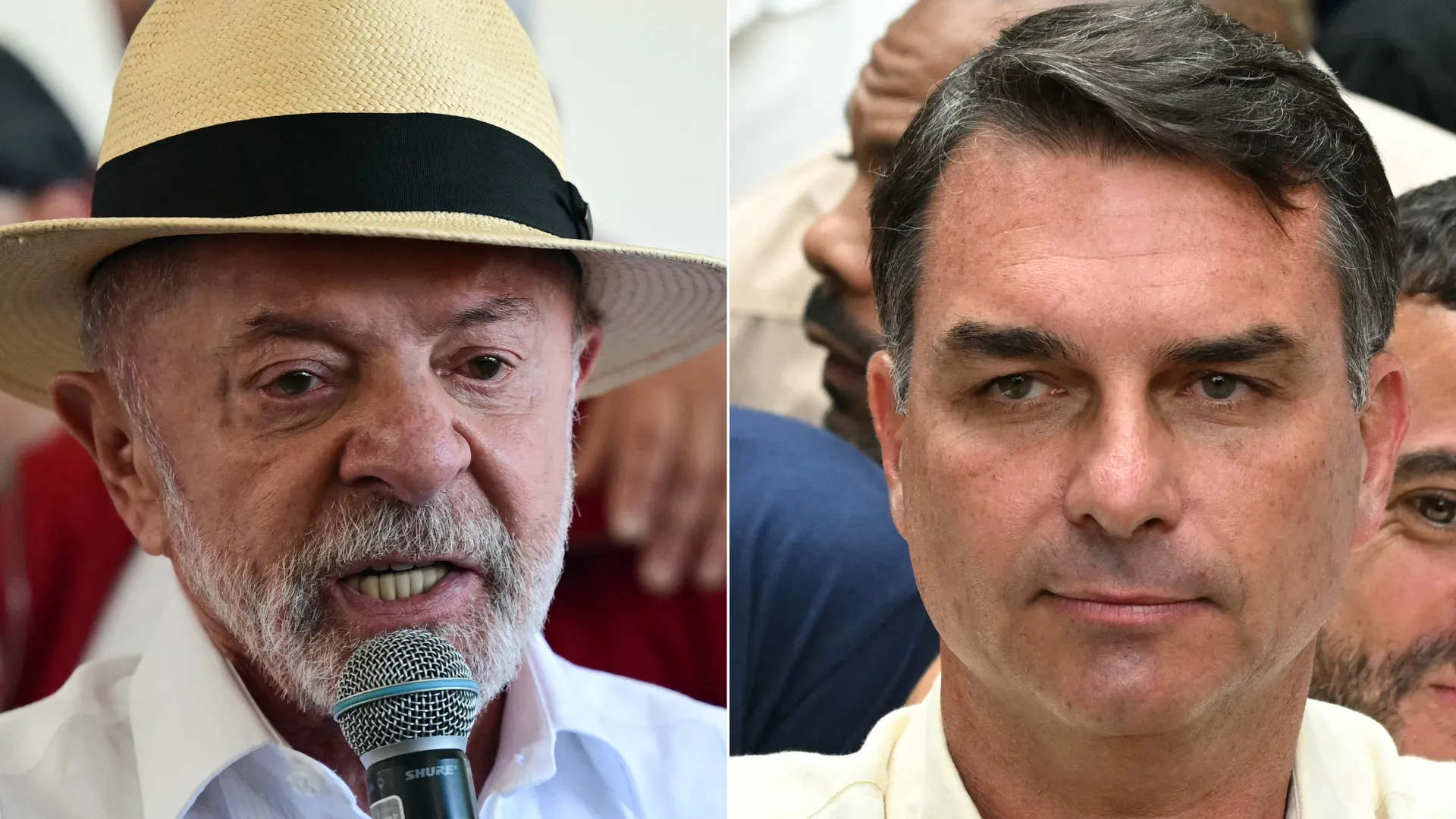
Lula, 80, acknowledged that the first-round result was unexpected but insisted that the election remained wide open.
More Read

“The game is about to start. We are in extra time. In extra time, we will win over the Brazilian people,” Lula said.
A Deeply Divided Brazil
The election has once again exposed the deep political divisions within Brazilian society.
Lula, a veteran left-wing politician seeking a fourth presidential term, remains particularly strong among poorer voters, women, Catholics and voters in Brazil’s northeastern states.
His campaign has focused heavily on social welfare, poverty reduction, economic development and the defence of democratic institutions.
Bolsonaro, meanwhile, has attracted strong support in southern Brazil, among wealthier voters and evangelical Christians.
More Read
His campaign has centred on crime, national sovereignty, government spending, economic reform and tougher action against organised crime.
After casting his ballot, Lula warned that Brazilians were facing a choice between “democracy and barbarism.”
Bolsonaro, for his part, said his objective was to “free the Brazilian people.”
Bolsonaro’s Political Machine Gains Ground
The first-round results also delivered significant gains for Bolsonaro’s Liberal Party, known as the PL.
The party emerged with the strongest showing among governors, senators and federal deputies in the results available so far, potentially giving the political movement considerable influence in Congress regardless of the presidential outcome.
The development could become particularly important if Flávio Bolsonaro wins the presidency, as a stronger congressional base would make it easier for his administration to advance its legislative agenda.
Flávio has also pledged to grant amnesty to his father and supporters convicted over the violent 8 January 2023 attacks on Brazil’s government institutions, when supporters of Jair Bolsonaro stormed government buildings in Brasília following his defeat in the 2022 election.
Jair Bolsonaro’s wife, Michelle Bolsonaro, was also elected to the Senate in Sunday’s voting, further strengthening the family’s political presence.
US-Brazil Relations in Focus
The election is also being closely watched beyond Brazil.
A victory for Flávio Bolsonaro could bring Brazil closer to the administration of US President Donald Trump and potentially result in stronger cooperation between Washington and Brasília on organised crime and drug trafficking.
Earlier this year, Bolsonaro successfully lobbied the United States to designate Brazil’s two largest criminal organisations as terrorist groups.
Trump previously imposed tariffs on Brazilian goods and sanctioned senior Brazilian officials and judges, citing the prosecution of Jair Bolsonaro as part of his justification.
A Bolsonaro victory could therefore mark a significant shift in Brazil’s foreign policy and its relationship with Washington.
President Lula, meanwhile, has made Brazilian sovereignty a central theme of his campaign and has accused the United States of attempting to influence Brazil’s political affairs — allegations Washington has denied.
Brazil’s Supreme Electoral Court said no evidence of international interference had been identified in Sunday’s election.
Crime and Corruption Dominate Campaign
Crime and insecurity were among the major concerns for Brazilian voters.
Although Brazil’s homicide rate has declined, street crimes such as mobile-phone theft remain highly visible and continue to fuel public concern.
Bolsonaro has promised to classify major criminal gangs as terrorist organisations and establish maximum-security prisons inspired by El Salvador’s controversial crackdown on organised crime.
He has also supported tougher security measures and a more aggressive approach to drug trafficking.
Lula has taken a different approach, focusing on attacking the financial networks that support organised crime, improving homicide investigations and investing in the country’s prison system.
Corruption also emerged as a major campaign issue following a financial scandal involving jailed banker Daniel Vorcaro, who has been accused of orchestrating one of Brazil’s largest financial fraud schemes.
The scandal has touched prominent figures across Brazil’s political landscape.
Bolsonaro acknowledged asking Vorcaro to provide financial backing for a biographical film about his father after recordings emerged in which Bolsonaro was heard discussing a payment of about 134 million reais, equivalent to approximately $25.9 million.
The scandal also indirectly affected the Lula administration after police suggested Vorcaro had contacted Supreme Court Justice Alexandre de Moraes seeking assistance in avoiding arrest. Moraes has denied wrongdoing.
Economy and Social Welfare
Economic concerns are also expected to play a decisive role in the run-off.
Brazil is facing slowing economic growth alongside high levels of household debt, placing economic management firmly at the centre of the election.
Lula has highlighted his record of social programmes, particularly Bolsa Família, which provides financial assistance to low-income families while encouraging children to remain in school and receive essential healthcare.
His administration has also expanded access to universities and promoted policies aimed at reducing poverty and inequality.
Lula’s economic and social policies have been credited with helping millions of Brazilians escape poverty during his earlier periods in office.
However, his environmental record has faced criticism from both sides of the political spectrum.
Although his government has strengthened environmental protections and helped reduce Amazon deforestation compared with the levels recorded during Jair Bolsonaro’s presidency, Lula has also backed oil exploration that has attracted criticism from environmental campaigners.
The Final Battle
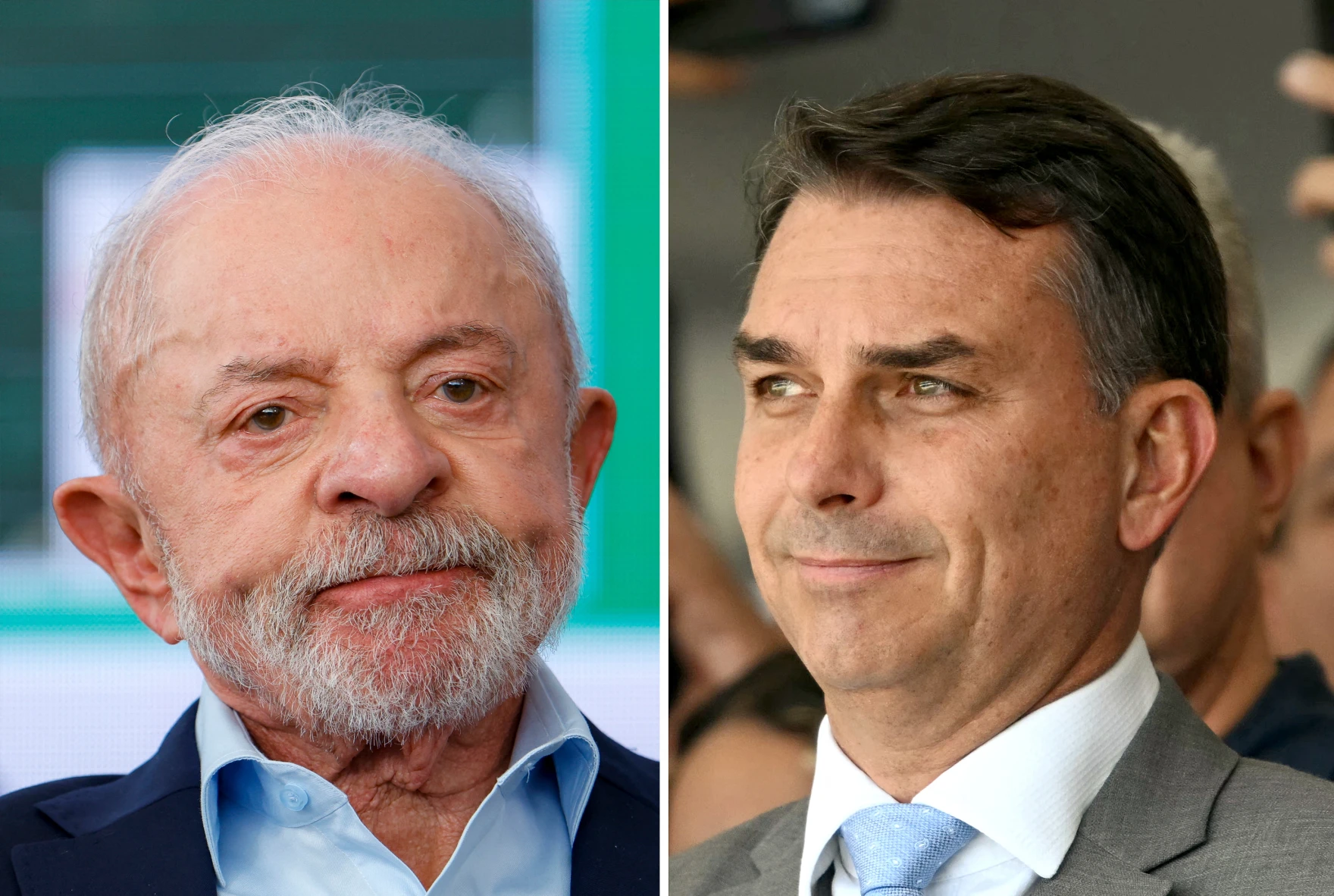
The result of the first round means neither candidate has secured Brazil’s presidency.
The country will now return to the polls on 25 October, when voters will choose between Lula’s left-wing platform and Flávio Bolsonaro’s conservative agenda.
The outcome could determine whether Brazil remains broadly aligned with Lula’s approach to social welfare, environmental protection and strategic autonomy, or moves towards the increasingly influential right-wing political movement associated with Bolsonaro and closer ties with the Trump administration.
With only a narrow gap separating the two candidates, the final weeks of the campaign are expected to be fiercely contested.
For Brazil, the choice on 25 October will be more than a presidential election — it will be a decision over the country’s political direction, economic priorities and place in a rapidly changing Latin American landscape.