The United Kingdom, France and Canada have announced coordinated sanctions targeting Israeli settlements in the occupied West Bank, accusing Israel’s government of failing to prevent escalating violence and the forced displacement of Palestinians by settlers.
The measures, announced on Tuesday, will prohibit the import of goods from targeted illegal settlements and impose restrictions on companies and individuals providing services linked to settlement expansion.
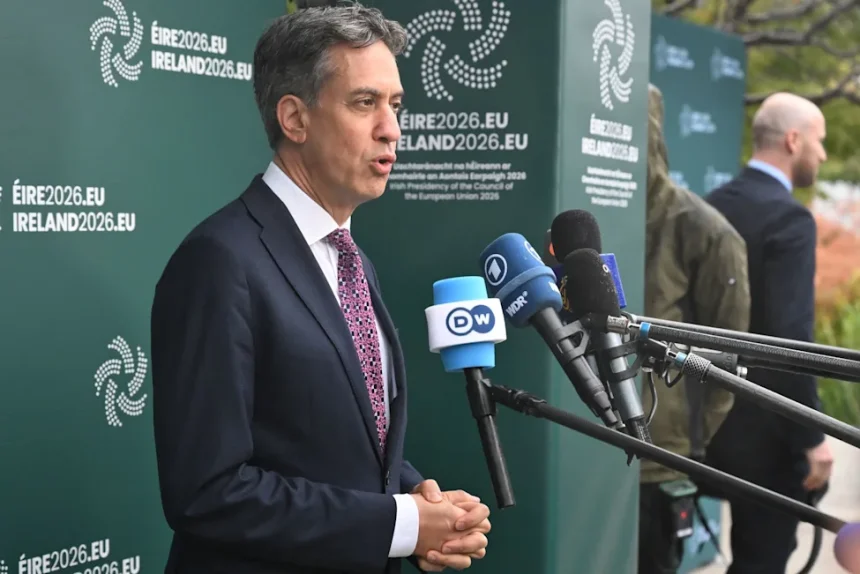
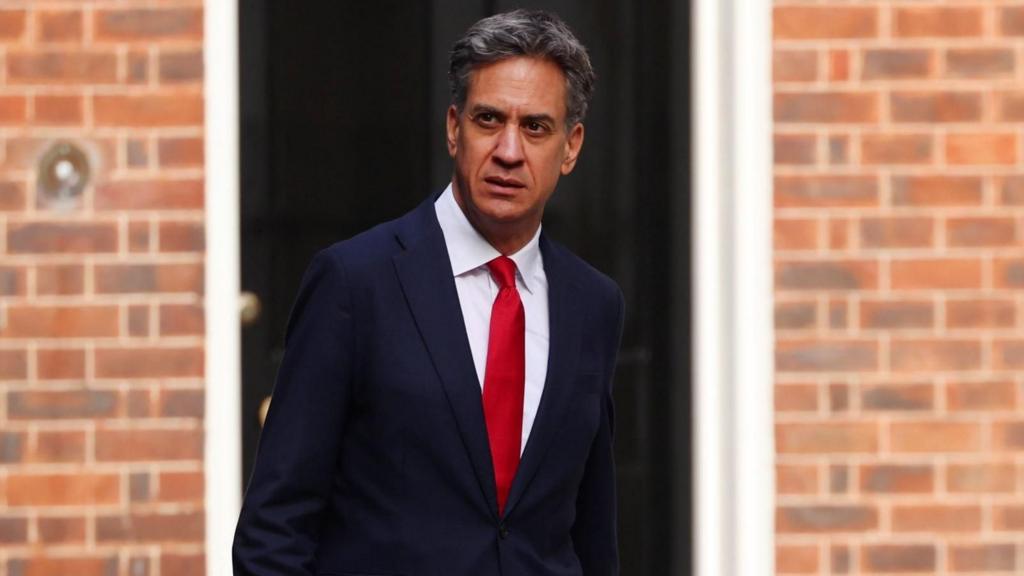
UK Foreign Secretary Ed Miliband described the action as the beginning of what he called a “new approach” to the Israeli-Palestinian conflict, saying Britain was moving beyond condemning abuses to taking concrete action.
“This is the beginning of a new approach, one that not only calls out injustice and suffering but acts,” Miliband told MPs.
The three countries said their coordinated action represented a further shift in their policies towards protecting the prospects of a two-state solution, under which Israel and a future Palestinian state would coexist.
More Read

UK Accuses Israel of Turning Blind Eye
Miliband told the House of Commons that the British government believed Palestinians were facing ethnic cleansing in parts of the West Bank at the hands of violent settlers.
“The British government agrees that there is ethnic cleansing of Palestinians in areas of the West Bank, perpetrated by settler terrorists,” he said.
More Read

He accused successive Israeli governments of failing to adequately confront settler violence and said some members of the Israeli government had made statements and taken actions supportive of the forced displacement of Palestinians.
Miliband also said Britain considered Israel’s continued occupation of the West Bank unlawful, citing the expansion and entrenchment of Israeli control and the construction of settlements.
He said the position was consistent with a 2024 advisory opinion by the International Court of Justice.
According to the foreign secretary, Britain would introduce a comprehensive sanctions regime over the next six to nine months, targeting settlement activity rather than Israel as a state.
“The sanctions regime will target illegal settlements and settlement expansion, not Israel,” he said.
The UK will also prohibit the advertising of illegal West Bank settlements in Britain.
More Read

Israel Announces Retaliatory Measures
Israel strongly rejected the British government’s accusations.
Foreign Minister Gideon Saar described Miliband’s claim as an “outrageous lie” and announced a series of retaliatory measures against Britain.
Among the measures, Israel said it would shut the UK consulate in East Jerusalem, which represents British government interests in Jerusalem, the West Bank and Gaza.
“We know that we have many friends in Britain,” Saar said.
“Unfortunately, we have a hostile Labour government that is consistently operating against the State of Israel, and it has left us no choice but to respond to its hostile actions.”
Saar also announced that 11 British MPs would be barred from entering Israel, accusing them of antisemitic and anti-Israel activity.
Those named include former Labour leader Jeremy Corbyn, Labour MP Diane Abbott and all five sitting Green Party MPs.
Israel also said it would remove British representatives from the International Gaza Support Center in Kiryat Gat and terminate UK activities aimed at training Palestinian Authority forces in the West Bank.
Israeli President Isaac Herzog criticised the British move, saying it would “fall on the wrong side of history”.
He also accused Britain of interfering in the democratic affairs of a sovereign country and urged governments to pursue dialogue rather than sanctions.
E1 Settlement Plans Raise International Concern
The British announcement comes amid renewed international concern over Israeli plans to construct approximately 1,200 settlement homes in the strategically important E1 area east of Jerusalem.
The proposed development has attracted widespread international condemnation because of its potential impact on the territorial contiguity of a future Palestinian state.
Miliband told MPs that construction in the E1 area could make a negotiated two-state solution effectively impossible by dividing the West Bank.
He argued that the latest sanctions were therefore necessary to protect the possibility of a viable Palestinian state.
Israel, however, maintains that the final status of settlements and borders should be resolved through direct negotiations with the Palestinians.
Britain Defends Israel’s Right to Exist
While announcing the sanctions, Miliband stressed that Britain continued to recognise Israel’s right to exist as a homeland for the Jewish people.
The foreign secretary, who spoke about his Jewish heritage and childhood visits to Israel, also condemned antisemitism in Britain.
“My personal story and that of thousands of British Jews is one of the many reasons why I say to anyone here or around the world who questions Israel’s right to exist as a homeland for the Jewish people – you are wrong,” he said.
He also condemned the Hamas-led attack on southern Israel on 7 October 2023, which triggered the ongoing Gaza war.
Miliband said the attack had “terrible echoes” of the centuries of persecution suffered by Jewish people and acknowledged Israel’s right to defend its population.
However, he said that right did not justify violations of international humanitarian law.
He pointed to allegations concerning civilian deaths, mass displacement and restrictions on humanitarian assistance in Gaza, saying international courts should determine whether war crimes or genocide had been committed.
Israel has repeatedly rejected allegations of genocide, crimes against humanity and war crimes, maintaining that its military operations comply with international law.
Jewish Leaders Condemn UK Decision
The sanctions have also triggered criticism within Britain’s Jewish community.
Chief Rabbi Sir Ephraim Mirvis described the announcement as “a truly dark day for British Jews”.
He accused the government of engaging in what he called political flag-bearing for anti-Israel rhetoric and warned that such measures could embolden people who use hatred against Jews.
The Board of Deputies of British Jews also expressed “deep regret” over the decision.
The organisation urged both the British and Israeli governments to avoid allowing political or party interests to take precedence over national interests.
Conservatives Criticise Labour Government
The British opposition also attacked the sanctions.
Conservative shadow foreign secretary Tom Tugendhat agreed that Israeli settlements in the occupied West Bank were illegal but argued that the government’s approach was unlikely to achieve its stated objectives.
He accused ministers of pursuing policies that the Foreign Office knew would not work.
Tugendhat also criticised what he described as the government’s attempt to reduce the complexity of the Israeli-Palestinian conflict to a single issue.
Israeli Foreign Minister Saar later said he had spoken with Tugendhat and Conservative leader Kemi Badenoch, thanking them for their opposition to the British government’s policy.
US Rejects Joint Sanctions
The United States has indicated that it will not follow Britain, France and Canada in imposing similar measures.
US Secretary of State Marco Rubio said Washington had no comment on the joint action but added that the United States would not take the same approach as Britain.
Donald Trump’s ambassador to Israel, Mike Huckabee, had earlier warned that Washington would respond to the sanctions.
He suggested that measures could potentially be taken not only by the federal government but also by individual US states, warning that British businesses could face significant economic consequences.
The United States remains Israel’s most powerful international ally.
Palestinians Welcome Sanctions
The Palestinian presidency welcomed the British decision, describing it as an important step towards confronting Israel’s settlement system and what it called violations against Palestinians.
The sanctions come amid a significant increase in settler attacks against Palestinians and their property in the West Bank since the outbreak of the Gaza war.
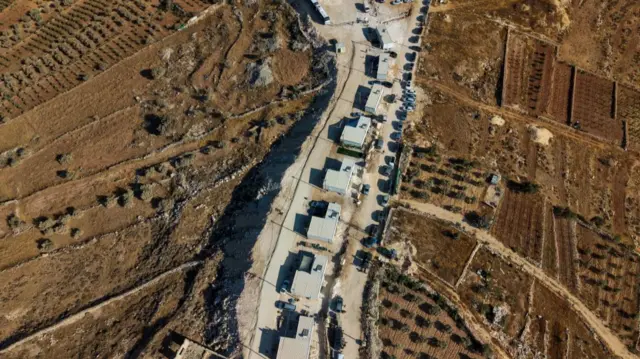
Israel has established about 160 settlements in the West Bank and East Jerusalem since capturing the territories during the 1967 Middle East war.
The settlements are regarded as illegal under international law, although Israel disputes this interpretation.
Approximately 700,000 Israeli settlers now live in the West Bank and East Jerusalem alongside an estimated 3.3 million Palestinians.
Wider UK Sanctions
Alongside the measures against Israeli settlements, Britain also announced sanctions targeting the financing wing of Lebanon-based Hezbollah, as well as additional sanctions against Iran aligned with measures imposed by the United States and European Union.
The latest intervention comes nearly a year after the British government formally recognised a Palestinian state, arguing that Britain had a moral responsibility to support a peaceful future for Israelis and Palestinians.
Britain says its latest measures are designed to preserve the possibility of a two-state solution.
Israel opposes recognising Palestinian statehood as a precondition for negotiations, while the Palestinian Authority supports the creation of an independent Palestinian state alongside Israel.
Hamas, which does not recognise Israel, has previously indicated that it could accept an interim Palestinian state based on the de facto 1967 borders without formally recognising Israel, while maintaining its demand for the right of return for Palestinian refugees.
The new sanctions mark one of the strongest diplomatic and economic measures Britain has taken against Israeli settlement activity and are likely to further strain relations between London and Jerusalem.