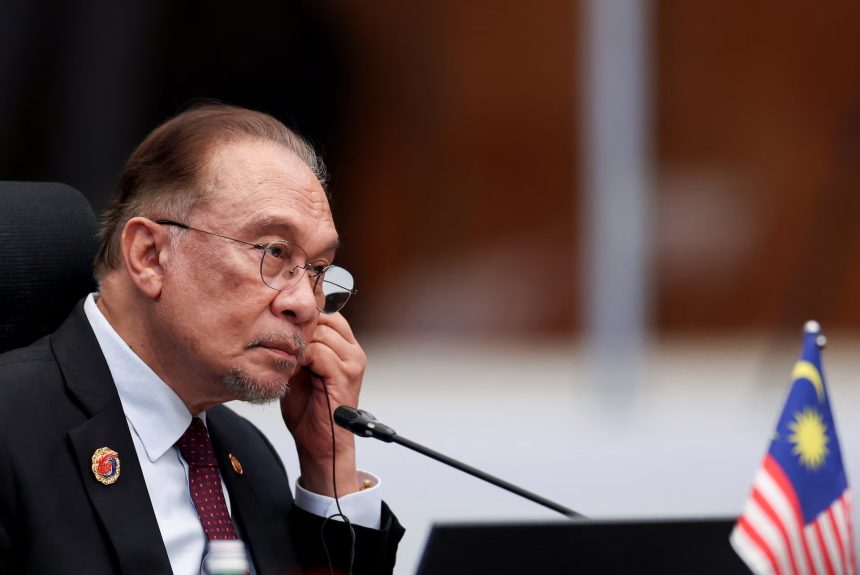
Malaysia has secured a rare breakthrough in the increasingly volatile Persian Gulf, with Prime Minister Anwar Ibrahim announcing that Iranian authorities have granted Malaysian vessels early clearance to pass through the strategic Strait of Hormuz.
In a televised address on Thursday, Anwar expressed gratitude to Iran’s President, Masoud Pezeshkian, for allowing Malaysian ships to navigate the critical waterway, which has been effectively restricted amid escalating tensions linked to the ongoing conflict between Tehran, the United States, and Israel.

“We are in the process of securing the release of the Malaysian oil tankers and the workers involved so they can continue their journey home,” Anwar said, without specifying how many vessels had successfully transited or the exact terms of their clearance.
The Strait of Hormuz, a narrow maritime corridor connecting the Persian Gulf to global markets, is one of the world’s most vital energy arteries, handling roughly one-fifth of global oil and liquefied natural gas (LNG) shipments. However, maritime traffic has plummeted dramatically in recent days—from an average of about 120 vessels per day before the crisis to just a handful currently navigating the route.
More Read

Iran has maintained that the strait remains open to countries it considers neutral, while simultaneously asserting control over passage. Tehran has acknowledged involvement in multiple incidents targeting commercial vessels and is reportedly considering legislation that would formalize a toll system for ships transiting the waterway. Some reports suggest vessels could be asked to pay up to $2 million for guaranteed safe passage.
Malaysia, which traditionally adheres to a non-aligned foreign policy, appears to have benefited from its diplomatic positioning. Still, the Southeast Asian nation is not immune to the broader economic fallout.
While Malaysia is a major exporter of liquefied natural gas through its state-owned energy giant, Petronas, it remains heavily dependent on crude oil imports, sourcing nearly 70 percent of its supply from the Gulf region.
More Read

Anwar warned that the disruption would have tangible domestic consequences, including rising fuel costs, increased food prices, and pressure on agricultural inputs such as fertilizer.
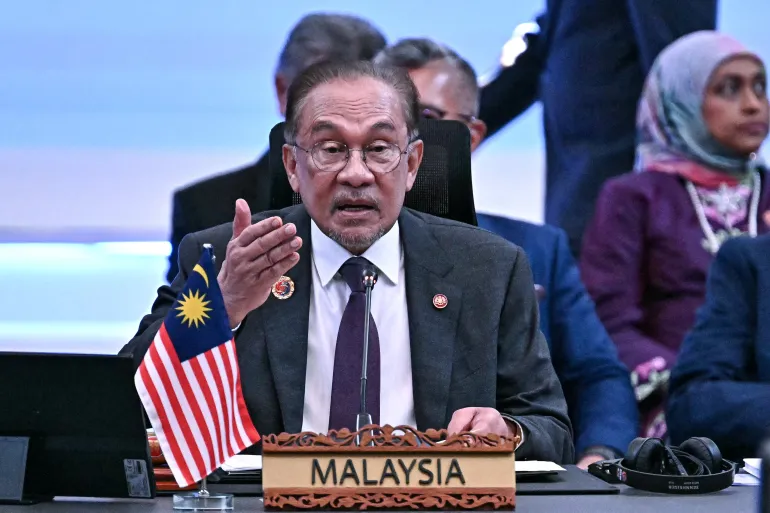
“Food supplies are affected; prices will certainly rise. Fertiliser as well, and of course, oil and gas,” he said. “There are countries whose impacts are far worse than ours, but that does not mean we are spared entirely.”
To cushion the impact, the Malaysian government is preparing a series of measures, including reducing subsidised petrol quotas and gradually implementing work-from-home arrangements for civil servants to conserve fuel.
Despite Malaysia’s limited success in navigating the crisis, analysts warn that the broader situation remains precarious. With shipping traffic still severely reduced and geopolitical tensions unresolved, the Strait of Hormuz is operating far below normal capacity—raising fears of prolonged disruptions to global energy markets.
For now, Malaysia’s passage offers a narrow window of relief in an otherwise tightening chokehold on one of the world’s most critical trade routes.