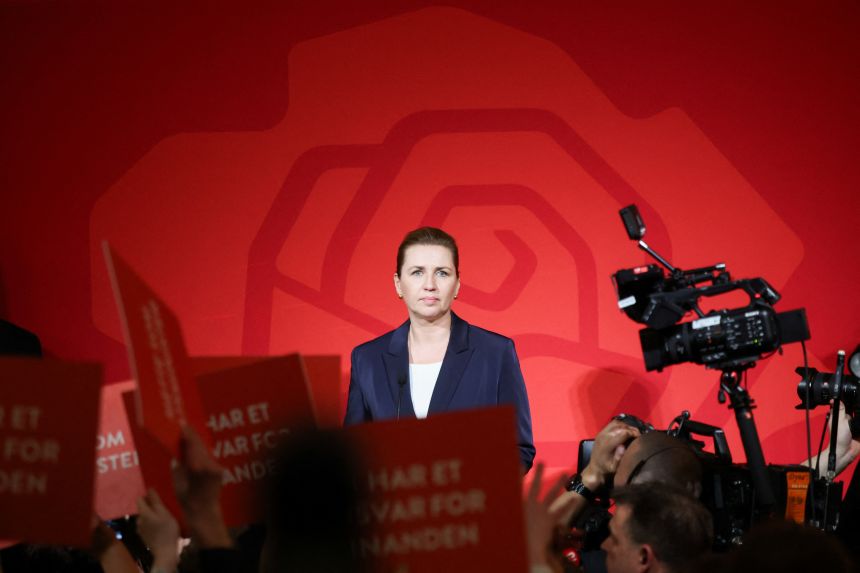
Denmark has been plunged into political uncertainty following an inconclusive general election that saw Prime Minister Mette Frederiksen’s center-left bloc lose ground, leaving no party or alliance with a clear majority in parliament.
Official results show that Mette Frederiksen’s Social Democrats remain the largest single party, but with just 21.9% of the vote — a sharp decline from the 27.5% they secured in 2022. Her two coalition partners in the outgoing government also suffered losses, compounding the challenge of forming a new administration.
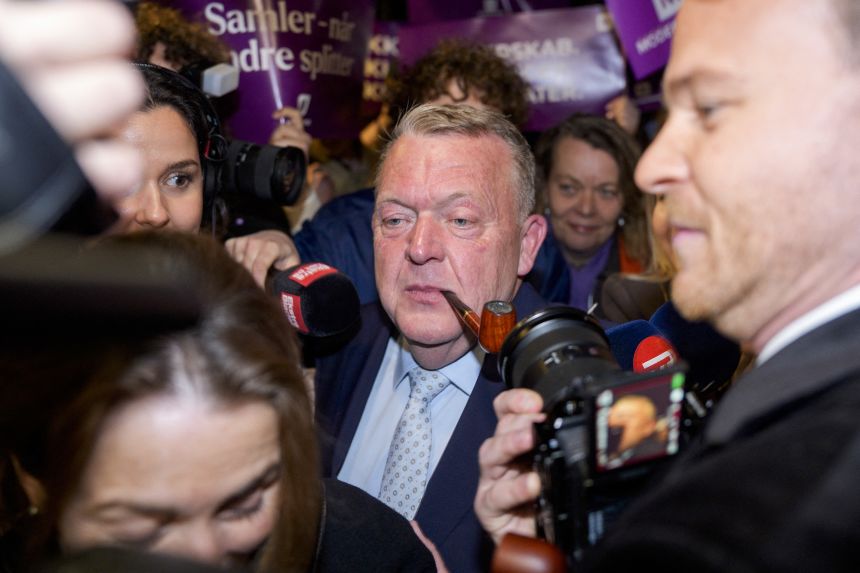
With neither the traditional “red bloc” on the left nor the “blue bloc” on the right able to command a majority in the 179-seat Folketing, attention has now turned to Lars Løkke Rasmussen, the centrist former prime minister whose Moderate Party holds the balance of power with 14 seats. His position effectively makes him the kingmaker in determining Denmark’s next government.
Frederiksen has made clear she intends to remain in office, emphasizing the need for stability amid global uncertainty. “The world is unsettled. There are strong winds around us. Denmark needs a stable government, a competent government. We are ready to take the lead,” she said after the results were confirmed.
More Read

However, coalition negotiations are expected to be complex. Troels Lund Poulsen, a leading figure on the center-right, has already ruled out joining another government led by Frederiksen’s Social Democrats, signaling a potential deadlock in talks.
Løkke Rasmussen, whose centrist platform positions him between the rival blocs, has called for compromise, urging political leaders to move beyond campaign divisions. “We are one tribe. We must come together. We must not be divided,” he said, appealing for a broad-based coalition that reflects national unity.
The election campaign itself was dominated largely by domestic concerns, including the rising cost of living, pension reforms, and debates over taxation. While Frederiksen has earned international recognition for her strong support of Ukraine and firm stance on immigration, analysts suggest that her government’s focus on global issues may have cost her support at home.
More Read

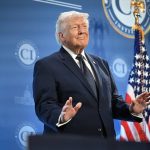
Her decision to call the election early, months ahead of schedule, was widely seen as a strategic move aimed at capitalizing on her leadership during tensions involving Donald Trump over Greenland. Yet the issue ultimately played a minor role in the campaign, as there is broad political consensus in Denmark regarding the territory’s status.
Frederiksen acknowledged the disappointing outcome but sought to put it in perspective, noting that electoral losses are common for incumbents seeking a third term. “I have been in charge of this wonderful country for nearly seven years,” she said. “We have weathered the pandemic; we have had to deal with war. We have been threatened by the American president, and in those nearly seven years, we have seen a four percent decline.”
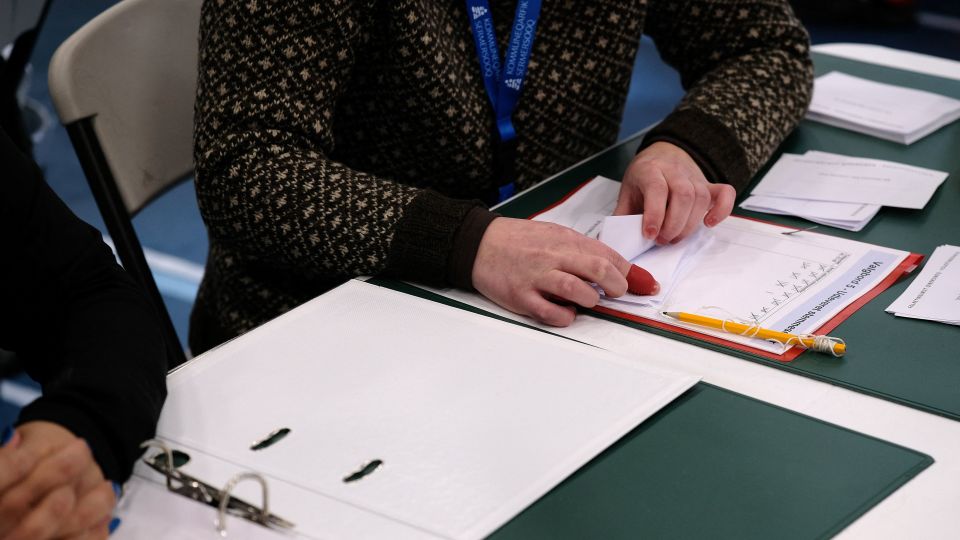
Denmark’s proportional representation system typically produces coalition governments, often after weeks of negotiations. With more than 4.3 million voters eligible in this election and no clear path to power for any bloc, the coming days are expected to be marked by intense political bargaining.
As talks begin, the central question remains whether Frederiksen can secure a third term or whether a new political alignment will emerge to lead one of Europe’s key NATO and European Union member states.
For now, Denmark waits as its political future hangs in the balance.