Abuja, Nigeria — The Minister of Power, Adebayo Adelabu, has issued a formal apology to Nigerians over the prolonged and severe electricity outages that have disrupted daily life and economic activities across the country in recent weeks.
Speaking at a press briefing in Abuja on Tuesday, Adelabu acknowledged the hardship caused by the worsening power situation, particularly amid the intense dry-season heat being experienced nationwide.
“I want to apologise to Nigerians, officially now, coming from me as the Minister of Power, for this temporary issue that is leading to hardship being experienced, especially during this dry season, where there is so much heat everywhere,” he said.
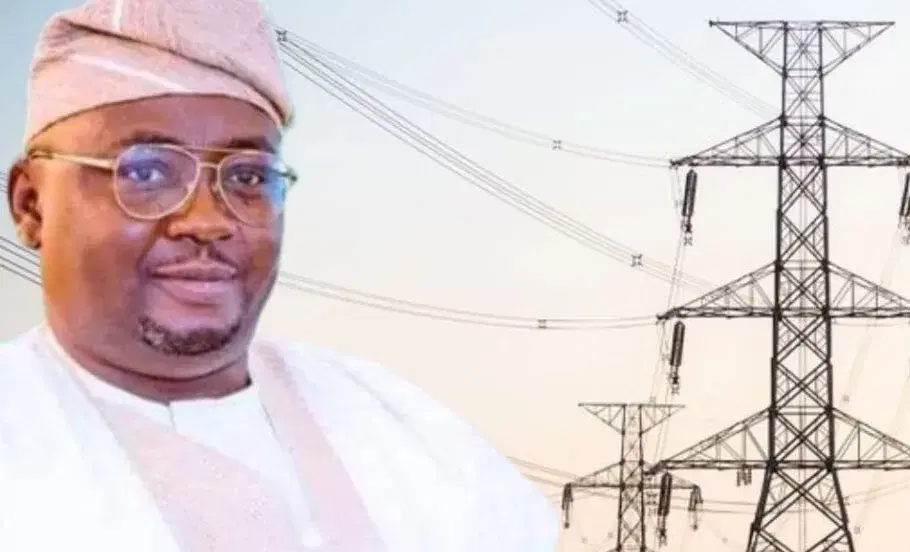
The minister noted that the persistent blackouts have significantly impacted businesses, schools, and industries, further straining an already challenged economy. He, however, explained that the situation was largely due to factors beyond the immediate control of the government.
More Read

Adelabu attributed the disruptions primarily to reduced gas supply to power-generating plants, stemming from pipeline maintenance issues, supply constraints, and longstanding challenges with gas producers meeting domestic supply obligations.
Despite the ongoing crisis, the minister assured Nigerians that relief is in sight. He disclosed that efforts are underway to restore stability to the power sector, with noticeable improvements expected within the next two weeks.
“I can tell you, with the committee that we have set up, and commitments from gas suppliers, and the timeline for repair of the gas pipelines, two weeks from now, we should start seeing improvements in supply,” Adelabu stated.
More Read

According to him, critical repair works, including those involving key gas infrastructure, are progressing, and once completed, will significantly boost electricity generation capacity.
To address the recurring issue of gas supply shortages, Adelabu revealed that the government has established a dedicated committee tasked with monitoring compliance among gas producers. The initiative aims to ensure that suppliers meet their obligations to the domestic power sector.
He also highlighted plans to improve payment structures within the electricity value chain, a move expected to incentivise gas companies to increase supply to power plants.
Nigeria’s electricity sector, which relies heavily on gas-fired generation, has long grappled with systemic challenges, including infrastructure deficits and financial constraints. Adelabu acknowledged these issues but maintained that the government is working round the clock to stabilise the grid.
“We are working on it 24/7 to make sure that we go back to the trajectory of 2025, when Nigerians commended us for a good job well done,” he said.

More Read

Reaffirming the Federal Government’s commitment to long-term reforms, the minister reiterated the target of achieving 6,000 megawatts of electricity generation before the end of 2026. He described the current situation as a temporary setback in a broader effort to transform the sector.
“Power generation will improve, transmission will improve, distribution will improve, and that 6,000 megawatts will be achieved before the end of this year, and Nigerians will be better for it,” Adelabu assured.
He added that the government’s goal is not only to restore previous levels of performance but to surpass them in the coming months.
“If we could provide such service in 2025, this is 2026, we are willing to do more, to even do better,” he said.
As Nigerians continue to endure erratic power supply, attention will now turn to the government’s promised timeline and whether the expected improvements will materialise in the weeks ahead.