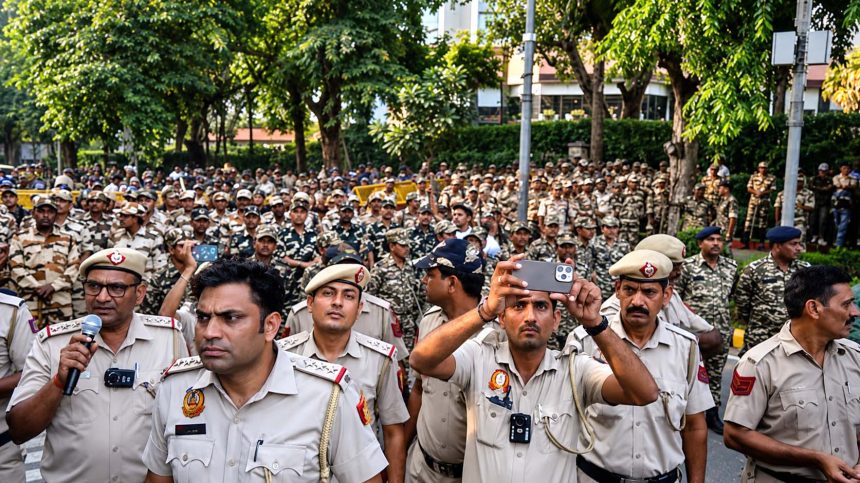
More than 30,000 police and paramilitary personnel have reportedly been deployed in India’s capital as protesters demand electoral reforms and the resignation of Chief Election Commissioner Gyanesh Kumar.
DELHI, INDIA — India’s capital, New Delhi, has been placed under heavy security as a Gen Z-led protest movement known as the Cockroach Janata Party (CJP) prepares to stage a major demonstration over allegations of irregularities in the country’s electoral rolls.
The protesters are demanding comprehensive electoral reforms and the resignation of Chief Election Commissioner (CEC) Gyanesh Kumar over allegations that the revision of voter lists has unfairly excluded eligible voters. The Election Commission of India has rejected accusations of wrongdoing, while Kumar has yet to publicly respond to the demand for his resignation, according to the report.
Authorities have reportedly deployed more than 30,000 police officers and paramilitary personnel across the capital ahead of the planned demonstration, which organizers describe as one of the largest protests in recent times.
More Read

Heavy Security Disrupts Movement Across Delhi
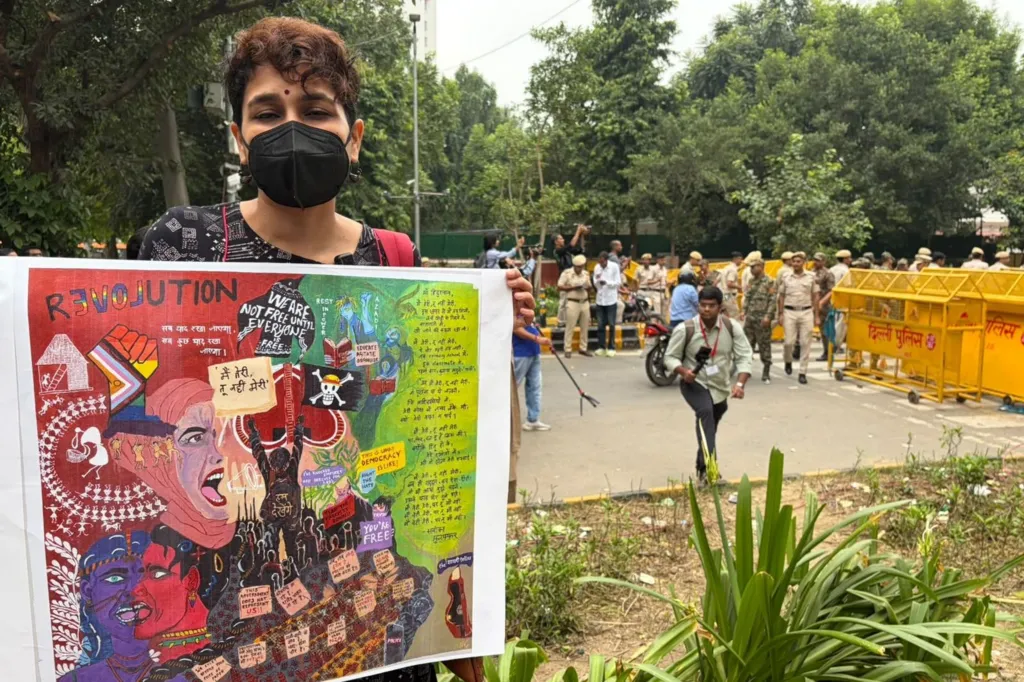
Security measures have significantly affected movement across central Delhi, with major roads closed, traffic diverted and large metal barricades erected around Jantar Mantar, the designated protest area.
The restrictions have reportedly caused substantial traffic congestion, with some journeys that would normally take approximately 15 minutes lasting more than an hour.
At Jantar Mantar, police have installed barricades and ropes to restrict access to the protest site. Some demonstrators who arrived early were reportedly stopped and questioned by police and paramilitary personnel.
More Read

Loudspeakers at a nearby roundabout have also been broadcasting repeated appeals for members of the public to cooperate with law enforcement officers.
In a statement posted on X, Delhi Police defended the restrictions, citing public safety and concerns about overcrowding at Jantar Mantar, which authorities say can accommodate approximately 1,000 people at a time.
The report also states that several trains to Delhi have been cancelled and that authorities have ordered the closure of dozens of metro stations to prevent protesters from gathering.
Protest Organizers Defy Police Ban
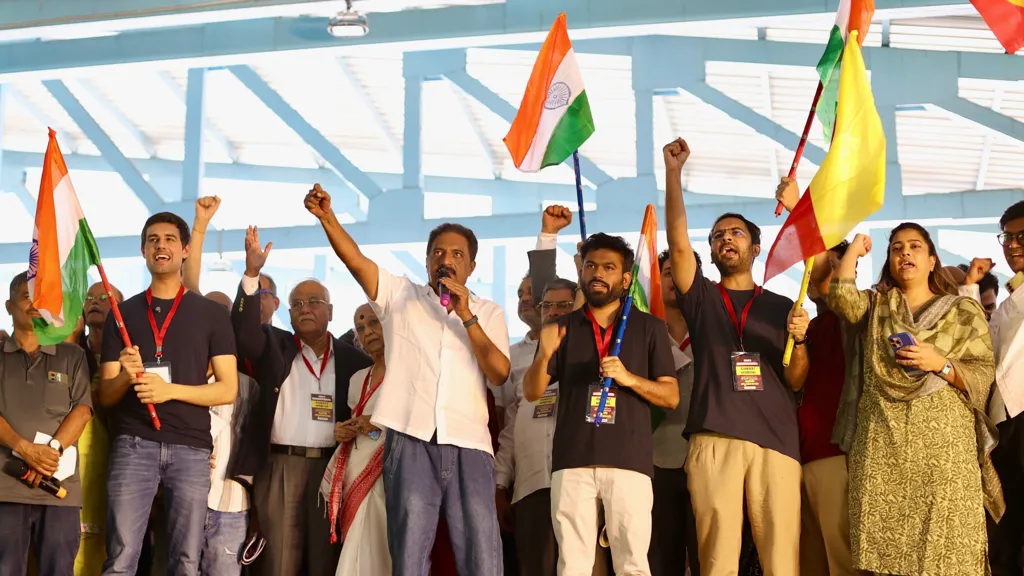
Despite the security restrictions, CJP founder Abhijeet Dipke has vowed that members of the movement will proceed with their planned march to Jantar Mantar.
In a message directed at Prime Minister Narendra Modi on X, Dipke declared that the movement would march on Saturday morning, regardless of the consequences.
“If you want to jail us or even shoot us we are prepared,” he said, according to the report.
More Read

Delhi Police official Nupur Prasad said the application to hold the demonstration was rejected partly because organizers had failed to provide sufficient notice.
According to Prasad, existing guidelines require applications for events at Jantar Mantar to be submitted at least 10 days before the scheduled date.
She also cited alleged previous failures by the movement to comply with lawful directions, alongside concerns about public safety, law and order, and traffic management.
The CJP, however, has challenged the decision, arguing that it is only required to notify the police of its intention to assemble and does not need prior approval to exercise its right to protest.
The disagreement has intensified the standoff between the movement and the authorities ahead of the planned demonstration.
Electoral Roll Revision Sparks National Controversy
At the heart of the dispute is India’s Special Intensive Revision (SIR), a controversial exercise introduced to review and update the country’s electoral rolls.
The Election Commission maintains that the process is intended to eliminate duplicate registrations and remove entries belonging to ineligible voters.
According to the report, approximately 130 million names have been removed from voter lists so far.
Opposition parties and activists, however, allege that eligible voters have also been excluded and that the process could be manipulated to benefit Modi’s Bharatiya Janata Party (BJP) during elections.
Both the BJP and the Election Commission have rejected these allegations.
The controversy has fueled growing political tensions, with opposition parties demanding greater transparency and safeguards to ensure that eligible citizens retain their voting rights.
Opposition Parties, Students and Farmers Join the Campaign
The planned demonstration has attracted support from several opposition parties, student organizations and farmer groups, raising expectations of a significant mobilization in the capital.
The CJP previously gained national attention during protests seeking education reforms in the summer. According to the report, that campaign resulted in a major political victory for the movement, with Education Minister Dharmendra Pradhan resigning in July.
Last week, the movement returned to the streets with a rally in Mumbai, demanding Kumar’s resignation. A further major rally was held in Bengaluru on Thursday.
Student groups and opposition lawmakers have also staged demonstrations in Delhi in recent days, making electoral reform an increasingly prominent issue in India’s political debate.
CJP leaders have additionally alleged that authorities are preventing some of their supporters from travelling to the capital to participate in the protest.
Rahul Gandhi’s Protests Add to Political Tensions
The planned demonstration comes amid an escalating confrontation between opposition leaders and the Election Commission.
For three consecutive days beginning Tuesday, police intervened in protests involving opposition leader Rahul Gandhi and other lawmakers over the electoral roll controversy.
Videos circulating on social media reportedly showed police officers forcing Gandhi onto a bus and preventing him from climbing out through a window. The footage subsequently attracted widespread attention online.
The incidents have further intensified criticism from opposition figures over the authorities’ handling of demonstrations.
What Happens Next?
With organizers insisting that the march will proceed despite the police ban, attention is focused on how authorities will respond and whether the planned demonstration will go ahead peacefully.
The outcome could have wider implications for India’s ongoing debate over electoral transparency, freedom of assembly and the independence of election administration.
For the protesters, the central demand remains accountability and a review of the electoral process. For the authorities, the stated priority is maintaining public order and preventing disruption in the capital.
As tensions rise, the confrontation has become another significant test of relations between India’s political opposition, civil society movements and the institutions responsible for administering its elections.