Japan has significantly increased the cost of permanent residency applications for foreign nationals, with the new fee rising to 200,000 yen ($1,270; £955)—around 20 times the previous charge.
The fee increase, which took effect on 1 October, is part of a broader tightening of Japan’s immigration system as the government seeks to manage a record growth in its foreign-resident population.
Under the new rules, foreigners applying to change or extend their residency status will also face substantially higher charges. The fees now range from 10,000 yen for stays of three months or less to 75,000 yen for applications seeking a stay of five years or more.
The changes triggered long queues at immigration offices ahead of the deadline, with Japan’s main immigration bureau in Tokyo reporting waiting times of more than seven hours as applicants rushed to submit applications before the higher fees came into effect.

More Read

New requirements for permanent residency
The financial cost is not the only change facing foreign residents.
Applicants for permanent residency must now demonstrate a stable income at or above Japan’s average level. Government data released in July put average household income at approximately 5.75 million yen in 2024.
From April 2027, applicants will also face additional requirements, including basic proficiency in Japanese.
More Read

Authorities are further examining applicants’ expected pension benefits. Under the new framework, expected benefits are required to be equivalent to those of someone who has participated in Japan’s employee pension system for 30 years. Financial assets may be taken into account when expected pension benefits fall below that level.
Applicants experiencing financial hardship and certain people designated as refugees may qualify for reduced fees.
Foreign workers remain important to Japan
The tougher immigration measures come as Japan increasingly depends on foreign workers to address labour shortages caused by its ageing and declining population.
Japan’s foreign-resident population surpassed 4.12 million at the end of 2025, representing a record 9.5% increase from the previous year.
Despite the growing economic need for foreign workers, immigration remains a politically sensitive issue in the country, with concerns about the pace of demographic and social change.
Prime Minister Sanae Takaichi has made immigration management one of her government’s key priorities since taking office in October 2025.

In a statement posted on X shortly before the latest residency changes, Takaichi acknowledged that some Japanese citizens could feel concern or unfairness as the foreign population increases.
She said the government was working to ensure that policies concerning foreign nationals remained orderly while enabling both Japanese citizens and foreign residents to live safely and securely.
Foreign residents question the changes
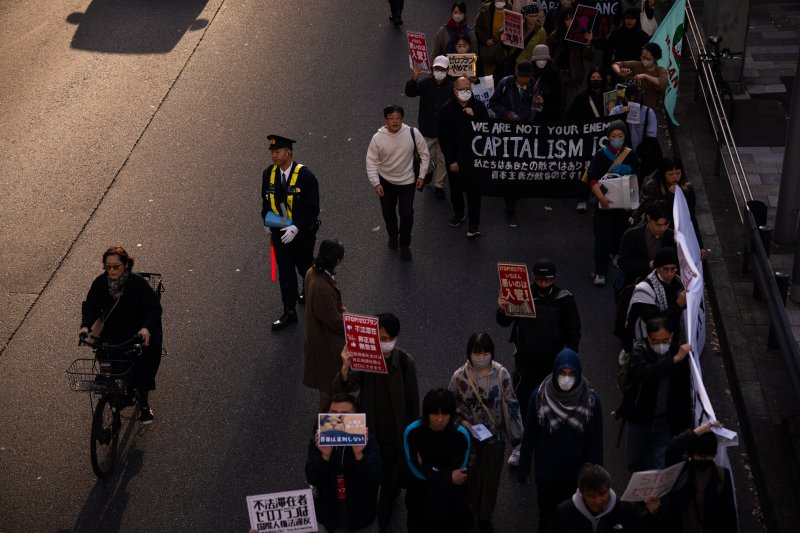
For some long-term foreign residents, the increased financial and administrative requirements have raised concerns about whether Japan could make it harder to attract international talent.
Micaiah Michaela-Spence, a 37-year-old who has lived and worked in Tokyo for a decade, was unable to gather all the required documents before the fee increase.
Although he still intends to apply for permanent residency, he questioned whether the new measures could discourage skilled foreigners from settling in Japan.
The changes come after Japan introduced a separate increase in visa fees in July—the country’s first visa-fee increase in five decades. Officials said that increase was intended to account for inflation and fluctuations in exchange rates.
With Japan facing persistent labour shortages alongside a rapidly ageing population, the government now faces the challenge of balancing tighter immigration management with the country’s continued need for foreign workers.