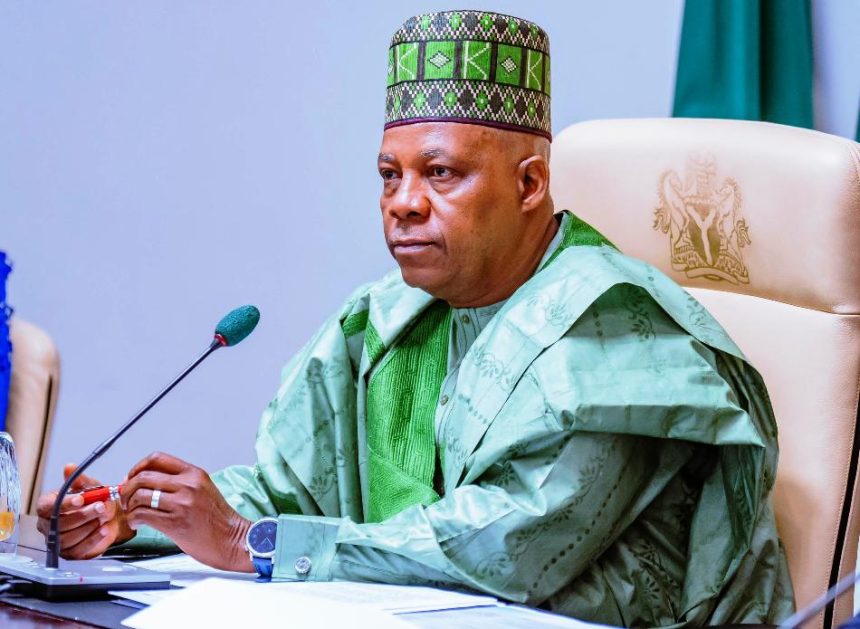
Nigeria’s Vice President, Kashim Shettima, has urged the new leadership of the Economic Community of West African States (ECOWAS) to prioritise reconciliation with countries that have withdrawn from the regional bloc, warning that its future relevance depends on stronger regional unity and integration.
Shettima made the call on Friday in New York, United States, when he received the new President of the ECOWAS Commission, General Birame Diop (rtd.), and his delegation on the sidelines of the 81st Session of the United Nations General Assembly.
According to a statement issued by his media aide, Stanley Nkwocha, the Vice President said the regional organisation must strengthen cooperation among West African countries and pursue initiatives that directly improve the lives and livelihoods of citizens.
His remarks come amid growing divisions within West Africa following the withdrawal of Burkina Faso, Mali and Niger from ECOWAS and the establishment of the Alliance of Sahel States (AES).
Shettima urged Diop to make reconciliation and constructive engagement with the countries outside the bloc central to his administration’s agenda.
“Beyond your administrative duties, your leadership of the commission must make deliberate efforts to build bridges of friendship across the sub-region,” the Vice President said.
“ECOWAS should be at the forefront of our engagement with emerging blocs in the area such as Alliance of Sahel States (AES).”
He also called on the new commission leadership to champion regional integration and strengthen the bonds of unity and friendship among West African countries.
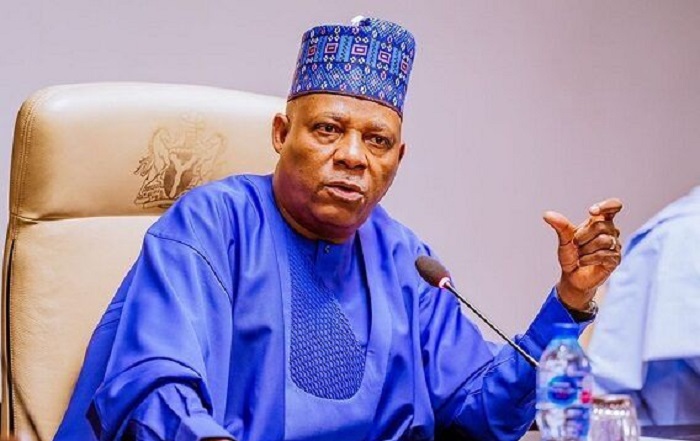
Shettima calls for private-sector investment
The Vice President also emphasised the importance of private-sector participation in regional infrastructure development, particularly in the implementation of the proposed Lagos-Abidjan Highway project.
He described private investment as an important factor in advancing economic integration and urged the new ECOWAS leadership to take a more active approach to involving businesses in the project.
The proposed highway is expected to link major commercial centres and economies in West Africa, improving transportation and facilitating trade across the region.
Shettima congratulated Diop on his appointment, noting that he was assuming office at a particularly challenging time for the regional organisation.
He said stronger cooperation and coordination among governments and citizens would be essential to overcoming the challenges confronting ECOWAS.
The Vice President also reaffirmed Nigeria’s commitment to supporting the regional bloc, citing President Bola Tinubu’s determination to strengthen the organisation and promote development across West Africa.
“My boss, President Bola Ahmed Tinubu, is a man of honour and conviction who will always support efforts aimed at advancing the transformation of ECOWAS as a regional body, and the progress of the area in general,” he said.
Shettima added that Nigeria would continue to provide an enabling environment for ECOWAS to succeed and fulfil the vision of its founding fathers.
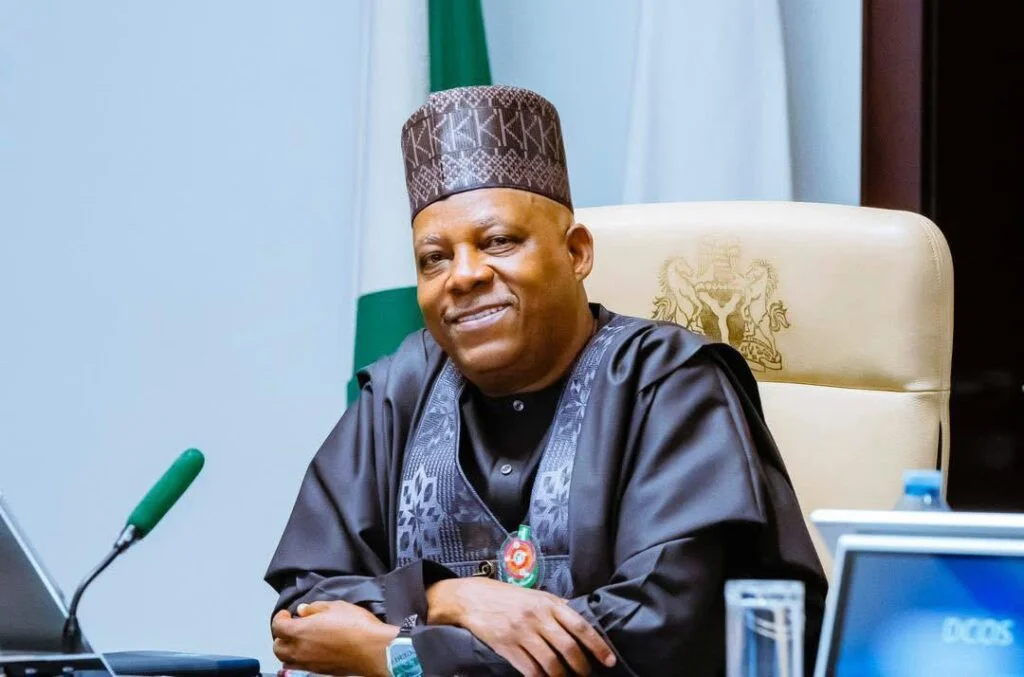
Diop seeks Nigeria’s support
In his remarks, Diop acknowledged Nigeria’s historic contribution to the establishment and sustenance of ECOWAS, as well as the country’s sacrifices towards promoting regional stability and prosperity.
He described Nigeria as a “big brother” whose support would be crucial in addressing the organisation’s current challenges.
The new commission president identified rising insecurity, persistent development difficulties and other complex regional problems as issues requiring Nigeria’s direct involvement.
He maintained that ECOWAS remained an important instrument for maintaining stability in West Africa and called on member states to continue supporting the organisation.
Diop also urged other West African countries to cooperate with Nigeria in advancing inclusive development and building a more secure and prosperous future for the region.
The meeting was attended by Nigeria’s Minister of Foreign Affairs, Ambassador Bianca Odumegwu-Ojukwu; the Attorney-General of the Federation and Minister of Justice, Chief Lateef Fagbemi (SAN); Nigeria’s Permanent Representative to the United Nations, Ambassador Jimoh Ibrahim; and senior officials of the ECOWAS Commission.