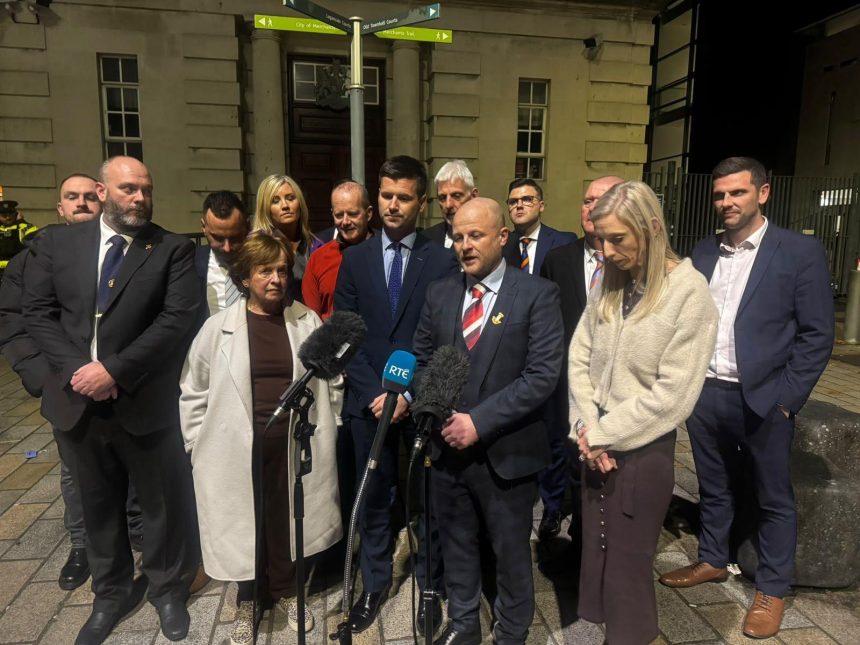
The Orange Order march along Garvaghy Road is set to proceed for the first time in nearly 30 years after a series of court challenges ended with a High Court ruling in the early hours of Sunday.
A controversial Orange Order parade in a nationalist area of Northern Ireland has been cleared to go ahead following a dramatic overnight legal battle that saw conflicting court decisions and heightened tensions in the community.
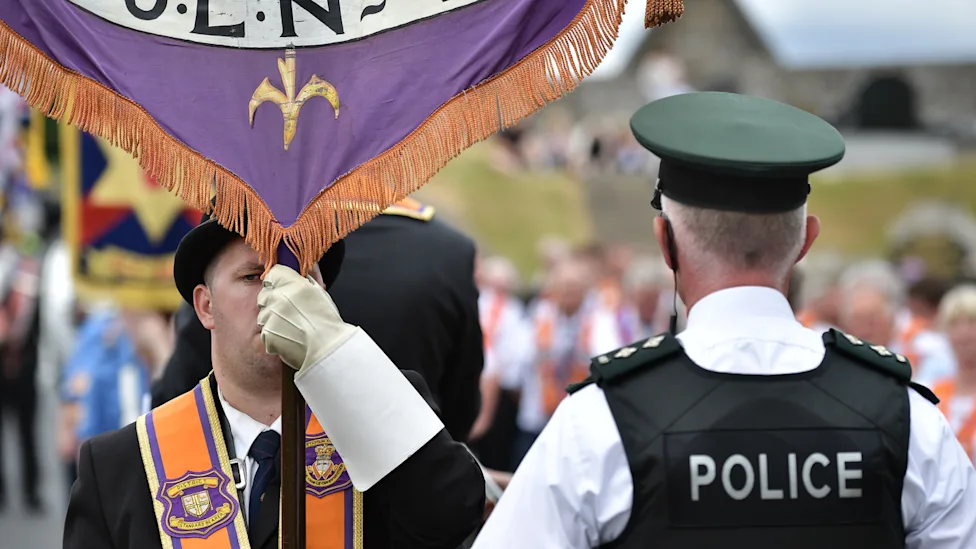
The Drumcree parade, which has been at the centre of some of Northern Ireland’s most serious unrest, is scheduled to take place along Garvaghy Road in Portadown, marking the first time in nearly three decades that the march has been permitted to proceed along the disputed route.
The decision followed a series of legal challenges on Saturday, culminating in a High Court hearing that concluded at 02:15 BST on Sunday, just hours before the parade was due to begin.
Justice Michael Humphreys, who dismissed the latest challenge by the Garvaghy Road Residents’ Coalition (GRRC), acknowledged the exceptional circumstances surrounding the case, noting that the parade was due to begin in just over six hours.
In his ruling, Justice Humphreys said the court could not substitute its own judgment for that of the Parades Commission, which had authorised the march subject to restrictions.
Northern Ireland’s most senior judge, Lady Chief Justice Siobhan Keegan, had also described the situation as unprecedented.
Court Battles End in Eleventh-Hour Approval
The legal drama began on Friday when the Parades Commission announced that the Orange Order could proceed with the march along Garvaghy Road, subject to strict conditions.
Under the commission’s determination, the parade was required to begin no later than 08:00 on Sunday, rather than the originally proposed 13:00 start. The number of participants was also reduced from the 60 requested by the Orange Order to 35, with bands and supporters prohibited from accompanying the march.
However, the decision was immediately challenged by the Garvaghy Road Residents’ Coalition, which argued that the police risk assessment submitted to the commission did not adequately consider the potential for future disorder.
The initial challenge succeeded, with High Court Judge Patricia Smyth issuing an injunction temporarily banning the parade.
Judge Smyth warned that the long-running dispute had the potential to escalate across Northern Ireland and said there was a need for further examination of the evidence before the court.
The injunction was subsequently overturned by the Court of Appeal following a successful challenge by an Orange Order member.
Late on Saturday, the residents’ coalition secured permission to bring a further challenge before the High Court. That application was ultimately dismissed by Justice Humphreys, allowing the commission’s original determination to stand.
Residents Express Anger and Fear as Protesters Gather
The court’s decision has sparked strong reactions from both supporters and opponents of the parade, with residents of Garvaghy Road expressing anger and concern over the potential for renewed unrest.
A large crowd of protesters gathered along the road after the Court of Appeal overturned the injunction that had temporarily stopped the march. The protesters remained largely peaceful, although two separate groups blocked the road at its northern and southern ends.
Masked men were reported to have blocked the northern end of the road, near the route’s starting point towards Drumcree, while another group blocked access further south.
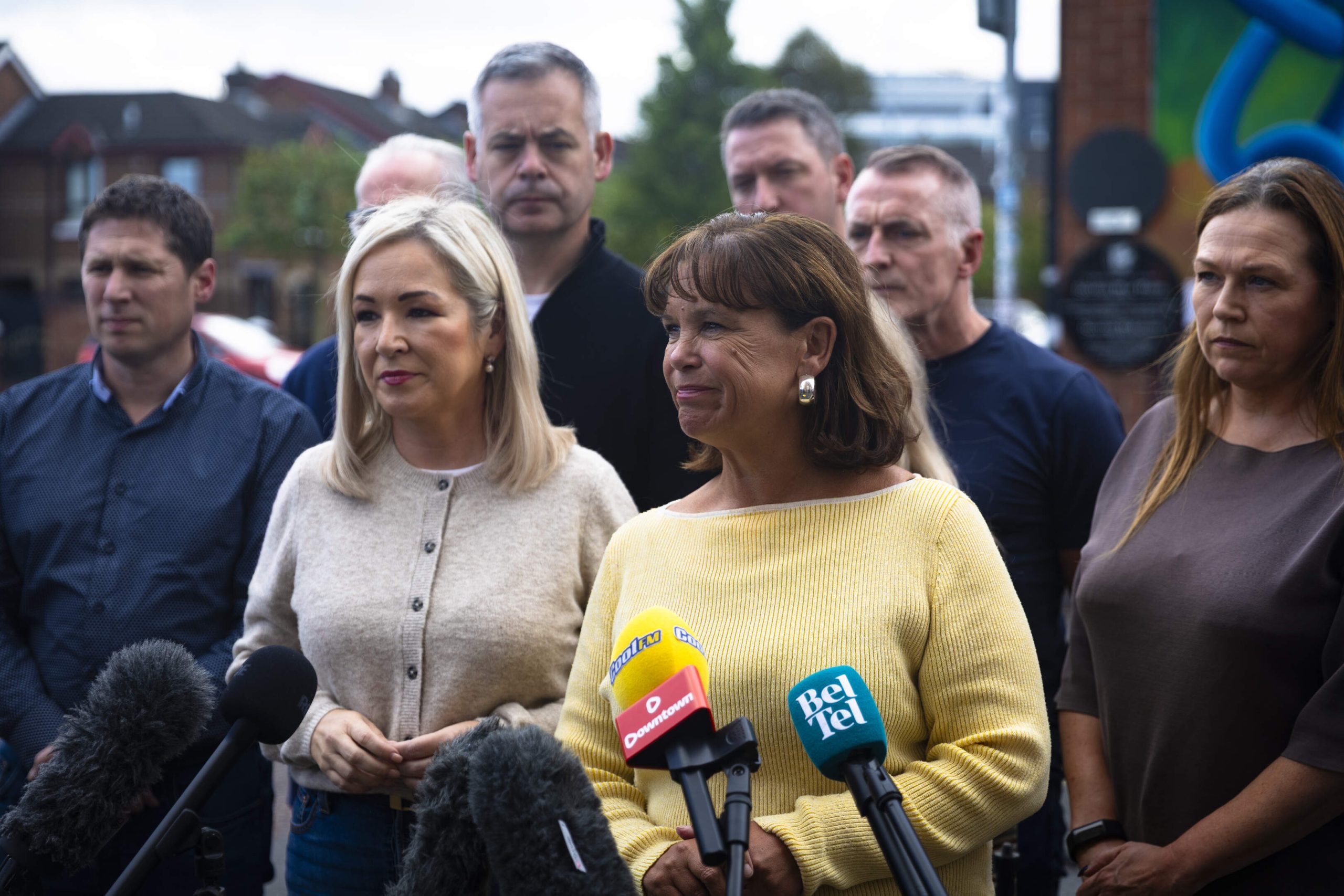
Sinn Féin leader Mary Lou McDonald and Northern Ireland First Minister Michelle O’Neill visited the roadblock and spoke with members of the crowd. Both pledged their support for the Garvaghy Road community.
Sinn Féin MP John Finucane said residents had been left feeling “angry and scared” following the ruling, adding that they had every right to feel that way.
He reaffirmed his party’s commitment to standing alongside the community.
Meanwhile, Democratic Unionist Party MP Carla Lockhart welcomed the ruling, describing it as a significant moment for the rule of law. However, she cautioned that the decision should not be treated as an occasion for triumph.
Loyalist activist Jamie Bryson, who has acted as a legal adviser to Portadown District Lodge, called on the police to ensure the parade was properly policed.
He said the marchers intended to proceed peacefully, respectfully and lawfully.
A Dispute Rooted in Northern Ireland’s Troubled Past
The Drumcree parade dispute dates back to the mid-1990s and has long been associated with some of the most serious episodes of communal violence in Northern Ireland.
In July 1995, police prevented the Orange Order from marching along Garvaghy Road, triggering a tense stand-off that continued over the following years.
The confrontation contributed to riots, roadblocks and murders, with the dispute threatening to undermine the peace process at the time.
The Parades Commission was established in 1998 to regulate contentious marches and help reduce tensions between communities.
Since then, the Orange Order’s attempts to march along Garvaghy Road have repeatedly been unsuccessful, despite numerous legal challenges.
The Orange Order is the most prominent of the loyal orders associated with the Protestant community in Northern Ireland.
The latest decision therefore represents a major development in a dispute that has remained unresolved for nearly 30 years.
Concerns Over Church Services and Public Safety
The timing of the parade has also raised concerns among local Catholic clergy, who fear it could interfere with Sunday church services and create further tension in the area.
Fr Peter Clarke of St John the Baptist Church on Garvaghy Road expressed concern that the march could clash with parishioners arriving for or leaving the church’s 08:30 Mass.
He said he had written to the Parades Commission to raise his concerns and questioned how the commission had arrived at its decision.
Parishioners attending the 10:00 service at St Patrick’s Church on William Street could also be affected, according to the priest.
Fr Clarke warned that tensions were already high in the community and said he intended to address the situation during Sunday’s service.
The Parades Commission, however, maintained that the restrictions imposed on the march should allow the church service to proceed as normal.
In a statement issued on Saturday, Archbishop Eamon Martin called for prayers and support for a peaceful resolution to the complex situation.
He acknowledged the shock and disappointment felt by many people following the latest developments and urged all parties to rely on lawful and democratic processes to resolve the dispute.
Police Prepare for Major Security Operation
Security arrangements are expected to be significant as authorities prepare for the march amid fears of possible unrest.
According to the Parades Commission’s determination, police had submitted written and oral assessments indicating that, at the time of their submissions, they had no information suggesting the parade would result in violence or disorder.
However, the Police Service of Northern Ireland (PSNI) has activated mutual aid arrangements to support contingency planning for the operation in Portadown.
It is understood that approximately 200 police officers are being brought in from Scotland to assist with policing duties.
The deployment comes against the backdrop of concerns raised during the court proceedings about the adequacy of the police risk assessment and the possibility of further escalation.
The residents’ coalition had argued that the assessment focused on past risks without sufficiently examining potential future threats.
Judge Smyth, in her initial ruling, highlighted the deep mistrust between the residents and the Orange Order, warning that the dispute had the potential to escalate.
Political Leaders Appeal for Calm
Political leaders across Northern Ireland have called for restraint and respect for the legal process as the region prepares for the controversial march.
DUP leader Gavin Robinson said unionists would await the outcome of the legal proceedings and expected all parties to respect the court process.
He maintained that the Orangemen of Portadown had conducted themselves with dignity and respect for the rule of law over the past 28 years.
SDLP leader Claire Hanna also stressed the significance of the dispute, warning that the history and meaning of Drumcree could not be ignored.
She welcomed efforts to reduce tensions, cautioning that while it was easy to ignite conflict, bringing it to an end could prove much more difficult.
Alliance deputy leader Eóin Tennyson urged everyone involved to take a step back and respond responsibly following the High Court’s intervention.
Earlier in the proceedings, Judge Smyth had appealed to the parties to reach an agreement and “step back from the abyss”, emphasising the importance of finding a peaceful resolution to an issue of fundamental importance to Northern Ireland.
The Portadown District Lodge had opposed delaying the parade, arguing that postponement could deprive it of an opportunity to exercise rights already granted by the Parades Commission.
The lodge also expressed concern that threats of disorder could be used to influence future decisions on the rout
What Happens Next?
With the court having dismissed the residents’ latest challenge, the Parades Commission’s original decision remains in force, allowing the restricted march to proceed.
The immediate focus will now be on the policing operation, the conduct of marchers and protesters, and whether the restrictions can prevent a fresh outbreak of violence.
The case has once again highlighted the enduring divisions surrounding contentious parades in Northern Ireland and the challenge of balancing the right to freedom of assembly with the concerns of communities affected by such events.
As the march approaches, political leaders, church representatives and community groups have urged calm, with the hope that the long-running dispute will not descend into another period of violence.