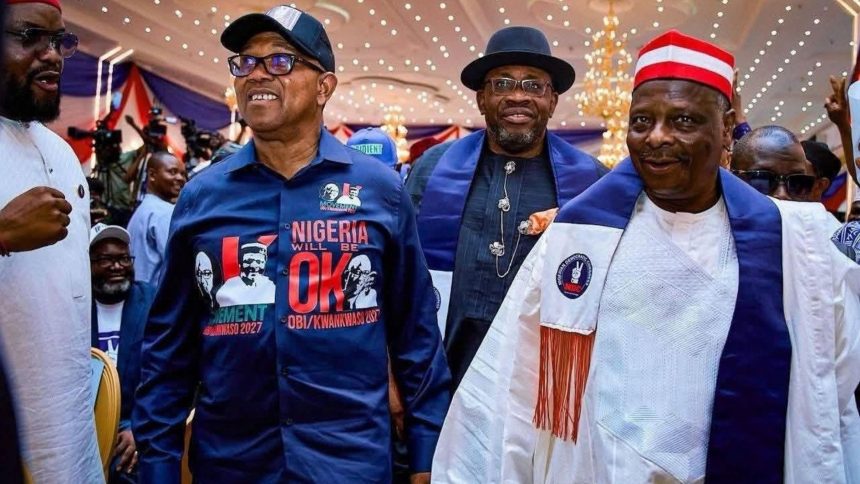
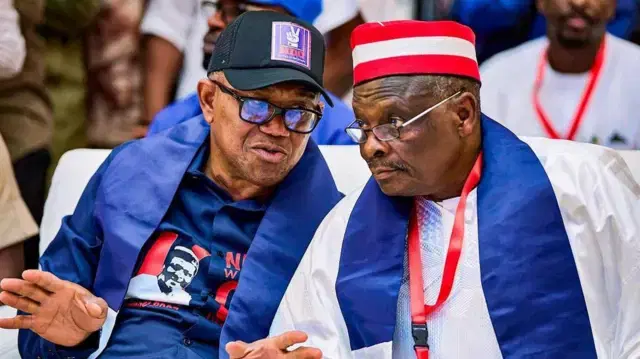
ABUJA — The OK Movement, a political support platform associated with the Nigeria Democratic Congress (NDC) presidential ticket of Peter Obi and Rabiu Kwankwaso, has rejected the party leadership’s decision to disown its 59-member Presidential Campaign Council (PCC), insisting that the structure remains valid and operational.
The movement said its campaign council, which was constituted and announced last week, would neither be dissolved nor altered at the direction of the NDC leadership or any individual within the party.
The disagreement followed a statement by NDC National Chairman, Senator Cleopas Moses, who disowned the council and directed members of the public and the media to disregard its announcement.
However, in a statement on Friday, the National Director-General of the OK Movement, John Ozyl Ughulu, maintained that the organisation was an independent political platform with its own leadership, principles and organisational structure.
Ughulu said the movement did not require the approval or validation of NDC National Leader, Senator Seriake Dickson, or any other party official to establish and manage its internal structures.
“The OK Movement wishes to reaffirm, unequivocally, that its position remains unchanged. The Presidential Campaign Council structure already constituted and announced by the OK Movement remains valid and operational, irrespective of the position or opinion of any individual leader of the party or presidential candidate,” he said.
Movement Defends Its Organisational Independence
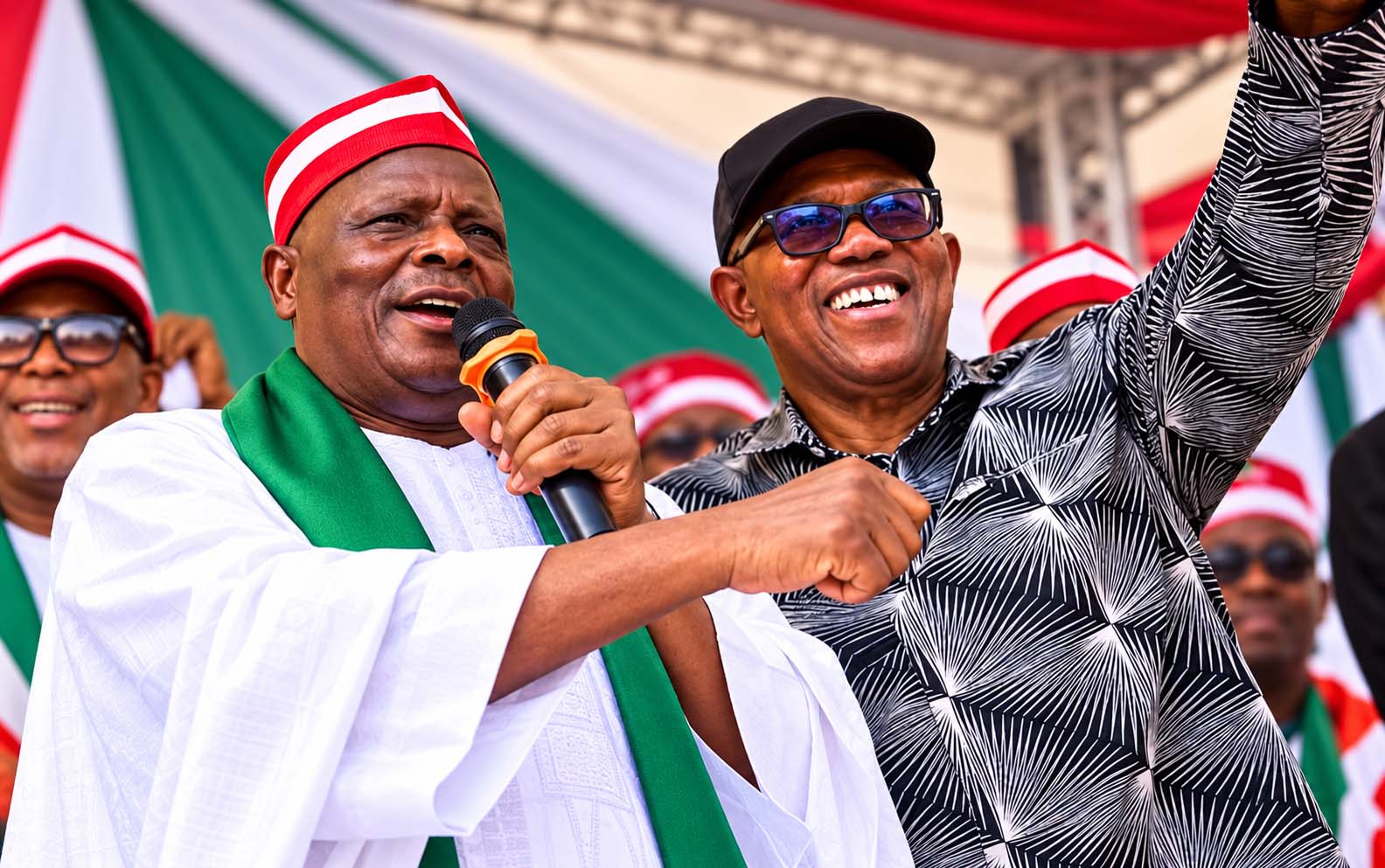
The OK Movement said it recognised candidates contesting under the NDC platform as potential beneficiaries of its grassroots mobilisation efforts but insisted that no candidate should consider himself or herself superior to others because of political position, office or proximity to the party leadership.
Ughulu stressed that the movement had never claimed superiority over the NDC, arguing that both organisations maintained separate structures and responsibilities.
“The NDC Party is a political party with its own constitutional structures, while the OK Movement is an independent political organisation with its own principles, values, leadership and organisational framework,” he said.
He also disclosed that the movement had neither requested nor received financial support from Peter Obi or the NDC to establish or operate its organisational structure.
According to Ughulu, neither the Nigerian Constitution nor any provision of the NDC constitution brought to the movement’s attention automatically grants a political party or its candidate exclusive authority over the internal organisational arrangements of an independent support organisation.
He maintained that while the NDC had the right to establish its own campaign structures, the OK Movement equally had the right to organise and manage its affairs within the law.
The director-general said the organisation would resist any attempt to undermine, appropriate, dissolve or interfere with its leadership and organisational framework.
“Our position is not about confrontation. It is about clarity, institutional respect and the protection of organisational independence,” he said.
Ughulu added that the movement remained open to constructive engagement with the party but would not abandon its principles or organisational identity to accommodate the preferences of individuals or groups.
How the Dispute Started
The disagreement followed the OK Movement’s announcement last Thursday of a 59-member Presidential Campaign Council designed to coordinate political mobilisation and engagement across Nigeria’s 36 states and the Federal Capital Territory ahead of the 2027 general elections.
In a statement issued in Abuja by its National Secretary, Saadatu Sani, the movement said the council would take its message and programme to Nigerians across states, local government areas, wards and communities.
The council is headed by Ughulu as Director-General, with Sani serving as National Secretary.
Six zonal coordinators were also appointed to oversee mobilisation across the country’s geopolitical zones.
They are Suleiman Abubakar for North Central, Hashimu Dungurawa for North West, Amadu Gwambe for North East, Dr Adebayo Adefolaseye for South West, Christopher Ighodaro for South South and El-Shaddai Ikeh for South East.
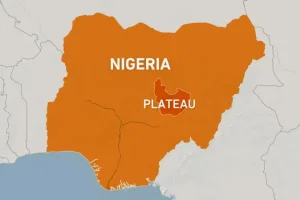
Ibrahim Jabir was named the FCT Coordinator, while Maiyaki Samson, Tokji Mandim, Yusuf Abdullahi, Aliyu Tershaku, Awal Goma and Kazeem Olawuyi were appointed coordinators for Kogi, Plateau, Nasarawa, Benue, Niger and Kwara states, respectively.
The movement also announced coordinators for other states, alongside directors responsible for mobilisation, women affairs, strategy, security, legal affairs and other operational areas.
NDC Insists Only Party Leadership Can Establish PCC
Reacting to the announcement on Saturday, NDC National Chairman Moses said the campaign council did not emanate from the party and should not be recognised as an official NDC structure.
In a statement titled “Re: Purported OK Movement PCC Announcement,” Moses said the party had dissociated itself from the council.
He argued that candidates contesting under the NDC platform were not independent candidates but products of the party and therefore remained subject to its authority and disciplinary framework.
“Therefore, only the party’s leadership can constitute and announce a Presidential Campaign Council, PCC,” Moses said.
The NDC chairman further warned that no party member, candidate or support group was authorised to undermine or demarket the party.
He added that no individual or organisation could announce, constitute or publish any campaign council, structure or organ in the name of the NDC without prior approval from the party’s National Working Committee.
Dispute Raises Questions Over Campaign Coordination
The exchange has brought into the open differences between the NDC leadership and the OK Movement over the authority to establish and manage campaign structures ahead of the 2027 presidential election.
While the party maintains that its leadership has the authority to establish official campaign structures operating under its name, the OK Movement argues that its independent organisational status gives it the right to establish and manage its own council.
The disagreement also raises questions about how the movement’s grassroots mobilisation plans will be coordinated with the party’s official campaign activities and how the two organisations will manage their relationship as the election approaches.
For now, the OK Movement has maintained that its 59-member council remains operational, while the NDC leadership has disowned the structure and insisted that only officially approved campaign bodies can represent the party.