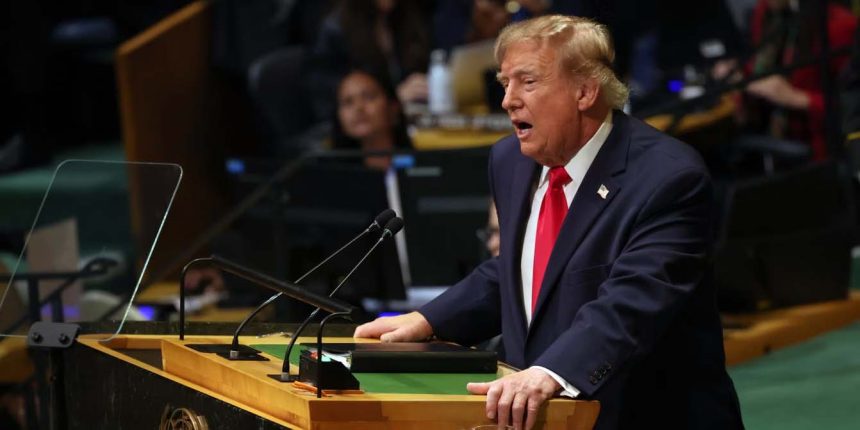
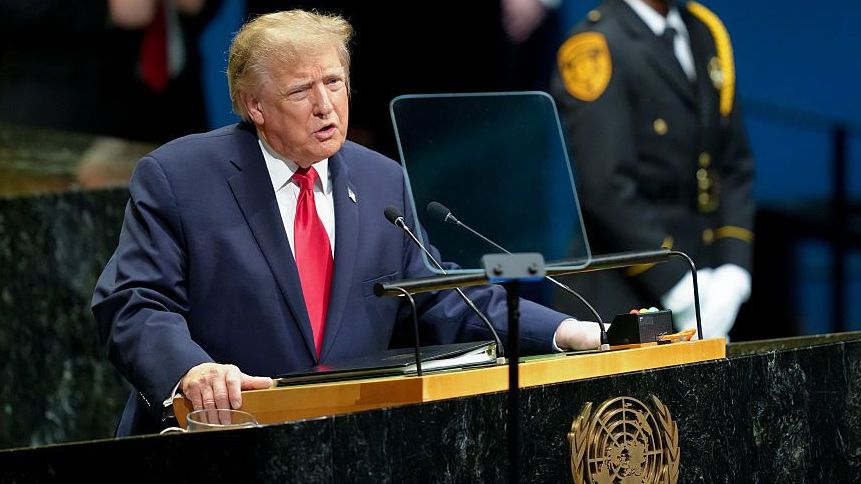
NEW YORK — United States President Donald Trump has issued a stark warning to Iran, telling world leaders at the United Nations General Assembly that he faces a “big decision” between pursuing a peace agreement with Tehran and launching further military action against the Islamic Republic.
In a forceful address in New York on Tuesday, Trump said Iran could either reach a deal that would allow the country to rebuild or face what he described as “annihilation.”
The warning came against the backdrop of continuing hostilities between the United States and Iran and renewed diplomatic efforts aimed at ending the conflict.
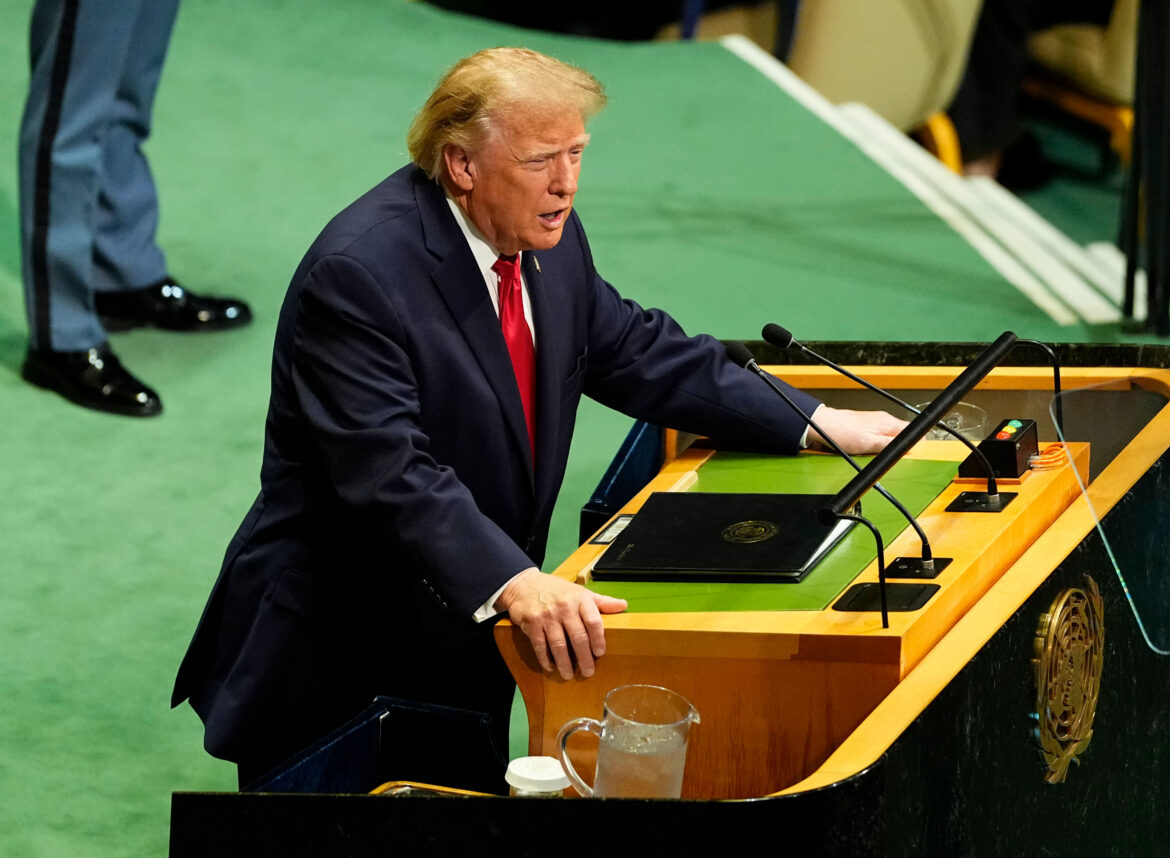
Trump told the packed General Assembly that the United States had already demonstrated its military strength against Iran and argued that the campaign had prevented Tehran from obtaining a nuclear weapon.
More Read

“Will a deal be made with Iran that lets them rebuild and create a far greater country than it ever was before?” Trump asked.
He then presented what he described as the alternative: further military action against the Iranian government.
Trump also expressed confidence that a deal could eventually be reached, saying he believed an agreement could come after the November US midterm elections.
More Read
US AND IRAN HOLD THREE-HOUR TALKS
Despite Trump’s hardline warning, a potentially significant diplomatic development emerged shortly after his address.
Trump revealed that American and Iranian representatives had held a three-hour meeting on the sidelines of the UN General Assembly.
The talks involved US Special Envoy Steve Witkoff and Iranian Foreign Minister Abbas Araghchi, with mediators shuttling between the two sides.
Trump described the meeting as “very good” and “very productive.” Witkoff later confirmed that discussions had taken place through mediators and said the talks could prove “constructive and promising.”
Iranian officials also confirmed the discussions.
According to reports, Tehran communicated conditions for ending the conflict, including an end to what it described as US aggression and measures to address the wider regional crisis.
More Read
The talks have therefore created a striking contrast: while Trump threatened overwhelming military action from the UN podium, American and Iranian representatives were simultaneously exploring a diplomatic route toward ending the conflict.
TRUMP DEFENDS HIS IRAN POLICY
Much of Trump’s UN address was devoted to defending his administration’s decision to use military force against Iran.
The president argued that the campaign had demonstrated the value of what he called “peace through strength,” insisting that military pressure was necessary to prevent Iran from developing a nuclear weapon.
Trump also urged other countries to join the United States in putting economic pressure on Tehran.
His comments come as the conflict continues to affect energy markets and commercial shipping in the Middle East, with the Strait of Hormuz remaining a major strategic concern.
TRUMP REJECTS ‘GLOBAL GOVERNMENT’
Beyond Iran, Trump used his UN address to challenge the role of international institutions and reject the idea of a global government.
He criticised what he described as an agenda driven by “globalist bureaucrats” and emphasised American sovereignty and military power.
“There is no global government,” Trump declared, while warning that the United States would use its military strength when it believed its national interests were threatened.
Trump also spoke about the Western Hemisphere, Cuba and other areas of US foreign policy.
RUSSIA-UKRAINE WAR
The US president also turned his attention to the war between Russia and Ukraine.
Trump told the General Assembly that his administration was working with the leaders of both countries and expressed confidence that the conflict could be brought to an end.
“We’re working very closely with the leaders of Russia and Ukraine, and we will get that one done,” he said.
He predicted that a resolution could come sooner than many observers expect.
US Secretary of State Marco Rubio is also expected to meet Russian Foreign Minister Sergei Lavrov in New York as diplomatic efforts continue.
TRUMP PROMOTES US LEADERSHIP IN ARTIFICIAL INTELLIGENCE
Artificial intelligence was another major issue in Trump’s address.
The president said the United States must maintain its lead over China in AI development and criticised international efforts that he believes could restrict American technological advancement.
Trump suggested that the technology should be described as “super intelligence,” arguing that the term artificial intelligence makes it sound less powerful than it actually is.
He nevertheless acknowledged that the technology must be handled carefully.
GUTERRES WARNS OF A DIVIDED WORLD
Trump’s speech came after UN Secretary-General António Guterres delivered a warning about the growing divisions confronting the international community.
Guterres highlighted geopolitical rivalries, wars, climate change and artificial intelligence as challenges that are widening the fault lines between countries.
He urged major powers to recognise that their influence has limits and that international cooperation remains necessary to address global problems.
The contrast between the two speeches was notable: while Guterres emphasised global interdependence, Trump focused heavily on national sovereignty, military strength and America’s interests.
DIPLOMACY OR ESCALATION?
The developments in New York have left the international community watching closely for signs of whether the latest US-Iran contacts can produce a diplomatic breakthrough.
Trump’s warning of further military action and his disclosure of direct diplomatic contacts with Tehran have highlighted the two-track approach currently surrounding the conflict — intense military pressure alongside negotiations.
For now, however, no final peace agreement has been announced.
The next stage of the diplomatic process is expected to depend on whether Washington and Tehran can bridge their differences over the war, Iran’s nuclear programme, sanctions, regional security and the conditions for ending hostilities.
As world leaders continue their meetings at the United Nations, the central question remains whether Trump’s threat of further military action will ultimately lead to a negotiated settlement — or another escalation in the Middle East.