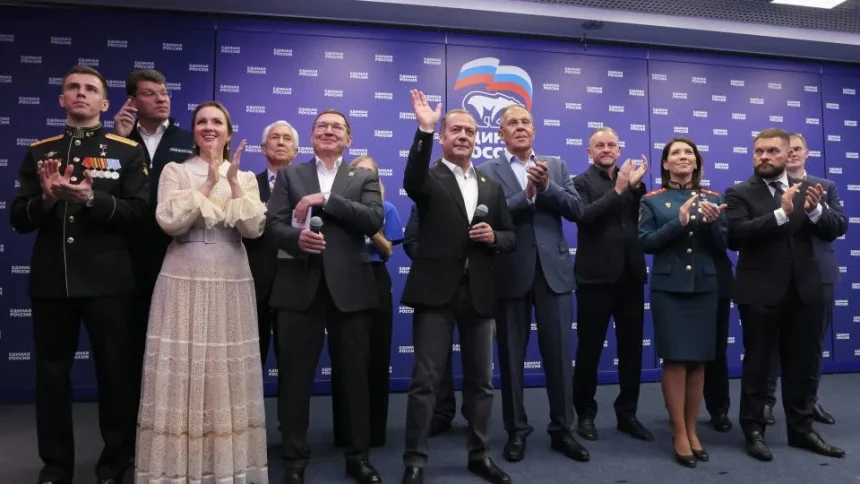
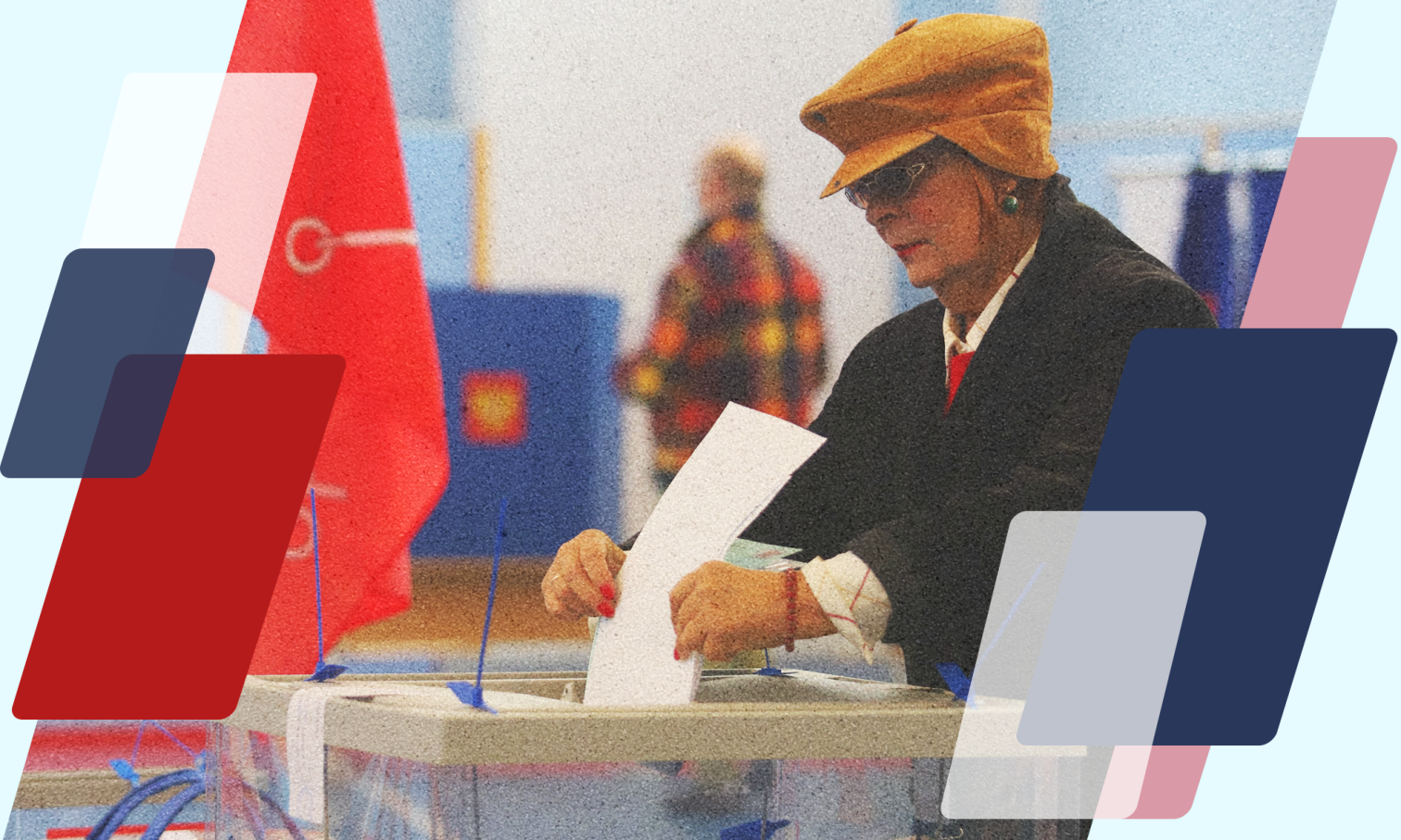
MOSCOW — Russia’s ruling United Russia party has secured a record majority in the country’s first parliamentary election since the full-scale invasion of Ukraine, strengthening President Vladimir Putin’s control over the State Duma.
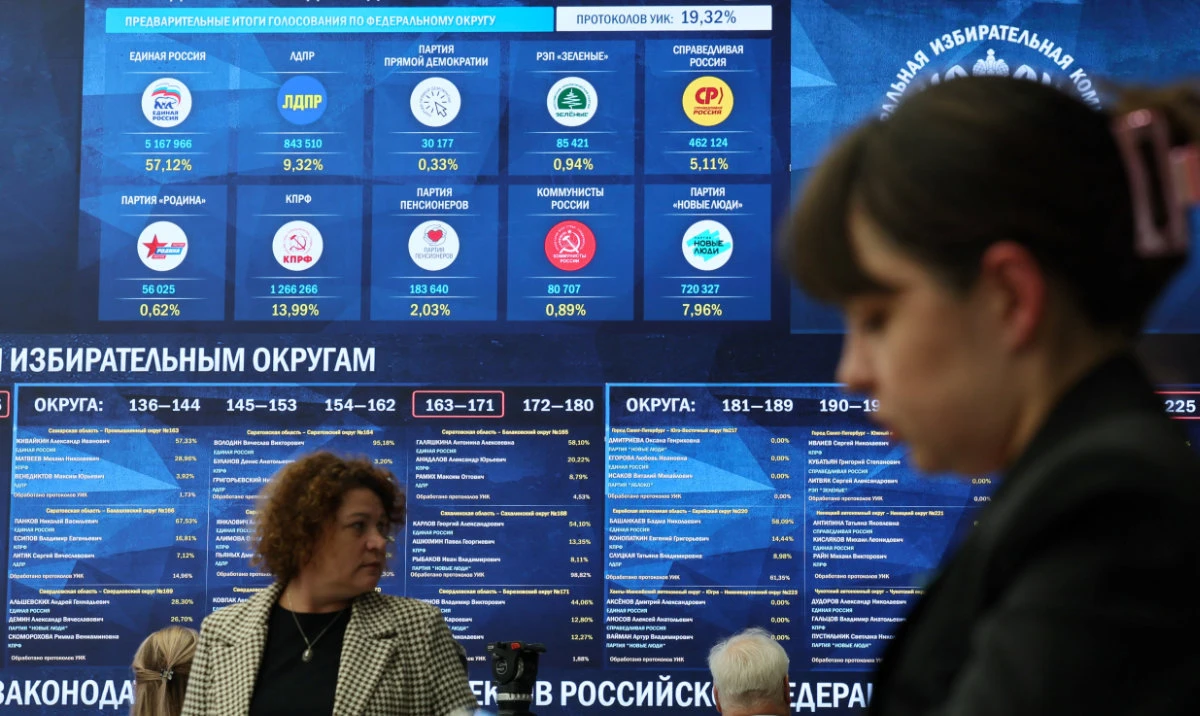
According to preliminary results from Russia’s Central Election Commission, United Russia won 57.83 percent of the party-list vote and is set to control 355 of the 450 seats in the State Duma. The figure surpasses the party’s previous record of 343 seats, achieved in 2016.
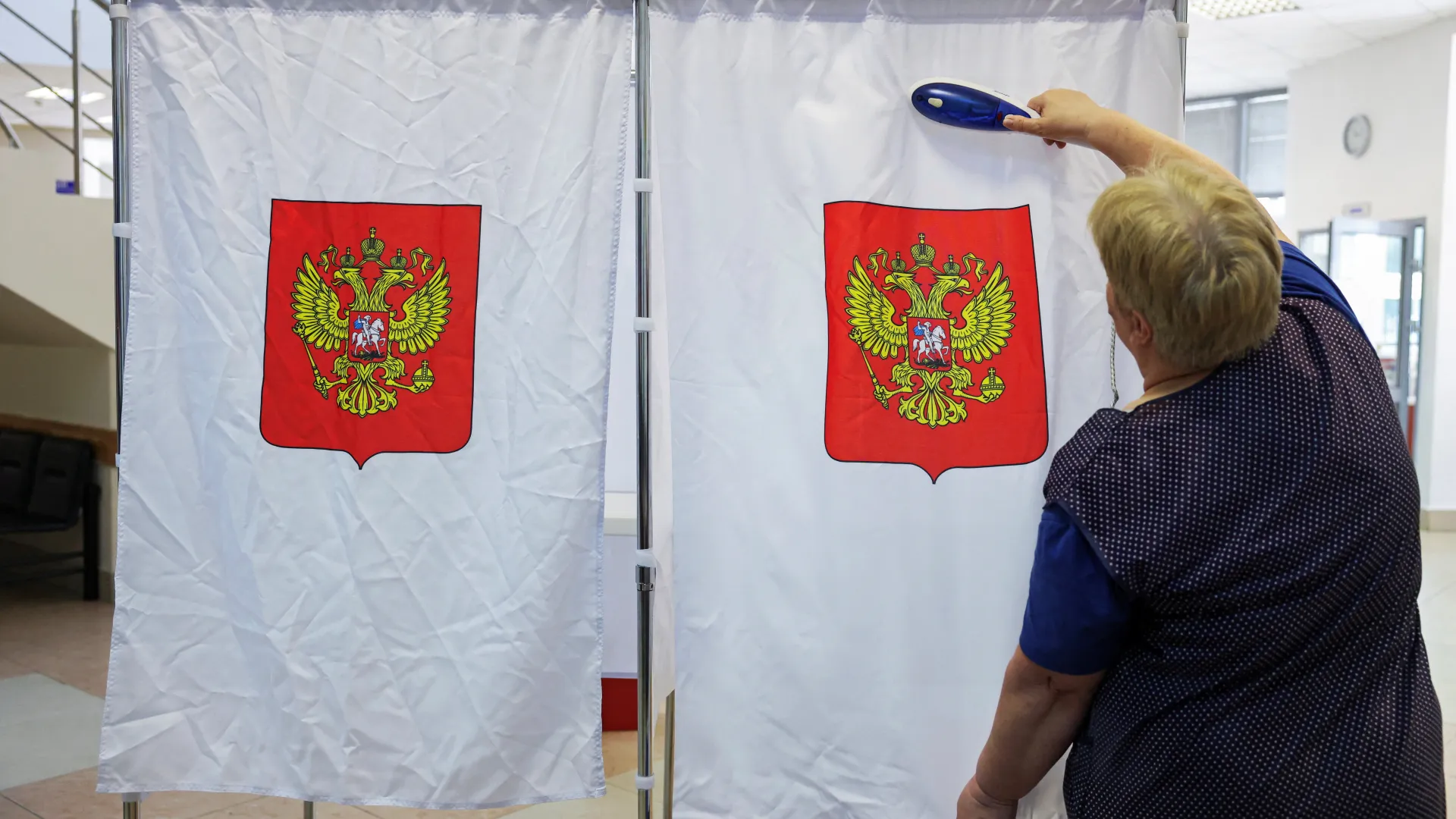
The election was held from September 18 to 20 across Russia’s 11 time zones. More than 111 million people were eligible to vote, while official turnout exceeded 59 percent.
The result was widely anticipated because meaningful political opposition to the Kremlin has been severely restricted in recent years. The liberal Yabloko party, which has publicly opposed Russia’s war in Ukraine, was removed from the national ballot by Russia’s Supreme Court shortly before the election. Other anti-war politicians have been imprisoned, barred from running or forced into exile.
More Read
President Putin had presented the election as a demonstration of national unity and public support for Russian soldiers fighting in Ukraine.
“Millions of people stand behind our fighters,” Putin said ahead of the vote, framing the election as evidence of national solidarity.
The election also took place against the backdrop of continuing Ukrainian attacks inside Russia. Ukrainian drone strikes targeted Moscow and other Russian regions during the voting period, underscoring the growing impact of the war on Russian territory.
More Read
What Comes Next?
The decisive victory gives the Kremlin a powerful political platform as Russia continues its military campaign in Ukraine.
One question now attracting attention is whether the result could be used to justify further military measures, including another mobilisation of troops. Russia mobilised about 300,000 reservists during the chaotic partial mobilisation announced in September 2022, triggering widespread public anger and a major exodus of military-age men from the country.
Putin has repeatedly rejected speculation about a new general mobilisation, describing such claims as false or deliberately intended to create panic. Reuters reported that concerns nevertheless remain among some Russians of military age, particularly as the war continues to consume manpower.
Rather than immediately announcing another mobilisation, analysts cited by Reuters say the Kremlin could use the election victory to promote war veterans as an emerging political class and encourage military recruitment by presenting service in Ukraine as a route to political and social advancement. Forty-nine veterans of the Ukraine war were elected to the new parliament.
More Read
The vote may also allow the Kremlin to portray Russia as maintaining political normalcy despite the war, while contrasting its elections with Ukraine’s decision to postpone national elections under martial law.
However, the election has drawn criticism internationally. France said the vote failed to meet standards for a free and fair democratic process, citing restrictions on political opposition, freedom of expression and independent media. France also condemned the holding of the election in Ukrainian territories occupied by Russia.
For Putin, the immediate political result is clear: United Russia will enter the new State Duma with an even larger majority, giving the Kremlin greater control over Russia’s legislative process at a critical stage of the war in Ukraine.