The United States has denied visas to several members of Iranian President Masoud Pezeshkian’s delegation, including members of his communications team, ahead of his planned appearance at this week’s United Nations General Assembly in New York.
Iranian state news agency IRNA reported on Monday that the Trump administration had refused visas for some members of the president’s high-level delegation, describing the decision as an “unprecedented hostile move.” The report was also carried by Mehr news agency, citing a spokesperson for the Iranian presidency.
Pezeshkian is expected to become the highest-ranking Iranian official to enter the United States since the current Middle East war began with U.S. and Israeli strikes on Iran in February.
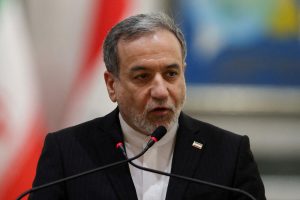
Despite the visa denials affecting some members of his delegation, the United States has approved visas for Pezeshkian, Foreign Minister Abbas Araghchi and other members of Iran’s core delegation to attend the UN General Assembly. The State Department said the delegation would be subject to travel restrictions while in New York.
The restrictions include limitations on the delegation’s movements and a prohibition on purchasing luxury and certain other goods during their stay. The Iranian delegation is also expected to be smaller than last year’s delegation.
Pezeshkian is scheduled to address the UN General Assembly on Wednesday, according to Iranian state media.
Iranian Foreign Minister Abbas Araghchi, who is part of the delegation, left Iran on Sunday evening and travelled to Qatar for a stopover. Qatar has played a mediating role in communications between Tehran and Washington.
The UN visit comes as tensions between the United States and Iran remain high, with the two countries still engaged in conflict and diplomatic efforts continuing amid the confrontation.
A major point of contention is the strategic Strait of Hormuz, a crucial global shipping route for oil and gas. Iran says it has conveyed conditions to the United States through Qatar for reopening the waterway, which has seen a sharp reduction in commercial traffic since the conflict intensified. Reuters reported on Monday that only 17 commodity vessels crossed the strait over the weekend, compared with 37 the previous week and a pre-war average of about 125 vessels per day.
The United States has also imposed a counterblockade on Iranian ports, adding another layer to the economic and military pressure between Washington and Tehran.
Pezeshkian’s appearance at the UN is therefore expected to take place against the backdrop of an escalating military confrontation, restrictions on the Iranian delegation and continuing diplomatic efforts aimed at addressing the wider conflict and the crisis surrounding the Strait of Hormuz.