JAFFNA, Sri Lanka — The discovery of a mass grave containing the skeletal remains of 572 people, including children and infants, in northern Sri Lanka has reignited demands for a comprehensive investigation into alleged wartime killings and the fate of thousands of people who disappeared during the country’s decades-long civil war.
The remains were discovered in February when workers extending a cremation ground in the Chemmani area of Jaffna came across human bones, triggering an investigation and subsequent archaeological excavation.
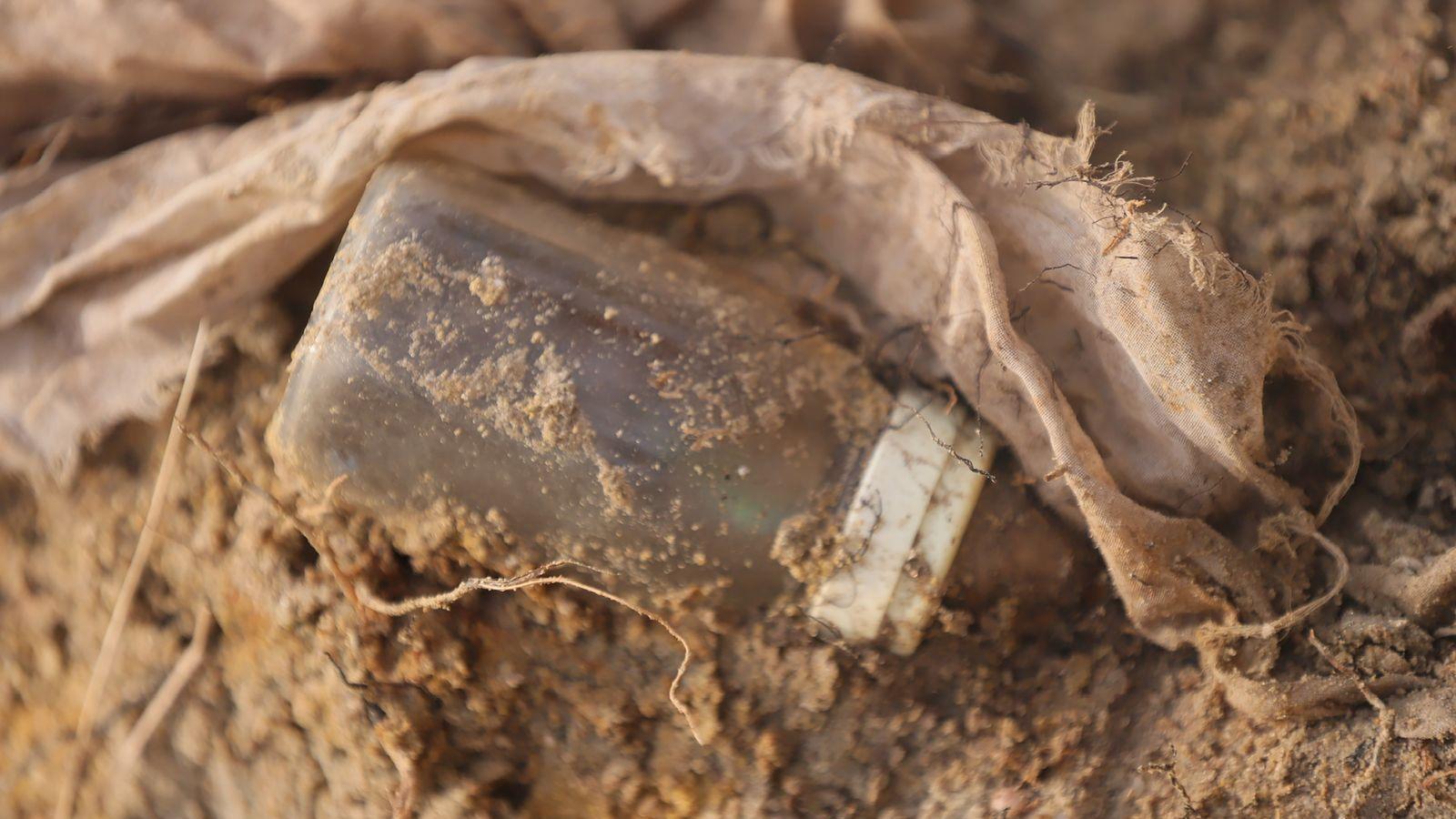
By August, archaeologists had completed the third phase of excavation at the site, recovering the remains of hundreds of people and personal belongings believed to have belonged to some of the victims, including bangles, a school bag and a milk bottle. The site is believed to be the largest mass grave ever uncovered in Sri Lanka.
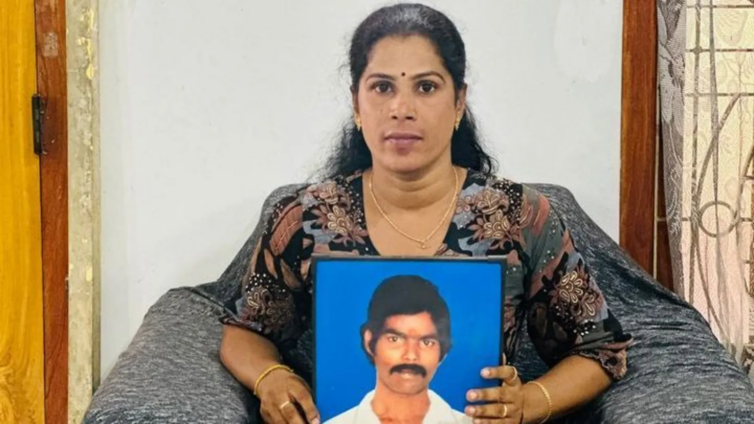
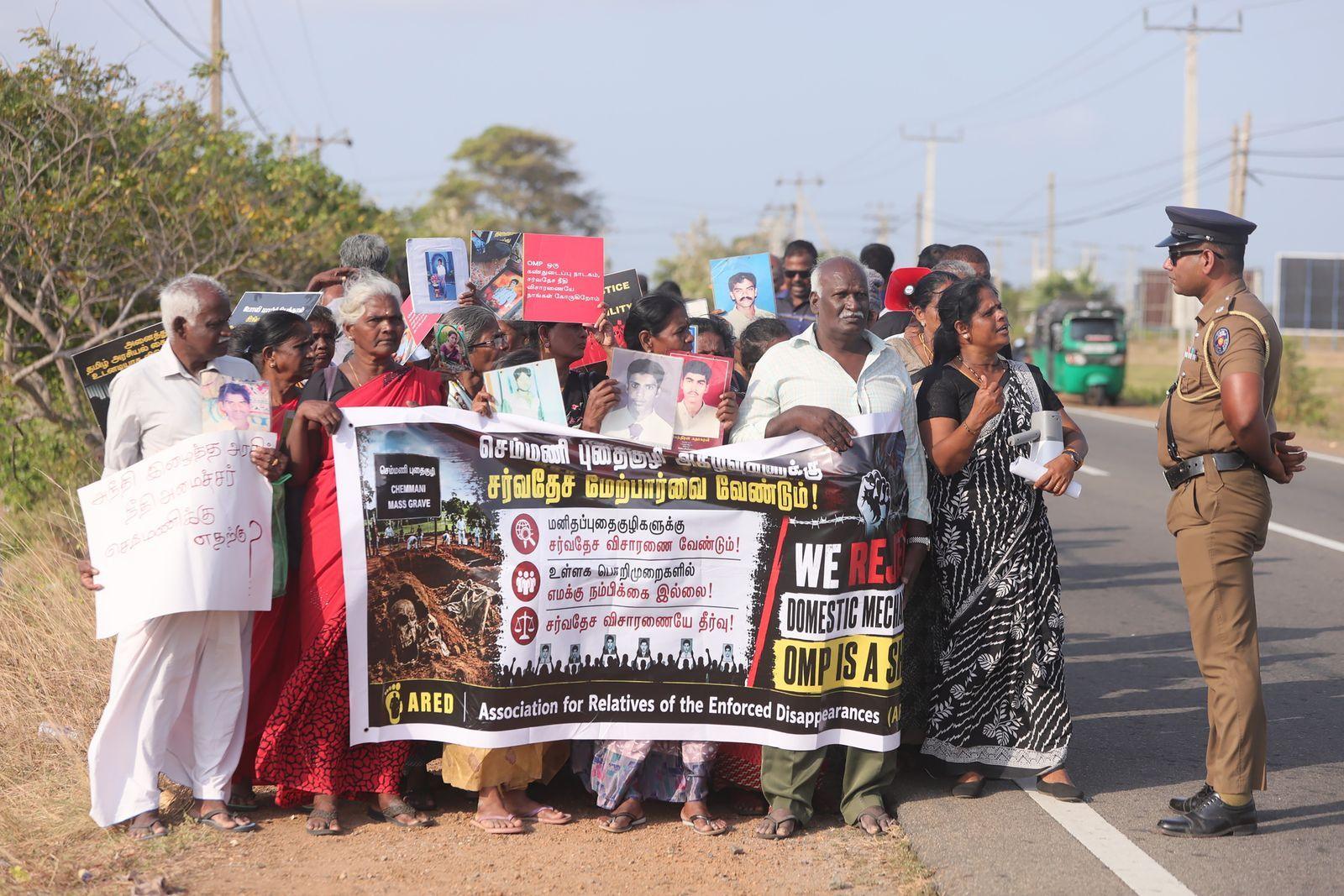
The discovery has particularly affected families of people who disappeared during Sri Lanka’s civil war, many of whom have spent decades seeking information about their missing relatives.
More Read

Families seek answers after decades of uncertainty
Sri Lanka’s civil war lasted from 1983 to 2009, pitting the government against the Liberation Tigers of Tamil Eelam (LTTE), who fought for an independent Tamil state in the country’s north and east.
The conflict, which lasted 26 years, killed an estimated 100,000 people and left approximately 23,000 people — mostly Tamils — missing. Both government security forces and the Tamil Tigers have been accused of atrocities and other crimes during the conflict.
For families of the disappeared, the Chemmani excavation has reopened painful memories.
More Read

Jeyaruby Jayapalan says her father, Kandaiah Jayapalan, was picked up by the Sri Lankan army at a checkpoint near Chemmani in September 1996, when she was only 12 years old.
Despite searches of military camps and police stations across Jaffna, the family never found out what happened to him.
“I went to Chemmani mass grave with many others hoping that I will find some answers,” she said, adding that the family wants detailed forensic analysis of the remains.
Another family member, 65-year-old Suseela, is searching for her son, Gnanaseelan Ravi, who was reportedly picked up by the military in 2007 when he was 24.
“He was my only son, and I keep crying every day remembering him. My life is empty without him,” she said.
Chemmani has a troubling history
The latest discovery is particularly significant because Chemmani has previously been linked to allegations concerning missing civilians.
More Read

In 1996, 18-year-old Tamil schoolgirl Krishanthi Kumaraswamy disappeared in the same area. In 1998, five soldiers were sentenced to death for her rape and murder and the killing of three members of her family. Their bodies were subsequently found buried in the Chemmani area.
During court proceedings, one of the convicted soldiers, Somaratne Rajapakse, made a startling allegation that between 300 and 400 people killed in the mid-1990s had been buried in Chemmani.
His testimony led to an excavation in 1999, during which investigators recovered more than 10 human skeletons. Human rights activists believed the remains could have been connected to people who disappeared during the conflict, but the investigation did not result in significant judicial follow-up.
The latest excavation has therefore intensified calls for accountability.
Experts raise concerns over nature of burials
Gehan Gunatilleke, a commissioner with the Human Rights Commission of Sri Lanka, said preliminary inspections indicated that the site did not resemble an ordinary burial ground or normal Hindu burial practices.
Activists and experts have also pointed to the manner in which many of the bodies were buried.
According to the Human Rights Commission, while some remains appeared to have been formally buried, the majority were found without clothing, packed tightly together and, in some cases, stacked on top of one another. Many were buried relatively close to the surface, between one and two metres deep.
The commission said there was a “reasonable likelihood” that the burials were unlawful and potentially connected to extrajudicial killings.
However, the circumstances surrounding the deaths have yet to be conclusively established through forensic examination.
DNA tests could hold the key
All the remains recovered from the Chemmani site are currently being kept at the Forensic Department of the University of Jaffna under court custody.
Professor Raj Somadeva, the chief archaeologist overseeing the excavation, said an interim report would be submitted to the court by the end of September.
Some samples are expected to be sent abroad for further examination to establish the age of the remains, while medical analysis will be required to determine possible causes of death. DNA testing will also be necessary to determine whether any of the victims can be identified and linked to families of missing persons.
Government promises investigation
Sri Lanka’s government has insisted that it is cooperating with the investigation.
President Anura Kumara Dissanayake, who came to power in September 2024, pledged to pursue justice and ethnic reconciliation.
Justice Minister Harshana Nanayakkara said excavation work at Chemmani would continue and stressed that investigators needed to establish how the victims died before conducting DNA identification.
The government has also asked families of missing persons to provide DNA samples for possible comparison with the remains. During a June inspection of the site, the justice minister promised that funding would be provided for the excavation and investigations.
The Sri Lankan military, however, has rejected allegations that security forces massacred civilians and buried their bodies at the site.
Army spokesman Brigadier Waruna Gamage said the allegations must be proven in court.
Past mass graves fuel scepticism
The Chemmani discovery has also revived criticism of Sri Lanka’s handling of previous mass grave investigations.
More than 20 mass graves have reportedly been discovered across Sri Lanka in recent decades. None has conclusively been linked to enforced disappearances or alleged extrajudicial killings in the north and south, and previous investigations have not resulted in prosecutions.
One case that continues to frustrate families is the mass grave discovered in the north-western town of Mannar in 2018, where more than 350 skeletal remains were recovered. Investigations failed to provide conclusive answers, leaving many relatives disappointed.
Against this background, many Tamil families fear that the Chemmani investigation could suffer the same fate.
Calls grow for international involvement
Human rights organisations and United Nations officials have urged Sri Lanka to seek international assistance in identifying the victims, determining how they died and establishing responsibility where crimes are proven.
The UN has said international involvement could help restore confidence among victims’ families, many of whom have spent decades waiting for answers.
Rory Mungoven, the Asia-Pacific chief at the Office of the UN High Commissioner for Human Rights, said families had lived with pain for decades and had lost trust in previous investigations.
He said international assistance could help strengthen confidence in the current investigation.
Sri Lankan governments have historically resisted calls for international investigations into alleged wartime atrocities. The current government has also opposed an international mechanism to investigate alleged war crimes, despite promising to pursue justice and reconciliation.
A grave that could reopen Sri Lanka’s darkest chapter
For the families of Sri Lanka’s missing, the Chemmani site represents more than an archaeological discovery. It could potentially provide answers about relatives whose fate has remained unknown for decades.
Rights groups say the government now faces an opportunity to demonstrate whether it is prepared to investigate allegations surrounding the country’s wartime disappearances thoroughly and transparently.
For families such as Suseela’s, the issue is deeply personal.
“I don’t know how long I will live with such uncertainty, but I want closure,” she said.
As forensic examinations, DNA testing and further excavations continue, attention is increasingly focused on whether the Chemmani mass grave will finally help families discover what happened to their missing loved ones — or become another unresolved chapter in Sri Lanka’s long and painful history of wartime disappearances.