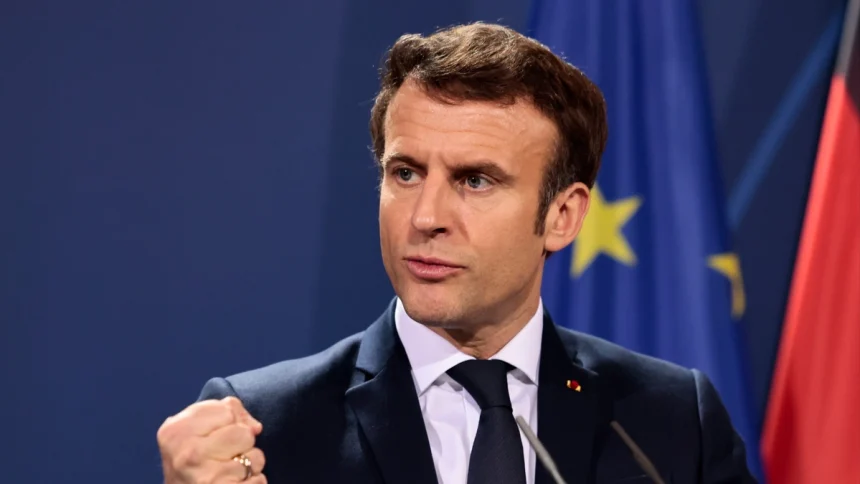
French President Emmanuel Macron has warned that Russia’s hybrid threat against Europe and France has intensified, amid growing concerns over cyberattacks, sabotage and other forms of covert aggression.
Speaking at a news conference at the Élysée Palace, Macron said he had ordered the government to strengthen protection around critical infrastructure, defence facilities and sensitive technology sites.
He said France had been targeted by what he described as Russian hybrid attacks in recent weeks, warning that such actions would not go unanswered.
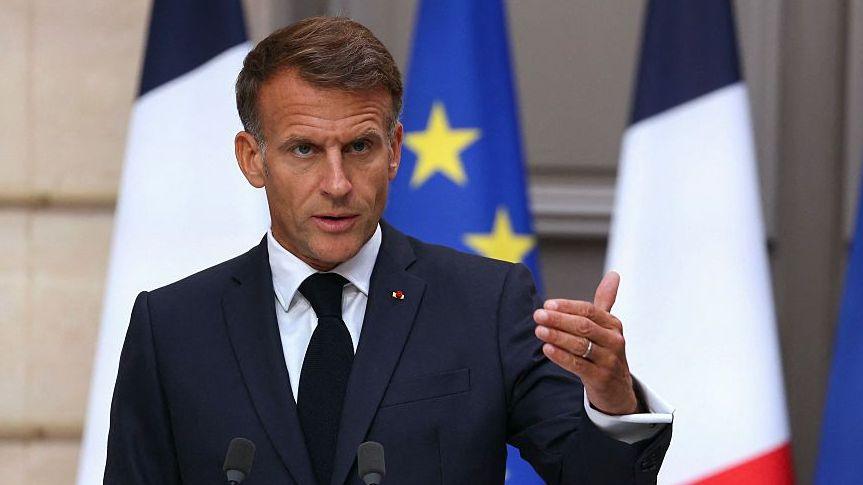
“In recent weeks, the Russian hybrid threat against Europeans and against France has intensified,” Macron said.
According to the French president, the objective of the attacks was to intimidate European countries and weaken their support for Ukraine.
More Read

He added that the strategy would have the opposite effect, insisting that France and its European allies would continue supporting Ukraine because their own security was at stake.
Hybrid warfare generally refers to non-conventional methods of exerting pressure on an adversary, including cyberattacks, sabotage, disinformation and attacks carried out through proxies.
Macron cited recent incidents across Europe, including a drone attack on Leipzig airport in Germany and concerns raised by Polish Prime Minister Donald Tusk over possible Russian drone and missile strikes against NATO countries.
Tusk told Polish lawmakers that there was a “real risk” of attacks on NATO territory, with Russia potentially describing them as accidental in an effort to create divisions within the alliance.
Another incident involved a passenger train near the Ukraine-Poland border, where a Russian drone reportedly struck the train’s engine shortly after former British Prime Minister Boris Johnson and European security officials had travelled along the same route.
Ukraine said passengers had been evacuated only minutes before the strike.
Several European countries have also reported suspicious fires at defence-related facilities, with some governments pointing to possible Russian involvement.
Moscow has repeatedly denied plans to attack Europe. However, Russian Foreign Minister Sergey Lavrov has warned European countries against deploying troops to Ukraine, saying such a move would be viewed by Moscow as a declaration of war.
Russia has also warned Britain that British military facilities in Ukraine used to launch attacks against Russian territory would be considered legitimate targets.

Moscow said it reserved the right to take what it called “necessary counter-measures” in response to Britain’s support for Ukraine, including the supply of drones and other weapons to Kyiv.
Russia launched its full-scale invasion of Ukraine in February 2022.
France Strengthens Critical Infrastructure Protection
Macron also addressed France’s energy security, saying authorities had been instructed to reinforce protection around critical infrastructure and the country’s most sensitive defence and technology facilities against potential drone and cyberattacks.
He announced plans for France to convene a G7 meeting to discuss energy security and possible measures to strengthen cooperation among member states.
Macron said the meeting would also examine options concerning strategic energy reserves and possible measures to ease pressure on energy markets.
The French president further warned politicians ahead of next year’s elections against exploiting public concerns over rising fuel prices for political purposes.
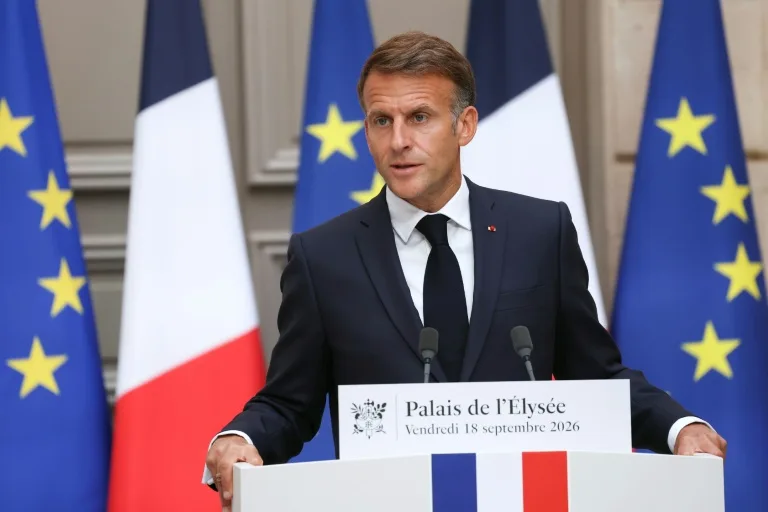
He argued that fuel-price inflation was being driven largely by international circumstances beyond the government’s direct control.
The political debate comes as France prepares for its next presidential election, with the National Rally’s Marine Le Pen among the leading figures in current polling for the April-May election period.
The developments come as European governments face increasing pressure to strengthen their security infrastructure while maintaining support for Ukraine amid continuing tensions with Moscow.