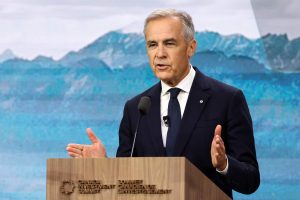
BRUSSELS/LONDON — Canada could be on the verge of forging an unprecedented relationship with the European Union after European Commission President Ursula von der Leyen invited Ottawa to explore becoming the bloc’s first-ever associate member.
The proposal has generated significant interest and confusion across Europe, with some headlines suggesting Canada could be preparing to join the European Union.
However, the proposal does not amount to full EU membership.
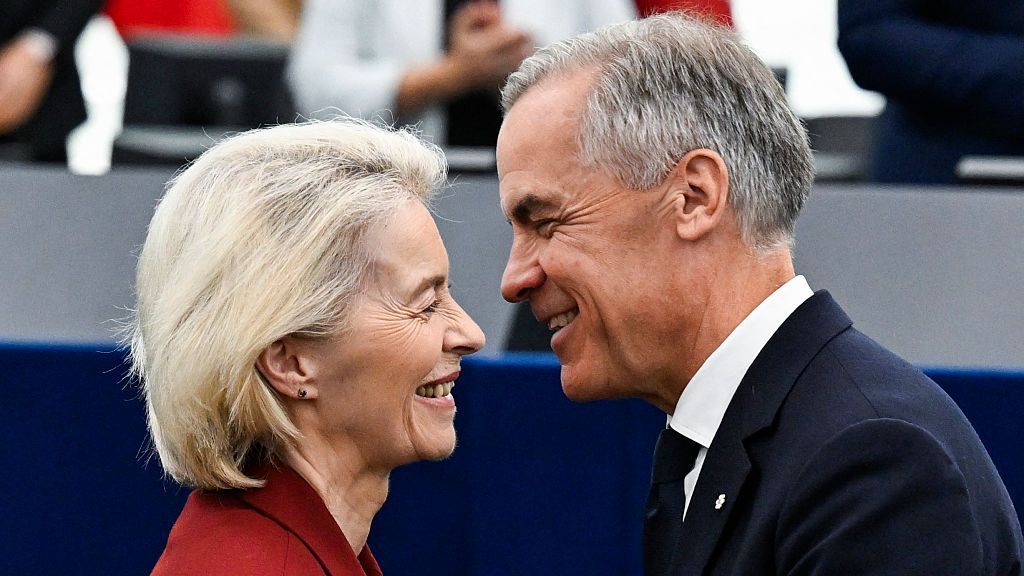
Canada, geographically located outside Europe, would not become a conventional member of the 27-nation bloc. Instead, the idea under discussion is a new form of closer institutional, economic and strategic partnership that could give Canada a significantly deeper relationship with the EU than it currently enjoys.
More Read

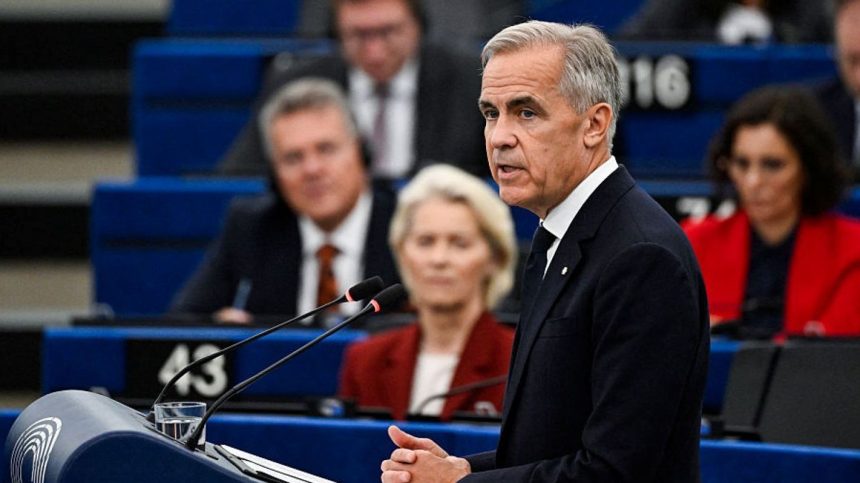
Canadian Prime Minister Mark Carney, addressing the European Parliament on Thursday, responded warmly to the proposal and called for much closer cooperation between Canada and Europe.
“Canada and Europe should secure our strategic autonomy through deep cooperation in the full range of strategic capabilities,” Carney told lawmakers.
His remarks appeared to signal Ottawa’s willingness to explore a relationship that could extend well beyond trade.
More Read

What Would Associate Membership Mean?
The precise meaning of associate membership has yet to be established.
Any agreement would likely require negotiations covering areas such as economic security, energy, critical minerals, technology, artificial intelligence, education, research and defence.
Canada and the EU already maintain extensive economic ties through the Comprehensive Economic and Trade Agreement, commonly known as CETA.
Carney suggested that the two sides could build upon that existing relationship to strengthen their ability to withstand economic and geopolitical pressures.
He also argued that closer cooperation would help Canada and European countries close strategic capability gaps and strengthen their national sovereignty.
According to Carney, the objective would not be to establish another global superpower or create a bloc directed against the United States or China.
More Read

“We do not pursue zero sum deals,” he said, presenting closer international cooperation as a way of responding to an increasingly unstable global environment.
Why Canada and Europe Are Moving Closer
The proposal comes at a time of growing uncertainty in Canada’s traditional relationship with the United States.
For decades, Washington has been Canada’s most important economic and defence partner. European countries have similarly depended heavily on the United States for security through NATO.
But trade disputes, tariffs and disagreements over security policy have prompted both Canada and several European governments to consider how they can reduce strategic vulnerabilities.
Canada is currently engaged in difficult trade relations with the Trump administration, while European governments have also been affected by US tariff policies.
The result has been a growing push on both sides of the Atlantic to diversify economic partnerships and strengthen domestic and regional capabilities.
The EU has recently pursued closer economic relationships with countries including India, Indonesia and Japan as part of a broader effort to diversify its global trade relationships.
Trump Warns Against the Proposal
The proposed Canada-EU relationship has already attracted a sharp reaction from US President Donald Trump.
Trump has dismissed the idea and warned that Washington could impose “very heavy tariffs” if Canada and the European Union proceed with an agreement.
He has also suggested that such an arrangement could be viewed by the United States as a “hostile act.”
The reaction has added another dimension to what was initially presented as an economic and strategic cooperation proposal.
Ironically, however, concerns over US trade and security policies appear to be among the factors encouraging Canada and Europe to explore closer cooperation.
Could Other Countries Follow Canada?
If the proposal eventually becomes reality, Canada could establish a completely new model for countries seeking very close relations with the EU without becoming full members.
Such an arrangement could attract interest from other countries with strong economic, political or security ties to Europe.
The United Kingdom, for example, has previously sought closer relations with the EU following Brexit, while countries such as Japan and South Korea have shown increasing interest in deeper cooperation with Europe.
Ukraine is another important case.
A proposal to make Ukraine an EU associate member was reportedly discussed in Germany earlier this year, although it did not gain sufficient support within the bloc.
Some European governments remain concerned that granting non-members extensive access to the EU could weaken the distinction between membership and partnership.
No Deal Has Been Agreed Yet
Despite the enthusiasm surrounding Carney’s speech, Canada is not yet an associate member of the European Union.
Any formal arrangement would require extensive negotiations and approval by all 27 EU member states.
There is also no established legal precedent for exactly what “associate membership” would entail.
Issues ranging from trade and tariffs to regulatory alignment, defence cooperation and access to European programmes would have to be negotiated before an agreement could become reality.
For now, therefore, Canada’s relationship with the EU remains a work in progress.
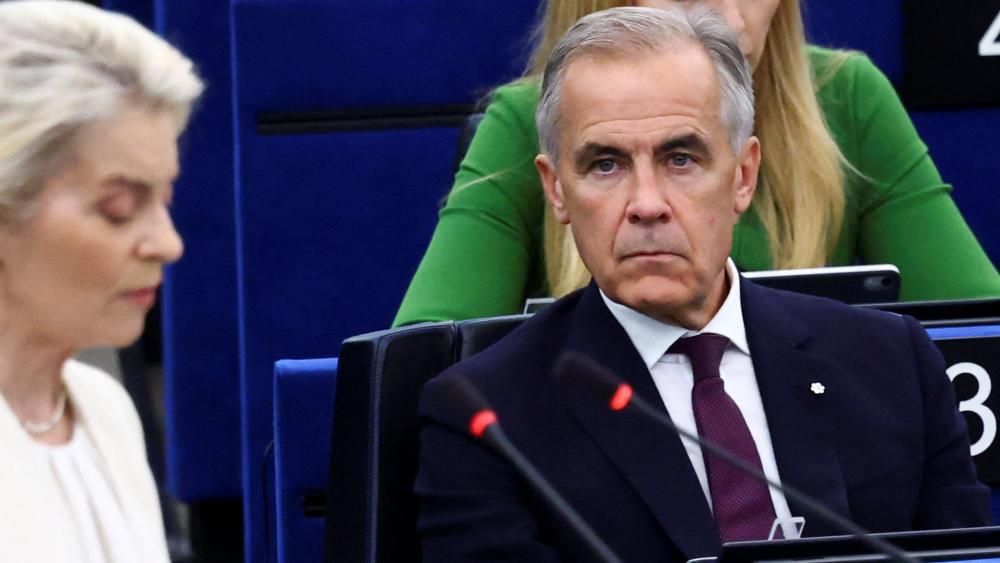
But the political message from Brussels and Ottawa is unmistakable: Canada and Europe are exploring a much closer strategic partnership at a time when both sides are reassessing their place in a rapidly changing world.
The proposal could ultimately become one of the most significant experiments in the EU’s relationship with a non-European country — and potentially establish a new model for cooperation beyond traditional EU membership.
Cruise TV News will continue to monitor developments surrounding the proposed Canada-EU associate membership arrangement.