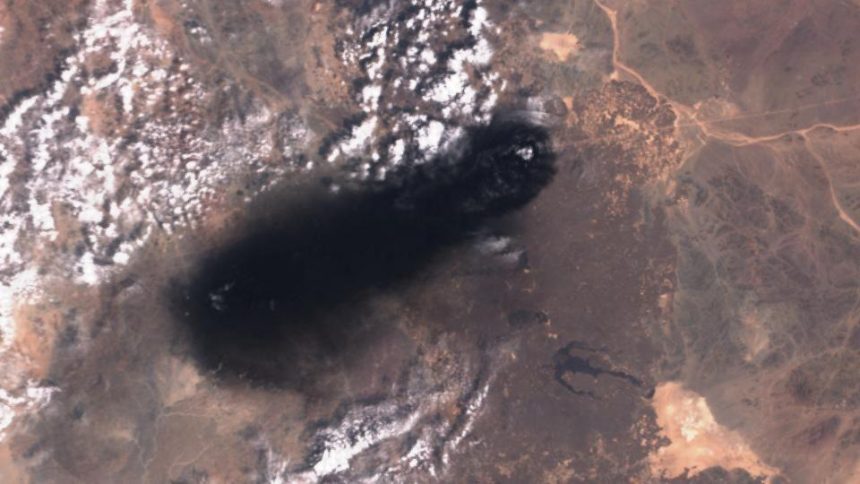
RIYADH — Saudi Arabia has temporarily shut down its strategic East-West oil pipeline after multiple drones launched from Iraq targeted the vital energy facility, in the latest escalation to threaten oil supplies and shipping routes across the Middle East.
The attack, which caused injuries and damage to the pipeline, has heightened fears over the security of one of the world’s most important alternative routes for transporting Saudi crude as disruptions continue around the Strait of Hormuz and the Red Sea.
Saudi Arabia’s Ministry of Energy said the East-West Pipeline, which passes through the Riyadh and Madinah regions, was attacked on Thursday, September 10. The pipeline was subsequently shut down as a precaution while emergency and technical teams moved in to secure the facility and assess the damage.

The Saudi Foreign Ministry later confirmed that the drones had been launched from Iraqi territory, describing the attack as a serious violation of the Kingdom’s security and sovereignty.

Saudi Arabia said it had decided not to retaliate at this stage, following a request from Iraqi Prime Minister Ali al-Zaidi, who asked Riyadh to give Baghdad an opportunity to investigate the incident and prevent further attacks from Iraqi territory.
However, Riyadh warned that it reserves the right to take whatever measures it considers necessary to protect its sovereignty, critical infrastructure, citizens and residents.
Iraq Dismisses Military Commander
Iraq has moved quickly to respond to the incident.
More Read

The Iraqi Prime Minister’s Office said an investigation confirmed that the drone attacks targeting Saudi Arabia were launched from a location within Maysan province in southern Iraq, a region bordering Iran.
Following the findings, Baghdad dismissed the military commander responsible for operations in Maysan and ordered a further investigation into the circumstances surrounding the attack.
Iraq has also condemned the attack and reaffirmed its opposition to the use of its territory as a launching ground for attacks against neighbouring countries.
The development comes amid longstanding concerns over the activities of Iran-aligned armed groups operating in Iraq and their potential impact on regional security.
Why the Pipeline Is So Important
The East-West Pipeline, also known as Petroline, stretches approximately 1,200 kilometres (745 miles) across Saudi Arabia.
Its strategic importance has increased dramatically because it provides Saudi Arabia with an alternative route for exporting crude without relying entirely on tanker traffic through the Strait of Hormuz.
More Read

According to Reuters, the pipeline has been transporting between 4 million and 5 million barrels of crude per day in recent months — equivalent to roughly 4% to 5% of global oil supply, based on estimates from ship-tracking companies and analysts.
The temporary closure therefore comes at a particularly sensitive moment for global energy markets.
Red Sea Also Under Pressure
The pipeline attack is occurring against the backdrop of a wider deterioration in the security situation around the Arabian Peninsula.
Iran-aligned Houthi fighters in Yemen have made a rapid advance along the country’s Red Sea coastline and have reportedly seized the strategic island of Perim, located at the entrance to the Bab el-Mandeb Strait.
The Bab el-Mandeb is one of the world’s most important maritime chokepoints, linking the Red Sea with the Gulf of Aden and providing access toward the Suez Canal.
The Houthi advance has raised concerns that another critical route for global oil and commercial shipping could come under increasing pressure.
The developments mean that Saudi Arabia is facing pressure on two sides — with the Strait of Hormuz severely disrupted and the Red Sea becoming increasingly vulnerable.
Oil Prices Under Pressure
The latest attacks have added another layer of uncertainty to already troubled global energy markets.
Oil prices have climbed above $100 a barrel, according to recent market reports, as traders assess the potential impact of disruptions around major Middle Eastern shipping and export routes.
Saudi Arabia is the world’s largest crude oil exporter, making any prolonged disruption to its ability to transport crude potentially significant for international markets.
Analysts are closely watching whether the East-West Pipeline can resume operations quickly and whether further attacks will occur.
Gulf States Condemn Attack
The Gulf Cooperation Council, which includes Saudi Arabia, the United Arab Emirates, Bahrain, Kuwait, Oman and Qatar, has condemned the drone attack.
GCC Secretary-General Jasem Mohamed Albudaiwi described the incident as a dangerous escalation and an unacceptable threat to Saudi Arabia’s security, territorial integrity and critical infrastructure.
The regional bloc called on Iraq to take decisive measures to prevent its territory from being used to launch attacks against neighbouring states.

Saudi Arabia Holds Fire — For Now
Despite the severity of the attack, Saudi Arabia has so far chosen restraint.
Riyadh said it would support Baghdad’s efforts to identify those responsible and prevent further attacks.
But the Kingdom’s warning that it retains the right to take necessary measures has left open the possibility of a stronger response if attacks originating from Iraq continue.
With the Strait of Hormuz already facing severe disruption and the Bab el-Mandeb coming under increasing pressure, the latest attack on Saudi Arabia’s East-West Pipeline could mark another dangerous turning point in the Middle East conflict.
For global oil markets, the biggest question now is whether the pipeline closure will be temporary — or whether the expanding conflict will further threaten the movement of crude from the Gulf to the rest of the world.