Tinubu aide challenges former Vice-President to provide evidence that crude subsidy to local refineries worked during Obasanjo administration
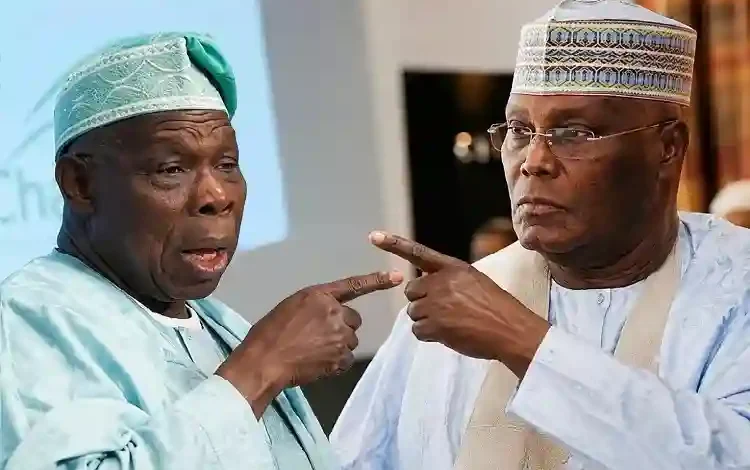
The Presidency has criticized former Vice-President Atiku Abubakar’s proposal to introduce a production subsidy for local refineries, arguing that a similar policy was previously implemented under the administration of former President Olusegun Obasanjo but failed to deliver the desired results.
Otega Ogra, Senior Special Assistant to President Bola Tinubu on Digital and New Media, made the assertion while reacting to Atiku’s proposal for the government to subsidies’ crude supplied to domestic refineries as part of measures to support local refining and reduce pressure on fuel prices.
In a statement posted on X, formerly known as Twitter, Ogra directly challenged the former Vice-President to explain why Nigerians should embrace the policy again when, according to him, a similar arrangement had already been tried during the Obasanjo administration.
“Excuse me, sir. Nigeria already tried your production-subsidy to local refineries idea while you were Vice President. We know the shambolic results of that production subsidy. You know it too,” Ogra wrote.
More Read

The presidential aide cited refinery utilization figures from the period to support his argument.
According to Ogra, the utilization rate of the Warri Refinery fell to 14.27 per cent in 2003 and further declined to 9.1 per cent in 2004.
He also stated that the Kaduna Refinery recorded utilization rates of 15.96 per cent and 26 per cent in 2003 and 2004 respectively.
More Read

For the Port Harcourt Refinery, Ogra said utilization dropped from 60.73 per cent in 2001 to 31.04 per cent in 2004.
The presidential aide further argued that the subsidy arrangement did not prevent petrol prices from rising significantly during the period.
“Meanwhile, price of petrol more than tripled by 2004 and nearly quadrupled by the time you left office despite your production subsidy to local refiners,” he said.
Ogra also referred to an October 9, 2003 presidential directive, which he said resulted in the cancellation of the discount arrangement.
According to him, the directive, identified as PRES/158, instructed the Nigerian National Petroleum Corporation, now known as the Nigerian National Petroleum Company Limited, to pay the full international price for crude supplied to refineries.
“President Obasanjo ordered NNPC to pay full international price for refinery crude. Your production subsidy was tried, failed and scrapped, with you as Vice President,” Ogra stated.
More Read

The presidential aide then challenged Atiku to provide evidence that the policy achieved its intended objectives during the period.
“So, before selling Nigerians this failed production subsidy policy again, answer one simple question,” Ogra wrote.
“I know there are many Nigerians who were too young to know what was happening then. But if you may tell them, where is the evidence that it worked the first time?”
The exchange comes amid continuing debate over how Nigeria can strengthen domestic refining, reduce dependence on imported petroleum products and bring down the cost of petrol.
Atiku has advocated policies aimed at supporting local refineries, including mechanisms that would make crude oil available to domestic refiners at more favorable terms.
The Presidency, however, maintains that subsidizing crude for local refiners is not a new idea and that Nigeria’s previous experience with the policy did not produce sustainable results.
The latest clash highlights the wider political and economic debate surrounding Nigeria’s downstream petroleum sector, particularly the question of whether government intervention through subsidies or market-based mechanisms offers the most effective route to affordable fuel and sustainable domestic refining.
For now, the Presidency has put the burden on Atiku to demonstrate why a policy it says was unsuccessful in the past should be revived under a different administration.
The debate is expected to continue as stakeholders weigh competing proposals on crude supply, refinery operations, petrol pricing and the future of Nigeria’s petroleum industry.