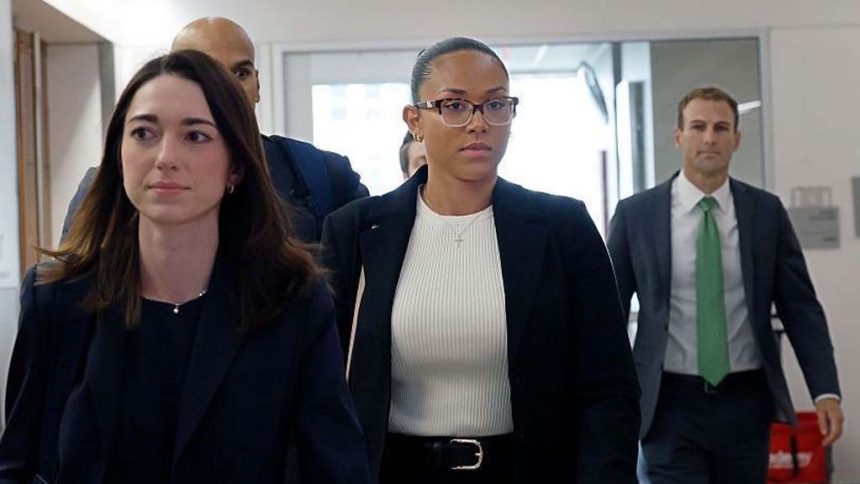
A bitter custody battle involving a surrogate mother, a California couple and a baby born with a severe heart defect has reached the United States Supreme Court, raising difficult questions about parental rights, medical decisions and the limits of surrogacy agreements.
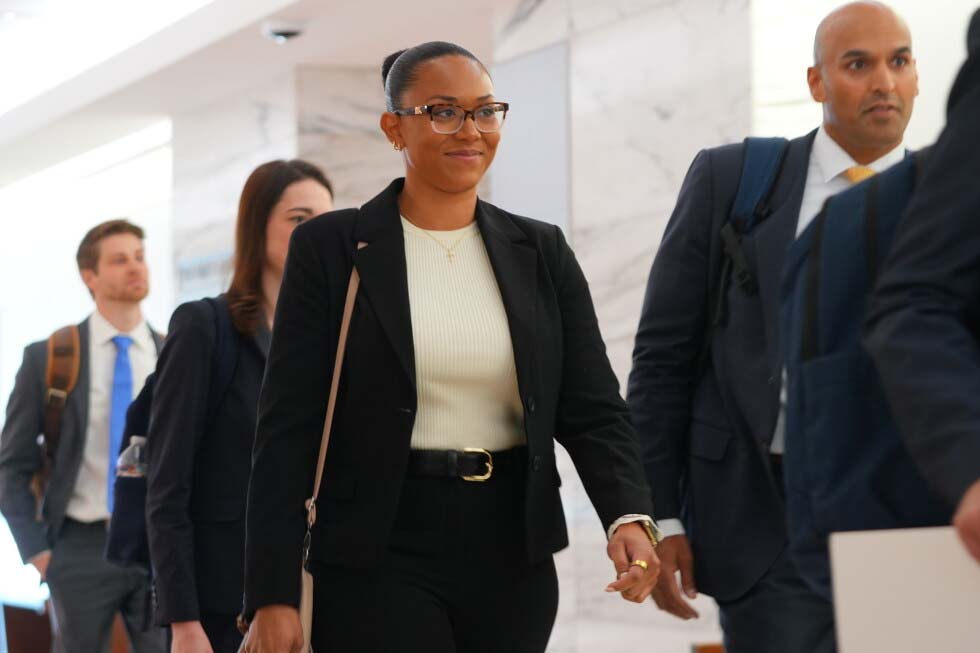
McKenna West, the surrogate mother at the centre of the dispute, has filed an emergency appeal asking the US Supreme Court to intervene after a California court previously awarded parental rights to the couple who hired her, Omar Ahmed and Nausheen Gilkar.
The dispute began during West’s pregnancy when a medical scan at about 20 weeks revealed that the unborn baby had hypoplastic left heart syndrome (HLHS), a serious congenital heart defect in which the left side of the heart is unable to pump sufficient blood to the body.
According to court documents, Ahmed and Gilkar subsequently asked West to terminate the pregnancy after learning about the diagnosis.
West refused.
More Read

Instead, she travelled from California to Texas, where abortion laws are among the most restrictive in the United States, and continued the pregnancy.
She later gave birth to the baby, whom the couple had named Rumi, last month.
The infant was born with the heart condition and required urgent medical treatment. Following intervention by Texas Attorney General Ken Paxton, a Texas court issued an emergency order requiring that the baby receive medical care in the state.
More Read

The child underwent surgery shortly after birth.
West has now asked the US Supreme Court to halt the enforcement of the California ruling granting parental rights to Ahmed and Gilkar while the custody dispute continues.

‘This Precious Baby’
In her Supreme Court filing, West said she rejected the abortion request after learning that treatment options were available for the baby’s condition.
She said she wanted to continue the pregnancy because she considered the unborn child “this precious baby”.
West is now seeking custody, arguing that she is concerned about whether the biological parents would provide the level of medical treatment the child needs.
More Read

Her lawyers have pointed to the couple’s earlier request for an abortion as part of their argument that the baby’s medical interests could be at risk if Ahmed and Gilkar are granted custody.
The California couple, however, strongly disputes that characterization.
During an earlier court hearing, Nausheen Gilkar described Rumi as “our child” and “the love of our lives”, according to reports by the Associated Press.
The couple also accused West of travelling to Texas without informing them and preventing them from accessing information about the baby’s medical condition.
A Battle Across Two States
The case has developed into a legal confrontation involving courts in both California and Texas.
A California court previously ruled in favour of Ahmed and Gilkar and granted them parental rights.
A Texas court, meanwhile, issued a restraining order preventing West from seeing the child.
Texas Attorney General Ken Paxton, a Republican, also became involved after West brought the baby to Texas. His intervention resulted in a court order designed to ensure that the child received necessary medical treatment.
West has received support from several Republican officials, making the case particularly significant amid America’s continuing political and legal battles over abortion.
The dispute, however, is not simply about abortion.
At its core is a question over who should have legal authority to make life-changing decisions for a medically fragile child.
The Baby’s Medical Condition
Hypoplastic left heart syndrome is a serious congenital heart defect.
According to the US Centers for Disease Control and Prevention, babies born with the condition can require multiple surgeries and may experience lifelong medical complications.
Treatment can improve survival, but the procedures do not constitute a complete cure for the underlying condition.
The baby’s medical condition has therefore become central to the custody dispute.
Last month, an attorney representing Ahmed and Gilkar said the child was in critical condition and appeared to be experiencing possible complications.
West’s lawyers have raised concerns about what could happen if the child is placed under the care of the biological parents.
In their Supreme Court filing, they suggested that Ahmed and Gilkar could potentially choose hospice care for the child.
The couple’s lawyers have not publicly responded to the latest allegations. The BBC said it contacted their legal representatives for comment.
What Happens Next?
West argues that immediate Supreme Court intervention is necessary because, without it, she could lose access to information concerning the baby’s medical condition.
The Supreme Court has yet to determine whether it will grant her emergency request.
The case presents the court with an unusually complicated intersection of surrogacy law, parental rights, abortion politics and medical decision-making.
It also highlights the complicated legal questions that can arise when a surrogate and the intended parents disagree over a pregnancy after a serious fetal diagnosis.
For now, the future of Rumi remains at the centre of a legal battle spanning two states.
While West maintains that she acted to protect a child she believed could be treated, Ahmed and Gilkar maintain that Rumi is their child and that they should retain parental authority.
The ultimate decision could have implications extending beyond this individual family, particularly for disputes involving surrogacy agreements, fetal diagnoses and disagreements over medical treatment.
The US Supreme Court’s response to West’s emergency appeal could therefore become another significant chapter in America’s increasingly complex debate over reproductive rights, parental authority and the welfare of medically vulnerable children.