Three prominent Hong Kong activists who organised annual vigils commemorating the 1989 Tiananmen Square crackdown in Beijing have been sentenced to prison terms of up to seven years.
Lee Cheuk-yan, 69, was sentenced to seven years in prison, while Chow Hang-tung, 41, received seven years and three months. A third defendant, 74-year-old Albert Ho, who pleaded guilty earlier this year, was handed a five-year prison sentence.
Lee and Chow were convicted last month of inciting others to subvert state power under Hong Kong’s controversial national security legislation. Ho pleaded guilty to the charge in January.
For decades, Hong Kong was one of the few places under Chinese sovereignty where large public gatherings could be held to commemorate the deadly 1989 crackdown on pro-democracy protesters in Beijing.
More Read

The annual vigils, organised by the now-disbanded Hong Kong Alliance, were banned by authorities in 2020, initially under coronavirus restrictions. They never resumed, while a sweeping national security law came into force the same year, criminalising a broad range of activities deemed to threaten national security.
Authorities maintain that the legislation is necessary to preserve stability, while critics say it has significantly weakened Hong Kong’s freedoms and autonomy and created an atmosphere of fear.
Lee, Chow and Ho were arrested and charged in 2021. Following their convictions, they faced prison terms of up to 10 years.
More Read

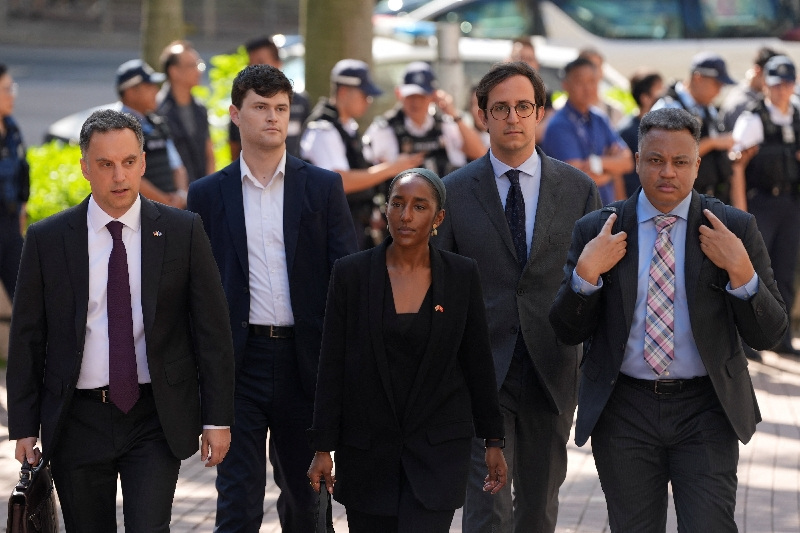
During Friday’s sentencing, Lee and Chow stood and smiled towards the packed public gallery as proceedings began, while Ho maintained a serious expression.
After the sentences were announced, Lee appeared to pray as he was escorted from the dock. Chow, meanwhile, blew a kiss towards supporters in the public gallery.
According to a court summary issued in August, Lee and Chow were accused of inciting people to “organise, plan, commit or participate” in acts through unlawful means with the intention of subverting state power.
A major focus of the case was the Hong Kong Alliance’s slogan calling for an end to “one-party dictatorship”. The court ruled that the slogan amounted to incitement to undermine the Chinese Communist Party.
Chow had told the court during proceedings in May that the national security law itself was effectively on trial.
Following the sentencing, Lee’s wife, Elizabeth Tang, described the development as a “sad day” and said it was unacceptable that her husband would have to spend additional years behind bars. She added that Lee intended to appeal.
More Read

Outside the court, Chow’s mother, Medina, urged supporters not to lose hope.
“Do not lose heart. And above all, do not feel guilty,” she told the crowd, according to Reuters.
Before her arrest in 2022, Chow told the BBC that she was prepared to be arrested and willing to pay the price for her fight for democracy.
The three defendants were senior figures in the Hong Kong Alliance, which was established in May 1989 to support students taking part in pro-democracy demonstrations in Beijing.
Weeks later, Chinese authorities deployed troops and tanks to crush the demonstrations around Tiananmen Square. Estimates of those killed vary widely, ranging from several hundred to several thousand.
For more than three decades, the Hong Kong Alliance had called on Chinese authorities to accept responsibility for the crackdown, release political dissidents and pursue democratic reforms.
The organisation also staged annual candlelight vigils in Hong Kong to remember those killed. Organisers said some of the events attracted more than 100,000 participants, although police provided lower estimates.
The court also imposed a HK$1.5 million ($191,000; £142,000) fine on the Hong Kong Alliance.
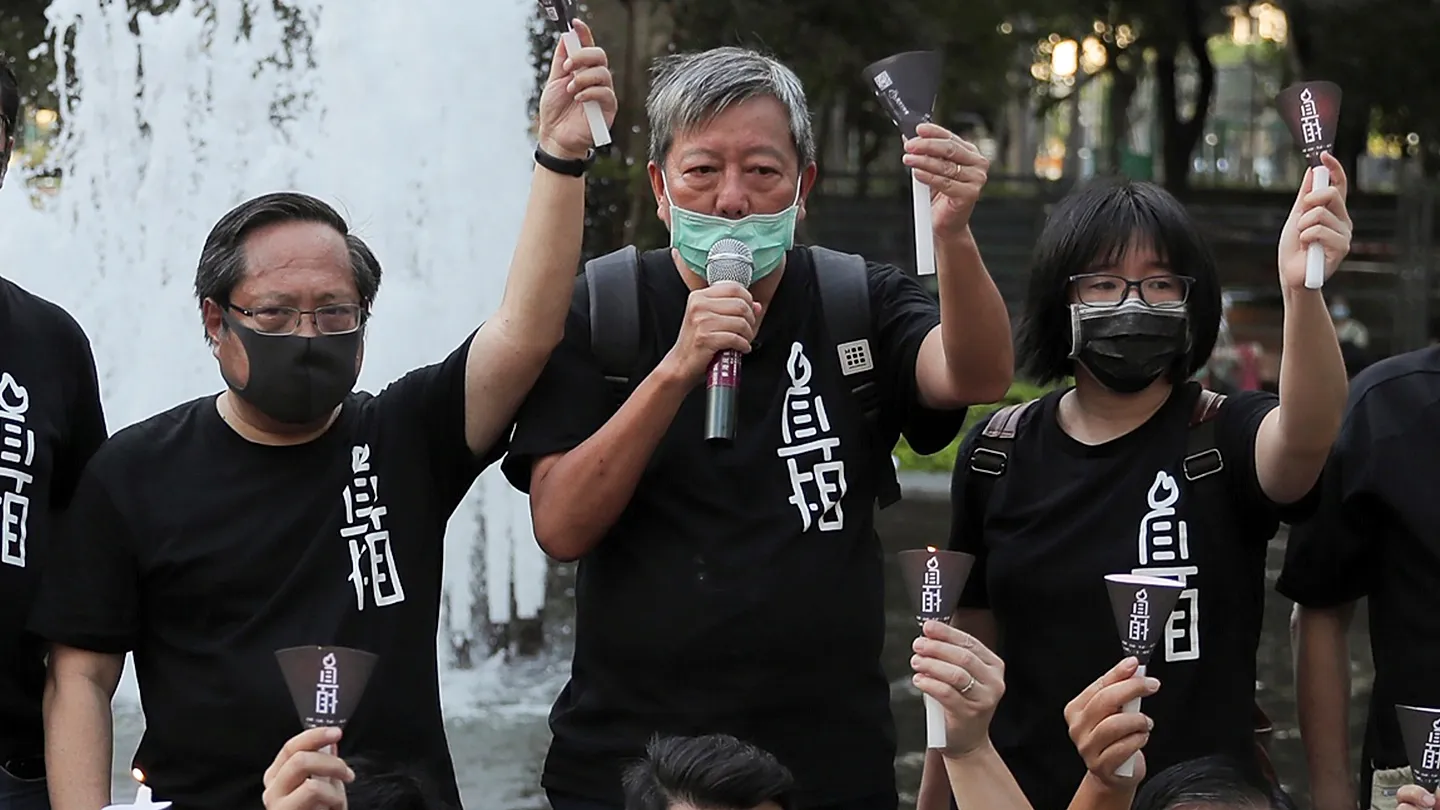
Human rights organisations have strongly criticised the sentences.
Amnesty International Deputy Regional Director Sarah Brooks described the case as a “triple tragedy” for the activists, the victims and survivors of the Tiananmen crackdown, and generations of Hongkongers who have been denied the opportunity to openly discuss the events.
Human Rights Watch also condemned the sentences, saying the punishment of peaceful organisers of Tiananmen vigils demonstrated what it described as a government fearful of historical memory and public dissent.