German automotive giant Volkswagen has approved plans to eliminate another 50,000 jobs by 2030 as the company embarks on the biggest restructuring programme in its nearly 90-year history.
The latest cuts will bring the total number of positions Volkswagen plans to shed to 100,000, following the company’s earlier announcement in March that it intended to reduce its workforce by 50,000.
The restructuring comes as Volkswagen battles declining profits, weaker sales and intensifying competition from rapidly expanding Chinese carmakers.
Volkswagen Group, which owns major brands including Audi, Porsche, Skoda, Seat, Bentley and Lamborghini, employed more than 660,000 people worldwide as of 2025.
The company’s Chief Executive Officer, Oliver Blume, described the latest decision as a major step towards securing Volkswagen’s future.
More Read

Blume said the move sends a “strong signal” about the company’s commitment to remaining competitive while taking responsibility for its workforce.
Four German Plants Under Review
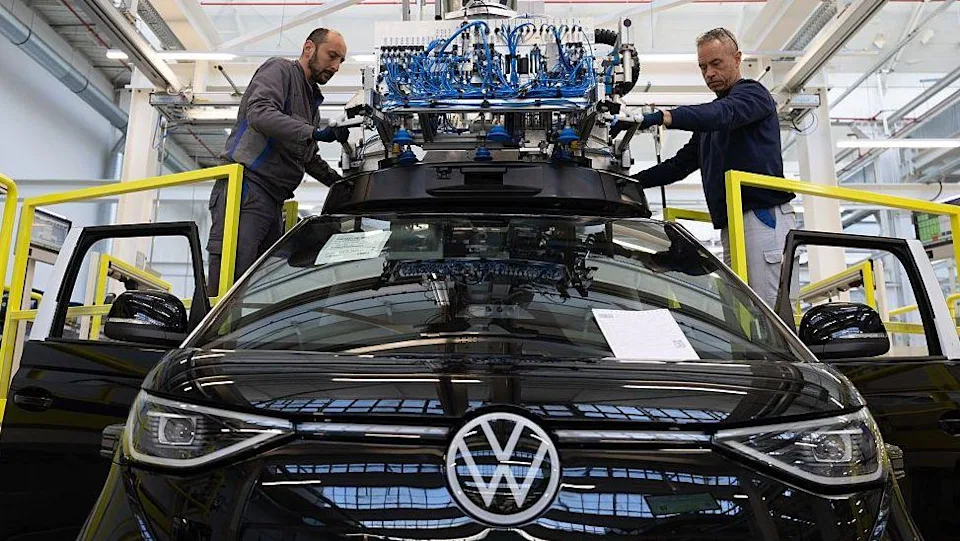
As part of the restructuring, Volkswagen is also examining the future of four of its German production facilities in Emden, Zwickau, Hanover and Neckarsulm.
More Read

The company said production capacity at the facilities currently exceeds demand and that it is assessing alternative uses for the plants.
The potential changes could have significant consequences for Germany’s automotive manufacturing sector, where Volkswagen remains one of the country’s largest industrial employers.
Volkswagen said a “fundamental adjustment” of its global workforce capabilities was necessary to protect the company’s competitiveness amid changing consumer demand and rapid technological developments.
The company expects the workforce adjustment to affect approximately 50,000 positions across the group, including management roles.
Volkswagen to Reduce Number of Car Models
The restructuring will not only affect Volkswagen’s workforce.
More Read

The company also plans to significantly reduce the number of vehicle models it produces.
By 2035, Volkswagen intends to cut the number of models it manufactures by approximately 50% and reduce the complexity of its product range by 75%.
The company said it would instead concentrate resources on its “most compelling vehicles” and increase production volumes for individual models.
Volkswagen believes producing fewer models in larger quantities will help simplify its operations and reduce manufacturing costs.
Chinese Carmakers Increase Pressure
One of Volkswagen’s biggest challenges has been the rapid rise of Chinese automotive manufacturers.
Companies such as BYD have expanded aggressively into international markets, including the UK, European Union and Southeast Asia.
Chinese manufacturers have gained ground by offering increasingly advanced electric vehicles and other technologies, often at lower production costs than established Western competitors.
Volkswagen has been particularly affected by declining sales in China, which was once one of its most important markets.
The company is now facing a dramatically different competitive environment as Chinese consumers have increasingly embraced locally produced electric vehicles.
US Market Also Under Pressure
Volkswagen’s difficulties have also extended to the United States, where sales have been affected by weaker demand and tariffs imposed on imported vehicles during the administration of US President Donald Trump.
The combination of weaker sales, higher costs, technological changes and increased competition has put pressure on Volkswagen to overhaul its operations.
Shares Rise After Announcement
Investors initially welcomed the restructuring announcement.
Volkswagen shares rose by approximately 7% in Frankfurt trading on Friday, suggesting that markets viewed the aggressive cost-cutting programme as a potentially positive step towards restoring the company’s profitability.
However, the scale of the planned workforce reduction highlights the challenges facing one of Europe’s most important industrial companies.
Union Welcomes Efforts to Address Crisis
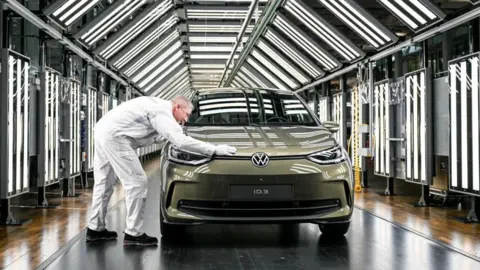
Christianne Benner, president of Europe’s largest industrial union, IG Metall, and deputy chair of Volkswagen’s Supervisory Board, said the company had worked hard to find solutions to what she described as a crisis situation.
The latest restructuring represents a major transformation for Volkswagen as the company attempts to adapt to changing consumer preferences, the shift towards electric vehicles, increasing global competition and pressure to reduce production costs.
With plans to eliminate up to 100,000 jobs by 2030, reduce its model range and reconsider the future of several German factories, Volkswagen is preparing for one of the most significant transformations in its history.
The decisions could reshape not only the future of Volkswagen but also Germany’s wider automotive industry, which is under growing pressure from new competitors emerging from China.