JAKARTA, Indonesia — More than 150,000 passengers have been left stranded after a major volcanic eruption forced Indonesian authorities to temporarily suspend operations at eight airports, disrupting hundreds of domestic and international flights.
The disruption began on Sunday morning when Jakarta’s Soekarno-Hatta International Airport was temporarily closed after volcanic ash from Anak Krakatau was detected in the airspace around the airport.
Indonesia’s Transport Minister, Dudy Purwagandhi, said 712 flights had been affected, as authorities moved to limit the risks posed by the spreading volcanic ash.
He urged airlines to consider diverting flights to alternative airports while authorities continued to monitor the situation.
More Read

Ash Cloud Spreads Across Major Flight Routes
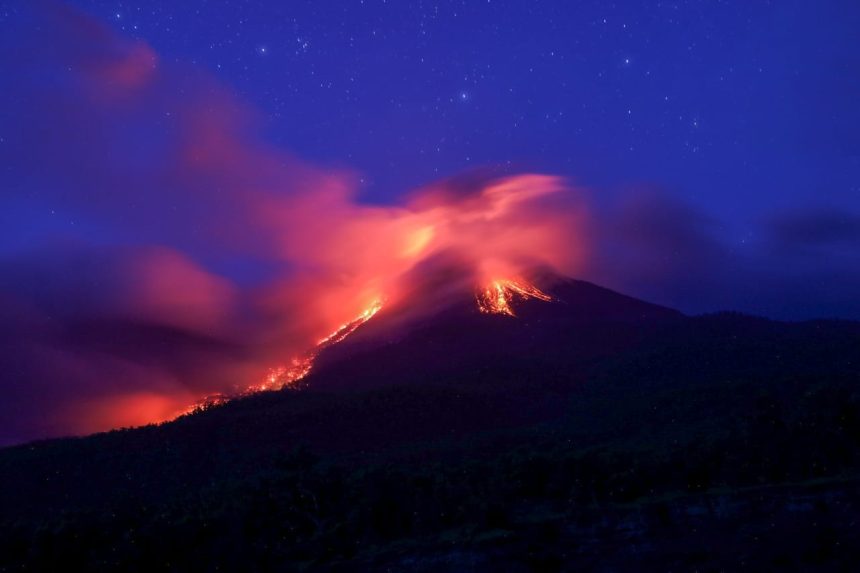
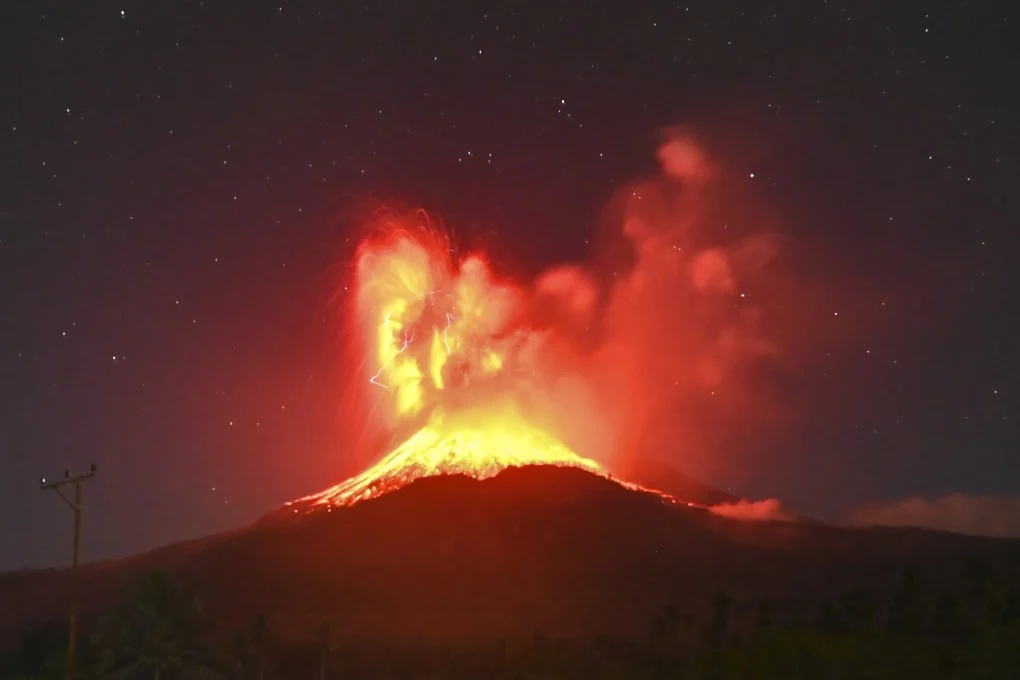
Anak Krakatau began erupting late Friday night, producing continuous seismic activity, lava fountains and loud booming sounds that were heard across surrounding areas.
Two additional eruptions were recorded early Sunday, further raising concerns about the spread of volcanic ash.
The Indonesian Transport Ministry said the disruption had particularly affected flights operating to and from Singapore, as well as other major international destinations, including Doha, Sydney and Kuala Lumpur.
More Read

Officials decided to temporarily close additional airports after tests indicated that volcanic ash had moved towards West Java, posing potential risks to aircraft engines and flight operations.
The disruption has created significant congestion at airports as thousands of travellers wait for information about cancelled and delayed flights.
Minister Purwagandhi called on airlines to accelerate ticket-refund procedures for affected passengers and provide timely information to travellers with upcoming flights.
He said better communication was necessary to prevent further overcrowding at airports.
Volcanic Ash Reaches Thousands of Feet Into the Atmosphere
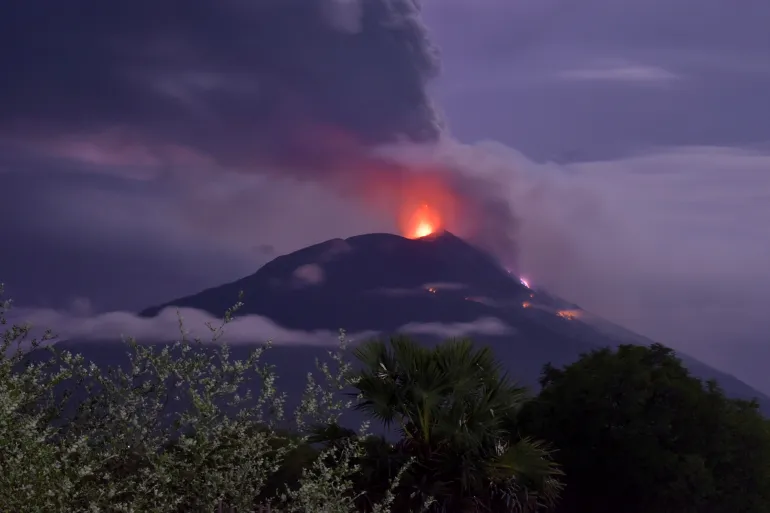
Indonesia’s Meteorology, Climatology and Geophysical Agency, BMKG, reported that volcanic ash had reached approximately 20,000 feet (6,000 metres) over parts of Java to the east of the volcano.
On the western side, towards Sumatra, the ash reportedly reached as high as 50,000 feet (15,000 metres).
More Read

The enormous ash cloud has become a major concern for aviation authorities because volcanic ash can seriously damage aircraft engines and reduce visibility, making flying through affected airspace extremely dangerous.
Despite the intensity of the eruption, authorities have confirmed that there is currently no tsunami warning associated with the latest volcanic activity.
Residents Warned to Stay Indoors
Health authorities have also warned residents living in areas affected by volcanic ash to take precautions.
Indonesia’s Health Minister urged people to remain indoors where possible and wear protective face masks to reduce exposure to particles that could cause respiratory, eye and skin irritation.
Local reports indicate that the ash has already begun affecting everyday life.
According to Indonesian newspaper Kompas, several schools cancelled activities on Saturday after students and residents complained of eye irritation.
Some fishermen also cancelled trips to sea after experiencing similar symptoms.
One resident, Aldi Candra Prayogi, told Kompas that he began experiencing eye irritation on Friday evening.
He described the sensation as though “small grains of sand had gotten into my eyes”, adding that he had been using eye drops to relieve the discomfort.
The amount of ash accumulating around his home was also significant.
Prayogi reportedly said he had to sweep the front yard every five minutes because of the thick volcanic dust.
A Volcano With a Deadly History
Anak Krakatau — meaning “Child of Krakatoa” — has been intermittently active since emerging from the sea in the early 20th century.
The volcano sits inside the caldera created by the catastrophic eruption of Mount Krakatoa in 1883, one of the most powerful volcanic eruptions in recorded history.
Anak Krakatau became particularly notorious in December 2018, when part of the volcano collapsed into the sea.
The collapse generated a devastating tsunami that struck coastal communities on the Indonesian islands of Java and Sumatra.
More than 400 people were killed, while thousands more were injured or displaced.
Scientists later determined that some of the enormous chunks of rock that slid into the sea during the collapse were estimated to have been 70 to 90 metres high.
The 2018 disaster highlighted the continuing danger posed by the volcano and its location in the Sunda Strait, one of Indonesia’s most geologically active regions.
Indonesia’s Place on the Pacific Ring of Fire
Indonesia is located along the Pacific Ring of Fire, a vast belt of volcanic and seismic activity stretching approximately 40,000 kilometres (25,000 miles) around the Pacific Ocean.
The region extends from the southern tip of South America towards New Zealand and encompasses numerous tectonic boundaries.
Approximately 90% of the world’s earthquakes occur along the Ring of Fire, while the region is home to around 75% of the world’s active volcanoes.
With Anak Krakatau continuing to erupt, Indonesian authorities are closely monitoring the volcano, volcanic ash movement and aviation conditions.
For the thousands of passengers affected by the disruption, however, the immediate priority remains finding alternative routes home or to their destinations as authorities work to determine when affected airports can safely resume normal operations.