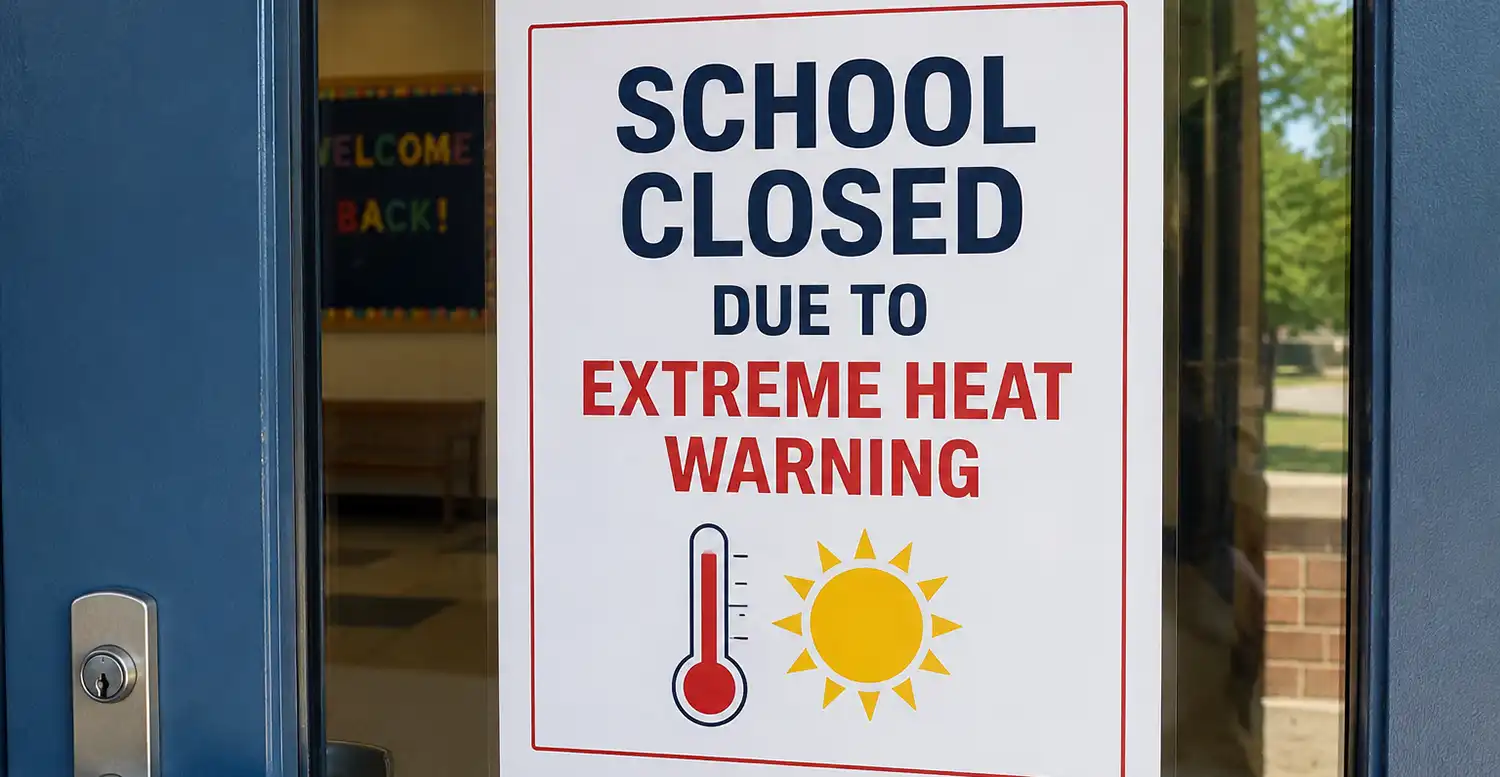
LONDON — More than 1,000 schools across southern England have either shut their doors or announced early closures as authorities extended a rare extreme heat warning amid soaring temperatures expected to reach as high as 40°C (104°F).
The unprecedented heatwave, which has gripped much of the United Kingdom and large parts of Europe, prompted school leaders to take emergency measures to protect students and staff from dangerous conditions. Hundreds of primary and secondary schools have shortened school days, while many others have suspended classes altogether as classrooms become increasingly difficult to keep cool.
The Met Office’s red heat alert remains in force across large parts of southern England, including London, the South East, South West, and parts of the Midlands. Forecasters warned that temperatures could challenge long-standing June records, with some areas expected to experience several consecutive days above 37°C.

Several major school trusts have ordered widespread closures. The Arthur Terry Learning Partnership shut all 25 of its schools, affecting more than 10,000 students, while the White Horse Federation closed over 30 schools across the Swindon area, disrupting education for approximately 11,000 pupils. Schools in counties including Wiltshire, Somerset, Berkshire, Buckinghamshire, Hampshire, and Bristol have also announced partial or full closures.
More Read

Education unions have expressed growing concern over the impact of extreme temperatures on learning environments, arguing that many school buildings were never designed to withstand such heat. Union leaders described some classrooms as “greenhouses,” citing inadequate ventilation and a lack of cooling systems in aging school infrastructure.
The Department for Education has maintained that schools should remain open whenever it is safe to do so but acknowledged that individual school leaders are best placed to make decisions based on local conditions. Schools that have remained open have relaxed uniform policies, encouraged students to wear sports kits, increased water breaks, and moved activities indoors where possible.
The heatwave has also disrupted transport networks, with rail operators warning of delays and speed restrictions due to overheating tracks. Health officials have urged residents to stay hydrated, avoid unnecessary travel during peak afternoon temperatures, and check on vulnerable family members and neighbours.
More Read

Britain’s extreme heat forms part of a wider European weather emergency that has already caused power outages, strained public services, and triggered health alerts across several countries. Meteorologists attribute the conditions to a powerful high-pressure system known as an “Omega block,” which has trapped hot air over Western Europe.
With temperatures expected to remain exceptionally high through the week, authorities continue to monitor the situation closely as schools, businesses, and transport operators brace for further disruption.