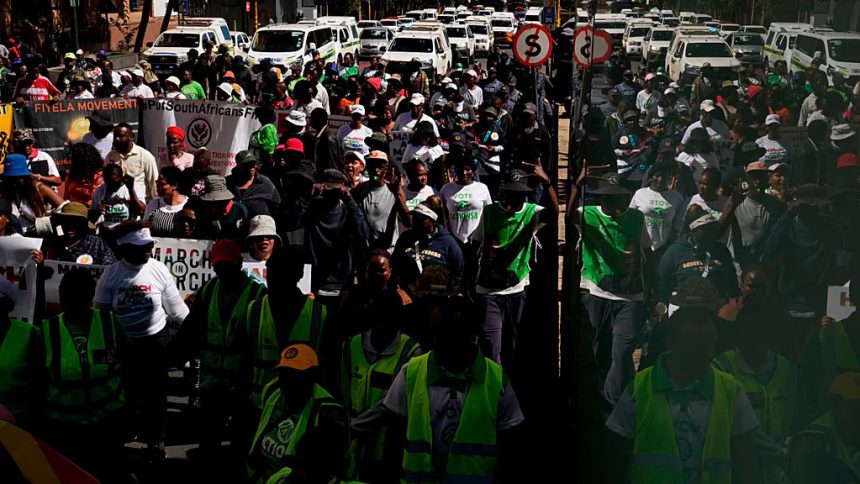
Johannesburg witnessed a surge of street protests on Wednesday as crowds gathered to voice growing frustration over illegal immigration, in what organizers describe as part of a broader national movement.
The demonstration follows similar protests in Pretoria on Tuesday, signaling rising tensions across South Africa over the presence of undocumented foreign nationals and the government’s handling of immigration policies.
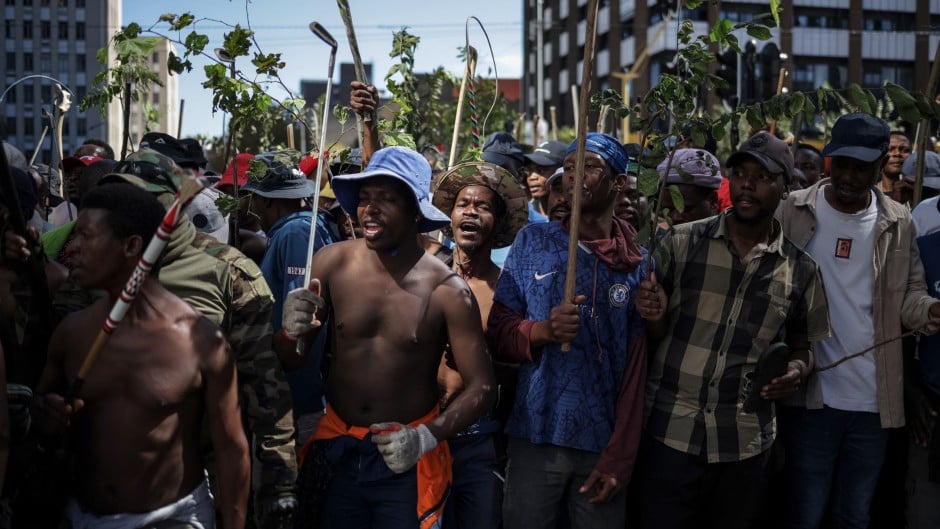
Protesters insist their actions are not rooted in xenophobia, but rather in concerns about economic opportunities, legal rights, and national security. Many argue that foreign nationals are exploiting South Africa’s economic system at the expense of citizens.
“We are here to collaborate on a progressive march involving different organisations and national forums,” said Tshepo Totwe, secretary of the Abahambe Movement. “Our goal is to address the issue of foreign nationals taking advantage of our economic freedom. We are being labelled as xenophobic, but that is not the point—we are standing up for our constitutional rights and legal protections.”
More Read

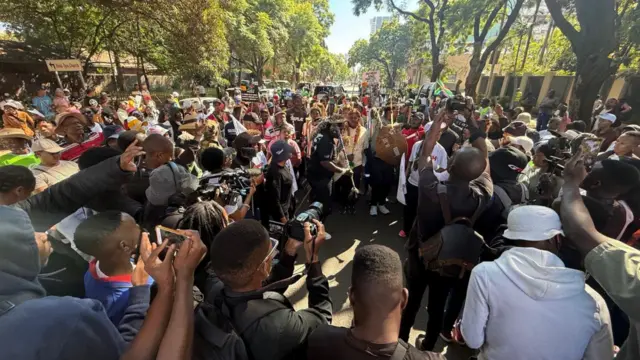
Another demonstrator, Sanele Nkambule, treasurer of the March and March movement, criticized the government for failing to enforce existing immigration laws.
“We call upon the government of the Republic of South Africa to make a formal declaration of commitment to the concerns raised,” Nkambule said. “This should affirm the intention to uphold the rule of law, enforce legislation, and prioritise the safety, security, and socioeconomic well-being of South Africans.”
More Read


Protest groups are urging authorities to take decisive action, including stricter enforcement of immigration laws and large-scale deportations of undocumented migrants.
The demonstrations highlight a deeply sensitive issue in South Africa, where economic hardship, unemployment, and inequality continue to fuel public discontent. As protests spread, pressure is mounting on the government to respond to citizens’ concerns while balancing human rights and regional obligations.