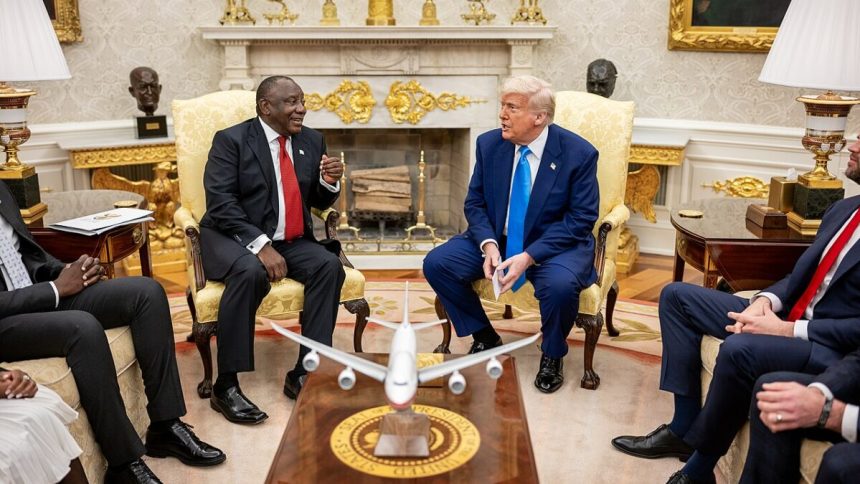
The administration of United States President Donald Trump is reportedly considering a significant increase in the country’s refugee admissions ceiling, a move that could prioritize white South Africans, particularly those of Afrikaner descent.
According to a report obtained by Reuters, the proposal under discussion would raise the current 2026 fiscal year refugee cap of 7,500 by as many as 10,000 additional slots. If approved, the expansion would mark a dramatic shift in the structure and focus of the US refugee programme.
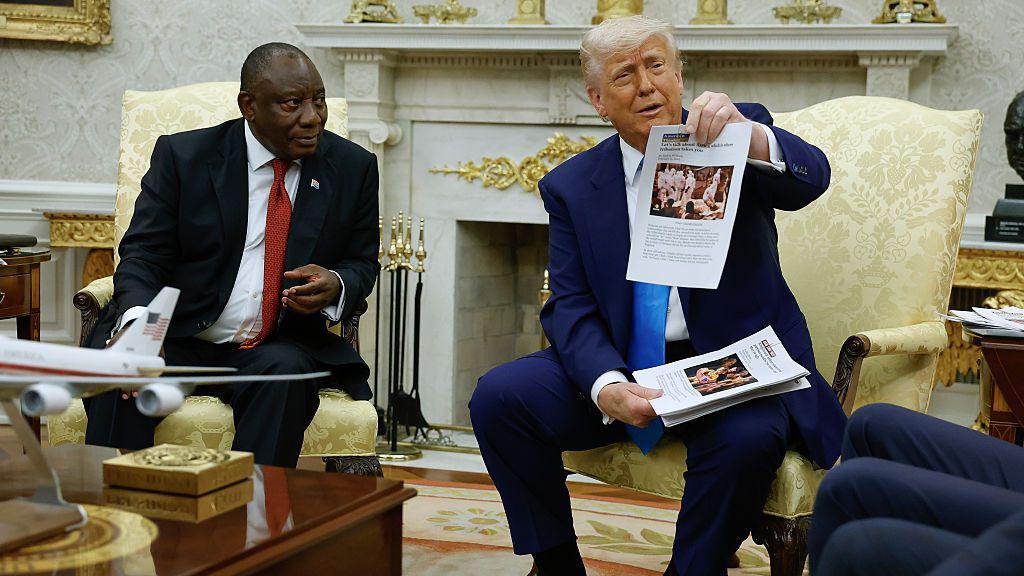
The plan is said to build on an existing trend. In the first six months of the fiscal year, approximately 4,500 South Africans were admitted as refugees, with only three Afghans approved during the same period—an imbalance that has drawn scrutiny from analysts and advocacy groups.
Trump has repeatedly argued that Afrikaners, a white minority group in South Africa, are facing persecution, including violence and land seizures driven by racial motives. Afrikaners make up roughly 60% of South Africa’s white population, which itself accounts for about 7.2% of the country’s total population.
More Read

However, these claims have been strongly disputed. The South African government, along with several Afrikaner organizations and civil society groups, has rejected assertions of systematic racial persecution. Critics argue that while South Africa faces serious challenges with crime and inequality, these issues affect multiple communities and do not meet the international legal threshold for refugee status.
The reported proposal has also sparked debate over fairness in the US refugee system, which has historically prioritized individuals fleeing war, political repression, and humanitarian crises in regions such as the Middle East and Africa. Observers note that a shift toward prioritizing a relatively privileged minority could redefine long-standing criteria for refugee admissions.
More Read

Adding to the complexity, internal US government communications cited by Reuters indicate that at least four South Africans admitted under the programme have already returned home. Meanwhile, broader migration patterns show that some white South Africans living abroad have chosen to relocate back to the country in recent years.
While the proposal remains under consideration and has not been finalized, it is already generating controversy, highlighting deep divisions over immigration policy, refugee definitions, and the role of politics in humanitarian programmes.