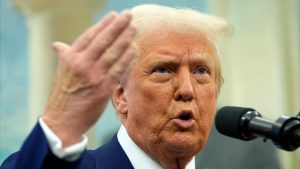
In a dramatic escalation of the ongoing Middle East crisis, U.S. President Donald Trump has ordered an immediate naval blockade of the strategic Strait of Hormuz following the collapse of high-stakes peace talks with Iran over its nuclear ambitions.
The announcement came shortly after marathon negotiations between U.S. and Iranian officials in Islamabad ended without agreement, marking a major setback in efforts to de-escalate a conflict that has already disrupted global energy supplies and heightened geopolitical tensions.

Trump declared that the U.S. Navy would begin intercepting all vessels attempting to enter or leave the strait—one of the world’s most critical oil transit routes—effective immediately. He also warned that ships found to have paid transit tolls to Iran would be targeted.
“Effective immediately, the United States Navy… will begin the process of blockading any and all ships trying to enter or leave the Strait of Hormuz,” Trump said in a statement.
Nuclear Dispute at the Heart of Breakdown
At the core of the failed negotiations is Iran’s nuclear program, which U.S. officials insist must be curtailed as a precondition for any lasting agreement. According to U.S. representatives, Tehran refused to commit to abandoning its pursuit of nuclear weapons, leading to a deadlock after nearly 21 hours of talks.
More Read

Trump emphasized that while progress had been made on other issues, the nuclear question remained “the only point that really mattered,” underscoring Washington’s uncompromising stance.
Strategic Waterway at Risk
The Strait of Hormuz is a vital artery for global energy, responsible for transporting roughly 20% of the world’s oil supply.
A blockade could have far-reaching consequences, potentially triggering sharp increases in oil prices and further destabilizing already fragile global markets.
The waterway has already been under strain in recent weeks, with Iran asserting control, imposing tolls on vessels, and allegedly deploying naval mines—actions the U.S. has described as economic “extortion.”
More Read
Rising Military and Diplomatic Stakes
Trump’s move signals a shift toward a more aggressive military posture. He warned that any hostile action from Iran would be met with overwhelming force, raising fears of a broader regional conflict.
Meanwhile, international reactions have been cautious. Some global leaders have urged both sides to return to negotiations, warning that further escalation could have severe economic and humanitarian consequences.

What Comes Next?
With a fragile ceasefire set to expire in the coming days and no clear diplomatic path forward, the situation remains volatile. Analysts warn that the blockade could deepen divisions between global powers, especially as countries reliant on Gulf oil shipments—such as China and India—face potential disruptions.
As tensions mount, the world watches closely to see whether this latest move will force Iran back to the negotiating table—or ignite a wider conflict with global repercussions.