Buenos Aires — Argentina’s Congress has approved a controversial reform to its landmark Glacier Law, opening the door to expanded mining activity in sensitive high-altitude regions and triggering a sharp backlash from environmentalists and opposition lawmakers.
The amendment, backed by President Javier Milei and passed by the lower house after clearing the Senate in February, changes how protected glacier areas are defined. It shifts responsibility from the national scientific body, the Argentine Institute for Snow, Ice and Environmental Sciences (IANIGLA), to provincial governments—many of which are eager to expand mining operations.
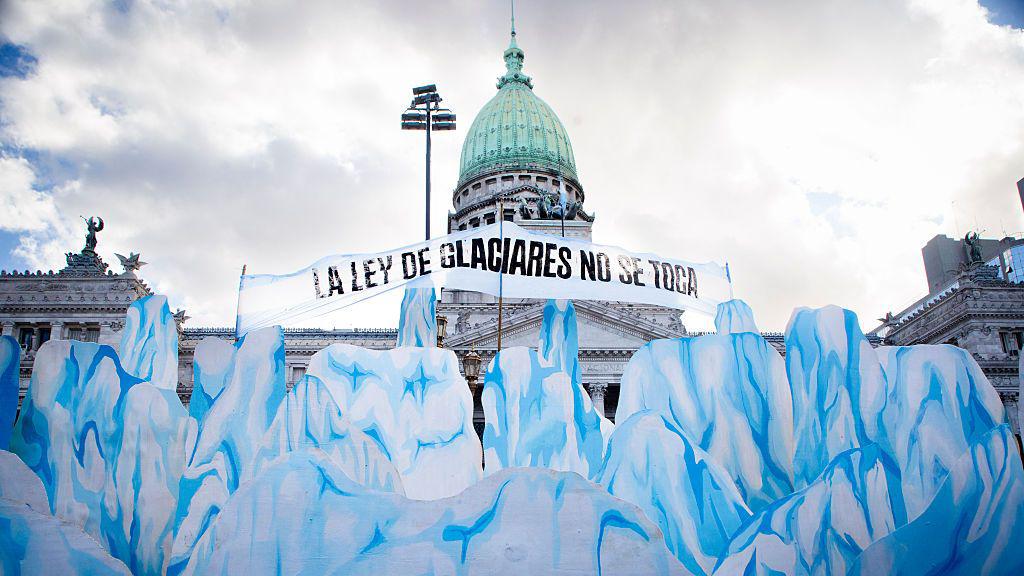
Supporters say the reform restores local control and unlocks economic potential in mineral-rich regions. Critics warn it could jeopardize vital freshwater sources in a country already grappling with increasing droughts.
A shift in power
Under the original 2010 Glacier Law, Argentina was considered a global pioneer in environmental protection, banning all mining and exploration in glacier and periglacial zones—areas that may not be permanently ice-covered but remain frozen for part of the year.
More Read

The new legislation allows mining in such areas unless provincial authorities designate them as “strategic” water reserves. Until that determination is made, glaciers and periglacial environments remain protected under the national inventory.
President Milei defended the reform, saying it “empowers the provinces to utilise their resources” and enables development in areas “where there was nothing to protect.”
Governors from mining-heavy provinces including Catamarca, Jujuy, Salta, Mendoza, and San Juan have welcomed the move, arguing the previous law hindered sustainable economic development.
More Read

Water vs. wealth
Opponents, however, say the reform weakens critical safeguards for water resources that millions depend on.
Argentina is home to nearly 17,000 glaciers, which feed 36 river basins across 12 provinces and supply water to around seven million people. Meltwater from these glaciers plays a crucial role in mitigating drought—particularly in semi-arid regions like Mendoza, where water scarcity is already a growing concern due to climate change.
“Without water, we can’t even think about a growth and development project,” said Congresswoman Natalia de la Sota during the debate.
Environmental group Greenpeace has been particularly vocal, rejecting the premise that some glaciers or periglacial areas are less important than others.
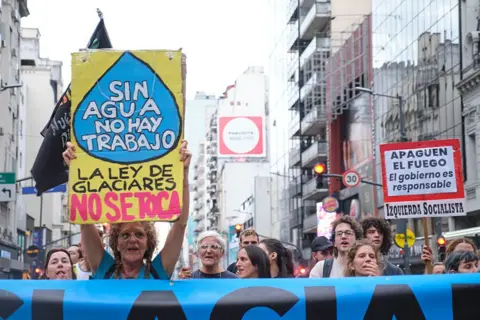
“The primary function of all glaciers and the entire periglacial environment is to act as a freshwater reservoir,” said Agostina Rossi Serra, a Greenpeace biologist. She emphasized that even partially frozen ground contributes to a gradual thaw that sustains rivers and streams.
More Read

“A large part of our country… are arid and semi-arid areas, where water is a scarce resource,” she added.
Industry optimism
Backers of the reform argue that environmental concerns are being overstated and that mining can coexist with conservation.
Congresswoman Nancy Picón Martínez dismissed criticism of the industry, saying it was being portrayed “as if it were a monster.”
“This law protects glaciers, no matter how much some people want us to believe otherwise,” she said.
The mining sector—particularly lithium, gold, and copper—has been seen as a key driver of Argentina’s economic recovery, with global demand for battery metals surging.
Uncertain path ahead
The reform is expected to face legal challenges from environmental organizations, and its real impact will depend heavily on how provincial governments classify protected areas in the coming months.
For now, the law has reignited a long-standing national debate: how to balance economic development with the protection of natural resources in a country where water is becoming increasingly scarce.
As Argentina moves forward, the stakes are clear—beneath the glaciers lie not only valuable minerals, but also the lifeblood of millions.