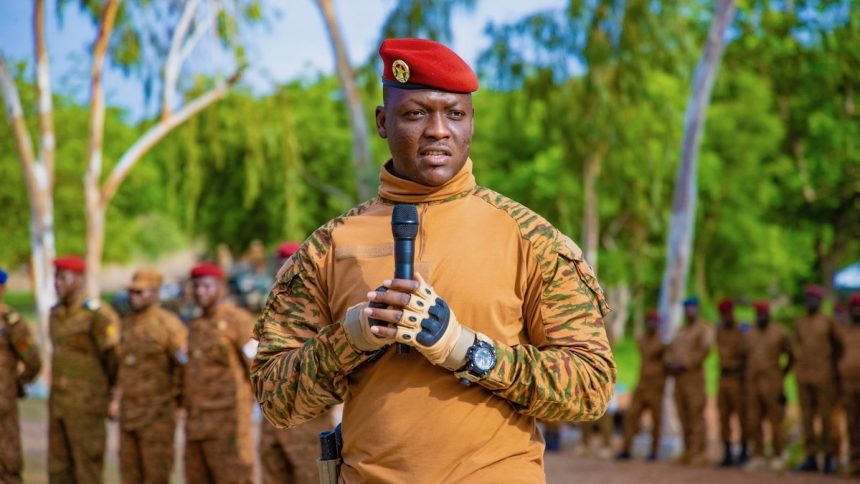
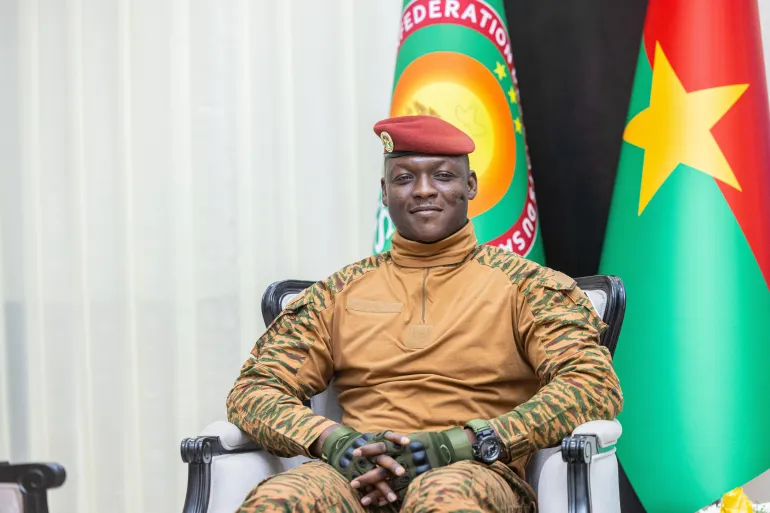
Nearly four years after seizing power in a coup, Burkina Faso’s military leader, Captain Ibrahim Traoré, has openly called on citizens to abandon democratic ideals, marking a significant escalation in the country’s shift away from civilian rule.
In a recent national address, Traoré sharply criticized democracy, describing it as ill-suited to African realities and ineffective in protecting citizens from the country’s worsening security crisis. He argued that democratic systems have failed to deliver stability, particularly in the face of nearly a decade of jihadist violence that has devastated large parts of the country.
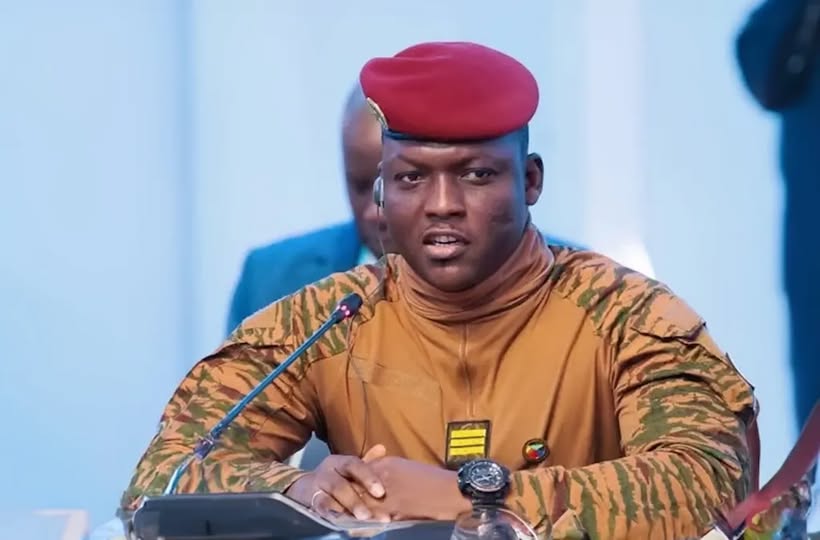
“Democracy has not helped us confront the threats we face,” Traoré said, suggesting that a more centralized form of governance is necessary to restore order and safeguard the population.
Consolidation of Power
Traoré’s remarks come as his government continues to dismantle key democratic institutions. Authorities have dissolved the country’s electoral commission and formally banned all political parties—many of which had already been suspended following the 2022 coup that brought him to power.
More Read

In addition, the military-led administration has extended the transition period to civilian rule by five years, effectively postponing elections that were initially promised for mid-2024. The move has further entrenched military control and dimmed prospects for a near-term return to democracy.
Security Crisis as Justification
Burkina Faso remains at the epicenter of a regional insurgency linked to jihadist groups operating across the Sahel. The conflict has killed thousands and displaced millions, overwhelming state capacity and fueling public frustration with previous civilian governments.
The junta has repeatedly cited the security crisis as justification for its actions, arguing that democratic processes are too slow and fragmented to effectively combat insurgent threats. Officials maintain that strong, centralized leadership is essential to reclaim territory and restore stability.
More Read

Growing International Concern
However, Traoré’s latest stance has drawn concern from the international community. The United Nations has urged Burkina Faso’s authorities to reverse the ban on political parties and restore civic freedoms, warning that shrinking political space could deepen instability rather than resolve it.
Rights groups have also expressed alarm over the erosion of democratic norms, cautioning that prolonged military rule risks undermining accountability and exacerbating tensions within the country.
A Regional Trend
Burkina Faso’s trajectory mirrors a broader pattern across parts of West Africa, where military governments in countries such as Mali and Niger have also distanced themselves from democratic governance, citing security failures and public disillusionment.
As Traoré doubles down on his rejection of democracy, Burkina Faso faces an uncertain future—caught between the urgent need for security and the long-term risks of authoritarian rule.