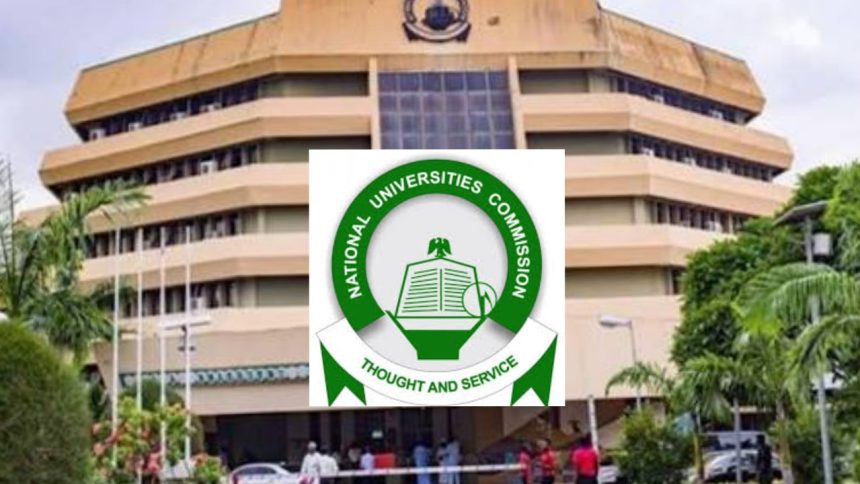
The National Universities Commission (NUC) has introduced sweeping new regulations governing the conferment of honorary degrees in Nigeria, including a strict ban on recipients using the “Dr.” title.
In a move aimed at restoring the credibility of academic honours, the Commission said the new guidelines are designed to curb widespread abuse and the indiscriminate award of honorary degrees, which it noted has eroded the value of genuine academic achievements.
Under the revised framework, only universities that have successfully graduated their first set of doctoral (PhD) students will be eligible to confer honorary degrees. This effectively disqualifies newer institutions from granting such honours until they reach a defined level of academic maturity.

A major highlight of the directive is the prohibition of honorary degree recipients from prefixing their names with “Dr.” The NUC clarified that the title is strictly reserved for individuals who have earned doctoral degrees through academic work or are certified medical practitioners. Instead, honorary awardees are to adopt appropriate post-nominal designations such as Doctor of Science (Honoris Causa) — abbreviated as D.Sc (H.C).
More Read

The Commission also took a firm stance against the commercialization of honorary awards, banning any form of financial inducement. It emphasized that such honours must be conferred strictly on merit and at no cost to recipients.
To further regulate the process, universities are now limited to awarding a maximum of three honorary degrees per convocation ceremony. Additionally, self-nominated individuals and serving public officials—whether elected or appointed—are no longer eligible to receive these honours.
In a push for greater transparency and accountability, institutions are required to publicly disclose the names of honorary degree recipients on their official websites. They must also establish clear procedures for revoking such honours if recipients are later found guilty of misconduct.
More Read


The NUC stressed that honorary degrees do not carry any academic or professional privileges. Holders are not entitled to practice regulated professions, supervise academic research, or occupy administrative roles within universities based on such awards.
The Commission warned that any institution found violating the new guidelines would face regulatory sanctions.
According to the NUC, the reforms form part of broader efforts to safeguard the integrity and global reputation of Nigeria’s university system.
“Academic honours must reflect merit, dignity, and excellence,” the Commission stated, underscoring its commitment to upholding international best practices in higher education.