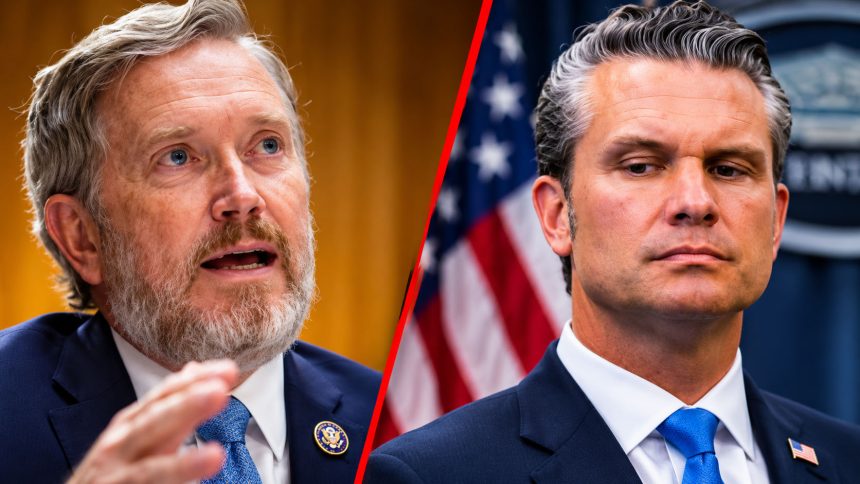
A Republican lawmaker has formally introduced articles of impeachment against US Defence Secretary Pete Hegseth, accusing him of violating the Constitution by engaging in military hostilities against Iran without congressional authorization.
A fresh political storm is brewing in Washington as Republican Congressman Thomas Massie moves to impeach US Defence Secretary Pete Hegseth over his handling of the ongoing war in Iran.
Massie formally introduced articles of impeachment against Hegseth on Monday afternoon, alleging that the Defence Secretary violated the US Constitution by allowing American military involvement in Iran to continue for more than 90 days without obtaining authorization from Congress.

According to Massie, the military engagement represents a violation of the law and requires accountability.
More Read

“By engaging in hostilities in Iran for more than 90 days without congressional authorization, Secretary Hegseth is breaking the law and must be held accountable,” Massie said.
The resolution sets a 48-hour window for the House of Representatives to consider the impeachment measure. Lawmakers can either vote directly on the resolution, refer it to a committee or move to set it aside.
Speaking after introducing the articles, Massie insisted that his action was motivated by principle rather than political considerations.
More Read

“I’m doing this because it’s the right thing to do,” he told reporters.
Massie Seeks to Pressure Trump Before Democrats Take Control
The impeachment move comes at a particularly sensitive moment for President Donald Trump’s administration, following the Republican Party’s loss of control of both chambers of Congress in last week’s midterm elections.
Massie, a Kentucky Republican who lost his re-election bid earlier this year, has been a vocal critic of Trump’s policies, particularly the administration’s military involvement in Iran.
He initially introduced articles of impeachment against Hegseth in September but has now revived the effort, arguing that Republicans should address the matter before Democrats assume control of Congress in January.
The congressman believes that Democrats could launch a more extensive impeachment campaign against Hegseth once they take control of the House and Senate.
Massie described his current effort as a less aggressive alternative to what he believes is coming from Democrats.
More Read

“My effort to impeach Secretary Hegseth is a much gentler version of what’s coming when the Democrats assume control of the House and Senate next year,” he said in a statement.
He added that Democrats would likely organize hearings and impeachment proceedings against the Defence Secretary.
Massie has also suggested that forcing a change in leadership before the transfer of congressional power could give Trump an opportunity to nominate a replacement while Republicans still have influence over the confirmation process.
Hegseth Dismisses Impeachment Threat
Hegseth has strongly rejected the impeachment effort, describing it as a political stunt and insisting that he remains confident in his leadership of the Department of Defence.
In a video statement released last week, the Defence Secretary accused his critics of attacking him because of his effectiveness in office.
“You see, they attack me. They attack us because we are effective,” Hegseth said.
“It’s not going to work. We will not back down.”
He also criticized Massie, describing him as a “disgruntled, defeated congressman” and dismissing concerns about the impeachment resolution.
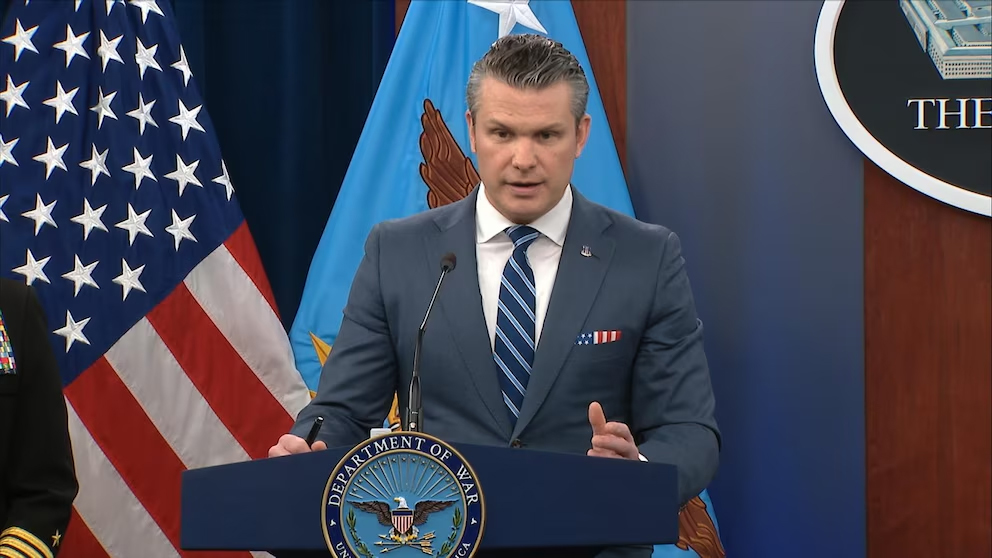
Speaking to reporters on Monday, Hegseth maintained that the administration was not worried about the development and indicated that he would address the controversy at a news conference scheduled for Tuesday.
Despite the mounting political pressure, Hegseth has continued defending his leadership and highlighting his efforts to implement Trump’s America First agenda.
Trump Stands Firmly Behind Hegseth
President Donald Trump has given no indication that he intends to remove Hegseth from office, instead publicly praising the Defence Secretary’s performance.
Trump recently commended Hegseth’s leadership during the United States’ capture of Venezuelan President Nicolas Maduro earlier this year and defended his handling of military operations involving Iran.
Speaking at the White House on Monday, Trump questioned why previous government officials who had overseen military conflicts were not facing similar criticism.
“We’ve made the world a lot safer place. Why haven’t we gone after all these other people that ran wars and lost?” Trump said.
The President also highlighted improved military recruitment figures under Hegseth, claiming that American service members strongly support the Defence Secretary.
“The soldiers, the actual soldiers, the great people that do the work, the great patriots, they love Pete Hegseth,” Trump said.
“He’s done a very good job.”
Trump’s continued support could make it more difficult for Massie to secure sufficient Republican backing for the impeachment resolution.
What Happens If the Impeachment Resolution Passes?
Impeaching a cabinet secretary is an exceptionally rare occurrence in American political history.
Under the US constitutional process, the House of Representatives must first approve articles of impeachment through a simple majority vote. If the measure passes, the Senate conducts a trial to determine whether the official should be convicted and removed from office.
However, conviction requires a two-thirds majority in the Senate, making removal significantly more difficult than securing impeachment in the House.
Only two cabinet officials have been impeached by the House in US history, and neither was convicted by the Senate.
The impeachment process involving Hegseth would therefore face considerable constitutional and political hurdles, particularly given the difficulty of securing the necessary Senate votes.
Political observers have also noted that impeachment proceedings have become increasingly common in an era of heightened political polarization.
Paul Gowder, a law professor at Northwestern University, observed that impeachment, once considered an exceptionally rare constitutional process, has become more normalized in recent decades.
He suggested that other members of Trump’s cabinet could also face impeachment efforts during the next two years.
Narrow Republican Majority Could Complicate the Vote
The political mathematics surrounding Massie’s resolution remain uncertain.
The House currently has 218 Republicans and 214 Democrats, leaving Republicans with a narrow advantage.
Although a simple majority is required to approve articles of impeachment, Massie would likely need support from some Republican lawmakers, even if all Democrats vote in favour.
Peter Loge, a professor of public affairs at George Washington University, suggested that the narrow Republican majority could create an unexpected opportunity for the impeachment resolution to pass.
He argued that some dissatisfied Republican lawmakers might simply choose not to attend the vote, potentially reducing the number of votes required for approval.
Nevertheless, the Senate presents a much greater obstacle.
Although Democrats are expected to have at least 54 seats when they assume control in January, two Senate races remain unresolved. A minimum of 60 votes would be required to reach the two-thirds threshold for conviction and removal under the projected composition of the chamber.
For now, the impeachment effort represents another major test of Trump’s political influence within the Republican Party and raises fresh questions about congressional oversight of American military operations.
Whether Massie can turn his resolution into a successful impeachment vote remains uncertain, but the controversy has already intensified the political battle surrounding Hegseth’s future as Defence Secretary.