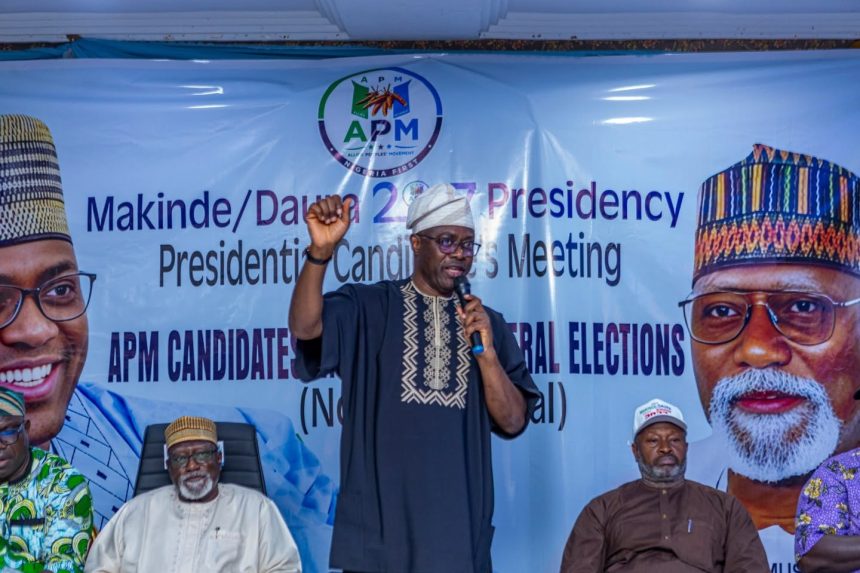
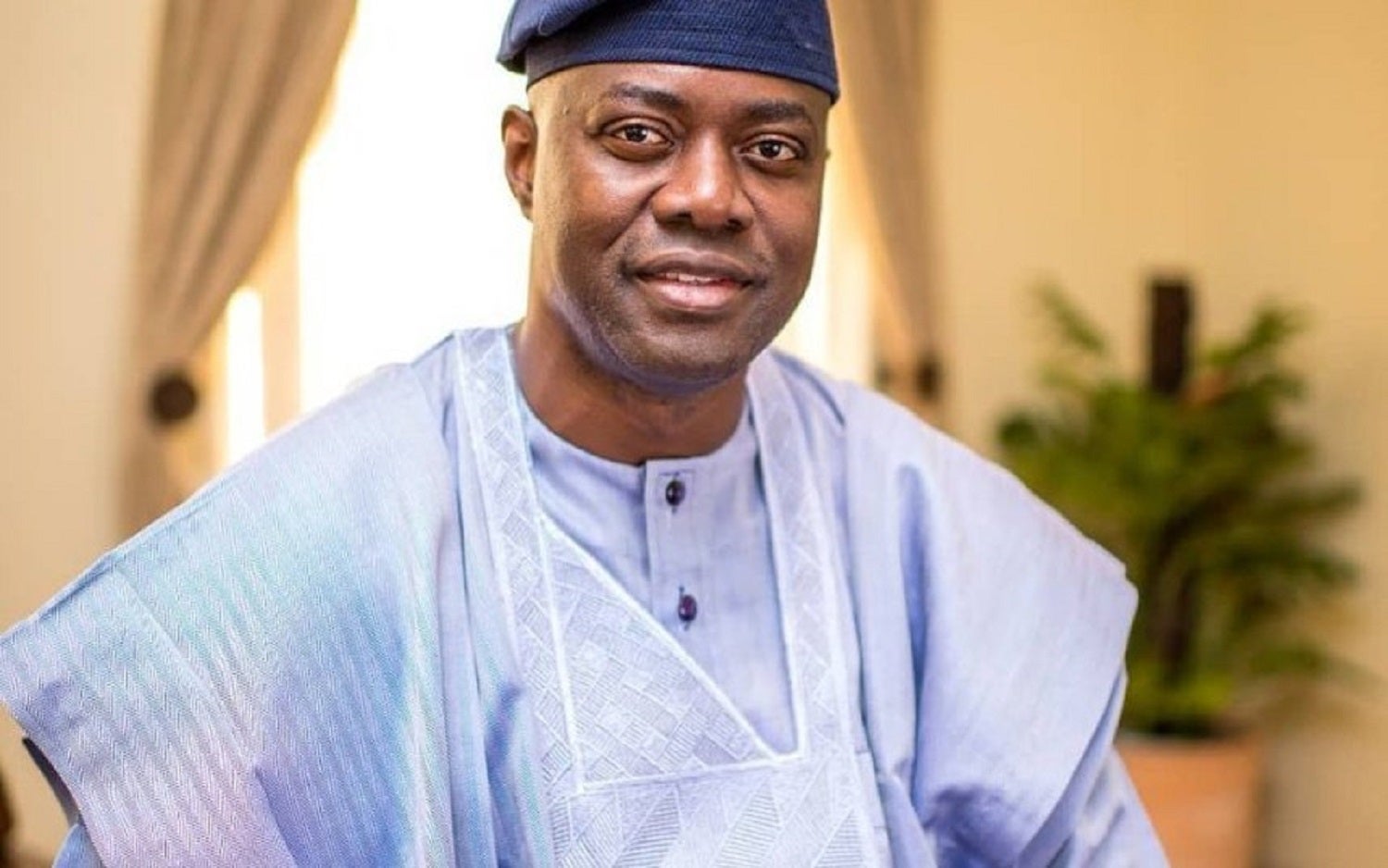
APM presidential candidate and Oyo State Governor, Seyi Makinde, has declared that the 2027 general election will be determined by the Nigerian electorate rather than the financial strength of political parties or the number of wealthy individuals supporting them.
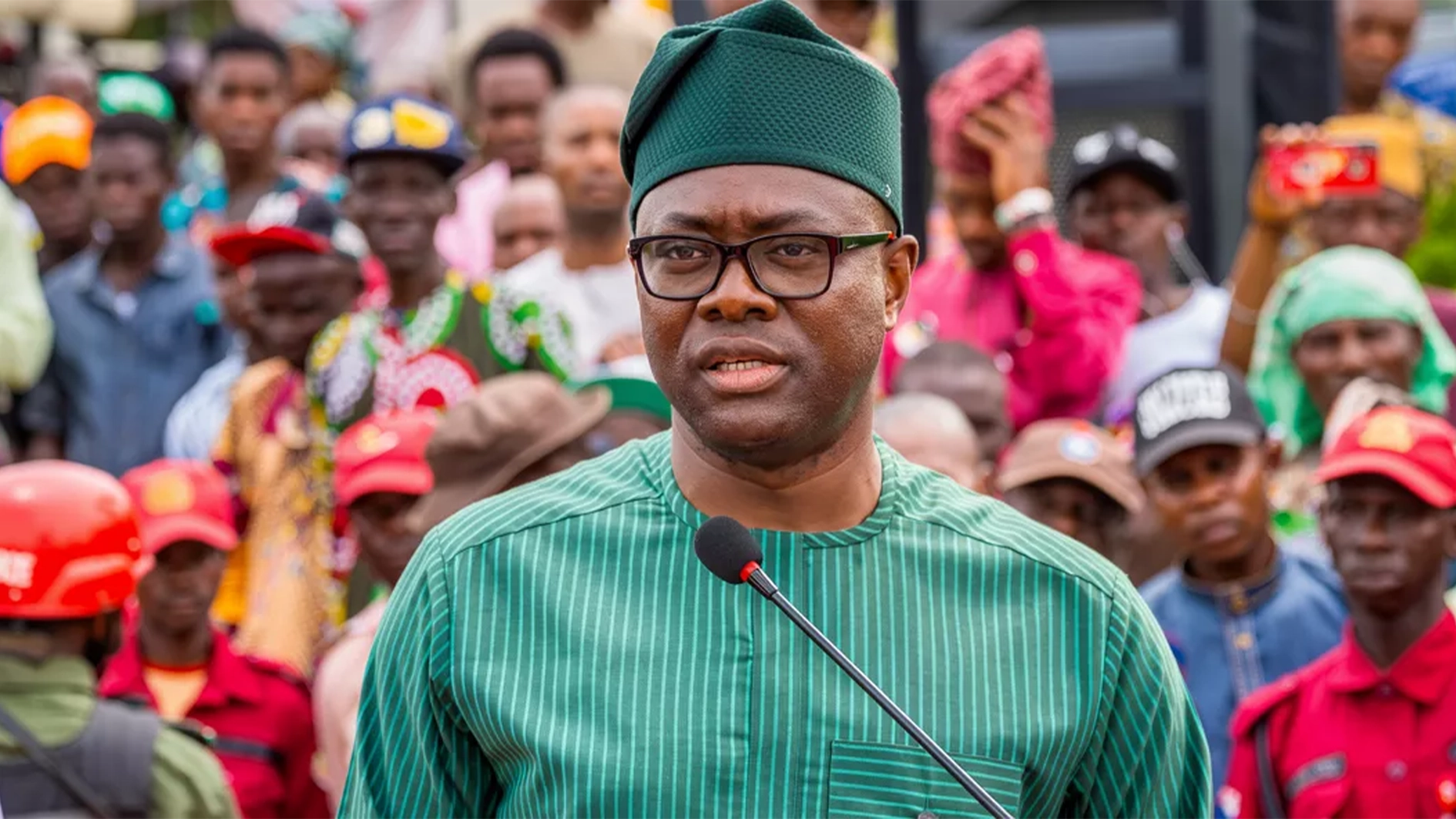
Makinde made the declaration at the Allied Peoples Movement (APM) North-Central Town Hall Meeting in Lafia, Nasarawa State, where he presented his vision for the country and expressed confidence in his ability to address Nigeria’s challenges through his proposed Reset Nigeria Agenda.
The governor, who described effective governance as a responsibility requiring energy, careful planning and a clear understanding of national challenges, said the outcome of the next presidential election would ultimately rest with ordinary Nigerians.
He maintained that political influence and campaign spending would not necessarily determine the winner, insisting that voters would have the final say.
“Let me say this. This 2027 election will not be determined by politics, by pollsters, or by the number of multimillionaires in your party,” Makinde said.
More Read
“This election is not going to be determined by the number of millionaires you have in your corner, or how many billions you have to spend. This election will be determined by the people of Nigeria.”
Makinde also assured supporters that he possessed the energy required to lead the country, pledging to bring his experience in Oyo State governance to bear on his presidential ambition.
“You need a lot of energy to be able to serve and govern our people effectively, and Makinde has the energy to Reset Nigeria,” he said.
More Read
Makinde Highlights Oyo’s Participatory Budgeting Process
As part of his argument for effective governance, the Oyo governor cited his administration’s approach to budget preparation, saying it involved consultations with residents across the state’s senatorial districts.
He disclosed that preparations for the 2027 budget had already commenced, with the government engaging communities to identify their priorities and determine the projects and programmes to be included in the spending plan.
According to Makinde, the process has been a consistent feature of his administration over the past seven years.
“If you go to Oyo State today, as I’m talking to you, we have started the process of preparing the 2027 budget,” he said.
“What we normally do is go around the senatorial zones in the state to listen to them, to know what they would like us to include in the budget. This is what we have been doing for the past seven years.”
More Read

He presented the approach as an example of the planning and public engagement he intends to bring to the national level if elected president.
Questions Federal Government’s Planning for Army Expansion
Makinde also criticised the Federal Government over what he described as insufficient planning for the reported expansion of Army divisions across the country.
The governor said he had examined the 2026 federal budget but was unable to identify a corresponding allocation for the expansion of the military formations.
He argued that addressing insecurity required more than announcing new military structures, stressing the need for adequate funding and detailed implementation plans.
“They expanded Army divisions to 12. I was looking at the budget for 2026. I was looking for the item in that budget relating to the expansion of those Army divisions. I did not see it,” he said.
Makinde challenged the Federal Government to identify the relevant budget provision, if one existed, and questioned how the expansion could be implemented effectively without a clear financial plan.
“If they have it in the budget that they prepared for 2026, let them bring it out. So, you cannot just wake up and say, well, without any plan, I am setting up or expanding Army divisions to tackle insecurity. There has to be a lot of planning that will go into this,” he added.
Accuses Federal Government of Running a ‘Voodoo Economy’
The APM presidential candidate also criticised the Federal Government’s economic management, describing the country’s economic situation as a “voodoo economy.”
Makinde acknowledged that state governments were receiving increased allocations from the Federation Account but questioned whether the additional revenue had translated into better living conditions for Nigerians.
He argued that higher government receipts should be reflected in measurable improvements in areas such as food affordability and household welfare.
“Yes, they claim we have more money, that is, the state governments. The state governments are collecting more money from the Federation Account. I am not arguing with that,” he said.
“Yes, in terms of the totality of the money, yes, we have more money, but has it translated to fighting hunger in our society? The answer is no.”
To illustrate his criticism, Makinde referred to Oyo State’s dependence on federal allocations, saying his administration had initially worked to reduce that reliance after assuming office in 2019.
He said the state’s dependence on federal allocations was above 80 per cent when he became governor, but had reportedly declined to 65 per cent by 2022.
However, he claimed that the economic changes introduced in 2023 had reversed some of those gains, with the state’s dependence on federal allocations rising to almost 80 per cent.
“For us in Oyo State, when I came in in 2019, the state’s dependence on federal allocation was about 80-plus per cent. We worked really hard to bring it down. And you can go check the data. By 2022, we had gone down to 65 per cent in terms of our dependence on federal allocation,” he said.
“Then, by 2023, when they came on board with their voodoo economy, the resultant effect is that today Oyo State is back to almost 80 per cent dependence on federal allocation. That is their voodoo economy.”
The governor’s comments placed economic management, public spending and the relationship between federal allocations and citizens’ welfare at the centre of his campaign message.
Daura Promises Results-Oriented Leadership
Also speaking at the town hall meeting, APM vice-presidential candidate Alhaji Lawal Musa Daura criticised what he described as ineffective leadership in Nigeria, arguing that successive opportunities to govern had not produced the results Nigerians expected.
Daura said the country needed a leadership approach focused on practical solutions and measurable outcomes rather than promises and political activity without meaningful progress.
“For quite some time, people have been given the opportunity to rule this nation without really having an idea of how to fix it. I need to borrow a common phrase: it is always motion without movement,” he said.
He described the APM’s proposed political movement as an effort to improve the lives of Nigerians, adding that the party intended to prioritise results that citizens could see and experience.
“Ours is going to be a movement for the betterment of Nigerians and Nigeria,” Daura said.
“We are result-oriented. We are focused on getting results to the extent that Nigerians will see and feel them. That is why we’re here. And, by the special grace of God, we are going to deliver.”
The Lafia meeting forms part of the APM’s political engagement ahead of the 2027 general election, with the party’s candidates outlining their positions on governance, security, economic management and public welfare.