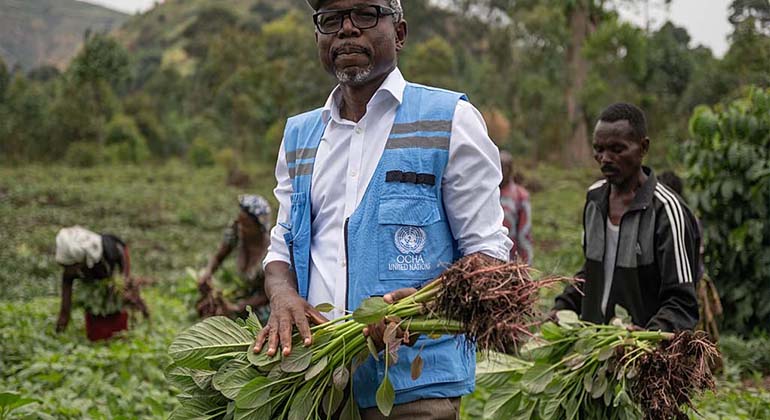
KIMOKA, NORTH KIVU, DR CONGO — A United Nations humanitarian team has visited Kimoka in North Kivu, eastern Democratic Republic of Congo, an area currently controlled by M23 rebels, to assess the situation of people returning to communities affected by prolonged conflict.
The visit came as the Democratic Republic of Congo continues to grapple with a serious Ebola outbreak and a humanitarian crisis that has displaced thousands of people across the region.
During the visit on Friday, the UN delegation met women working on farms, inspected their crops and discussed the challenges facing families attempting to rebuild their livelihoods after displacement.
Damien Mama, coordinator of United Nations humanitarian activities in the Democratic Republic of Congo, said the women identified access to livestock and farmland as some of their most urgent needs.
More Read

According to Mama, such assistance would help returning families strengthen their resilience, improve food production and rebuild sustainable sources of income.
Thousands Returning Home
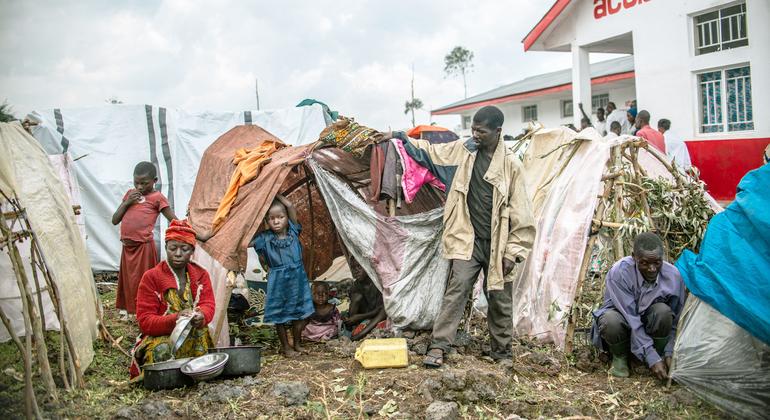
Humanitarian agencies reported that, as of February 4, 2025, approximately 30,384 people, representing about 5,064 households, had returned to Kimoka and Saké, areas located near Goma, the capital of North Kivu.
The United Nations also said more than 1,400 people, most of them women who had previously lived in camps for internally displaced people, were benefiting from agricultural assistance and socioeconomic reintegration programmes in villages across Masisi territory.
More Read
Among the beneficiaries is Sifa Asifiwe, who received financial assistance through the United Nations Food and Agriculture Organization, or FAO.
Recalling the difficult circumstances faced by displaced families, Asifiwe said the assistance provided an important source of support.
“Amid that hardship, our brothers from the FAO came and welcomed us,” she said.
Farming Support Improves Nutrition
Residents also reported improvements in the health and wellbeing of displaced families, particularly children, which they attributed partly to improved access to nutritious food produced from the women’s agricultural activities.
The farming initiatives are intended not only to improve food security but also to help returning families regain economic independence after years of conflict and displacement.
Despite the return of thousands of people, however, the humanitarian situation remains critical.
The United Nations estimates that approximately 95,000 displaced people remain in the area around Goma, largely because of continuing violence involving armed groups.
More Read
Ebola Adds to Humanitarian Crisis
The conflict is unfolding alongside a major public-health challenge.
Figures released by Congolese authorities this week reportedly put the Ebola outbreak at 7,022 cases and 3,398 deaths, adding another layer of difficulty for communities already struggling with displacement, food insecurity and limited access to essential services.
Humanitarian agencies continue to support returning communities through agricultural assistance, livelihood programmes, food security initiatives and other forms of socioeconomic reintegration.
The UN says continued support will be essential if displaced families are to rebuild their lives safely and sustainably in communities affected by years of conflict.