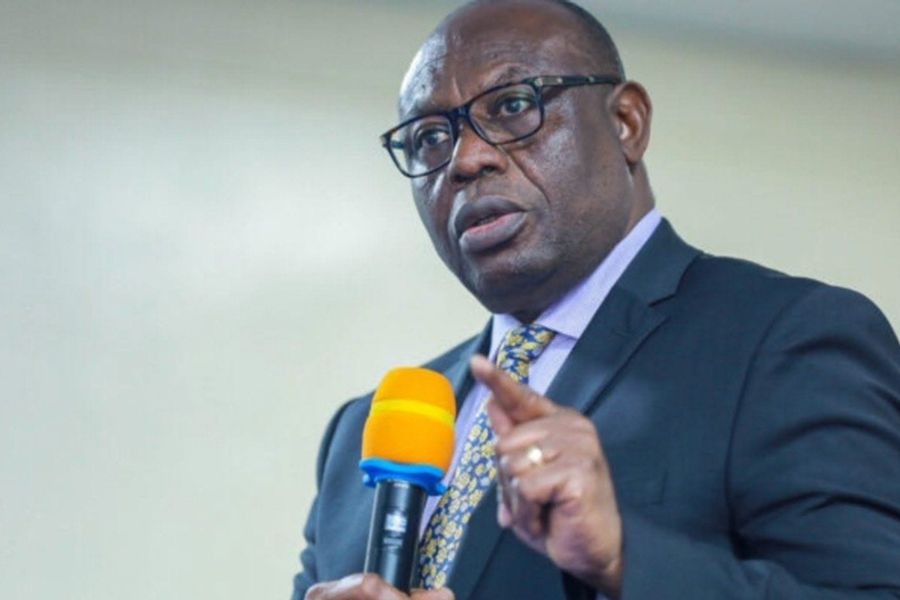
A former National Commissioner of the Independent National Electoral Commission, INEC, Festus Okoye, has disclosed that the commission’s digital platforms came under several cyberattacks during the 2023 presidential election.
Okoye made the revelation while speaking on Deep Insights, a podcast hosted by Austin Agbonsuremi, where he reflected on the challenges that confronted INEC during the controversial election.
According to him, the commission experienced serious technological difficulties while attempting to upload polling-unit results to its Result Viewing Portal, IReV.
The IReV platform had been introduced to promote transparency in the electoral process by allowing voters, political parties, candidates, election observers and other stakeholders to view scanned copies of polling-unit result sheets uploaded by INEC officials.
More Read

Ahead of the 2023 election, INEC had repeatedly assured Nigerians that the platform would provide access to results from polling units.
However, following the conclusion of voting in several locations during the presidential election, the portal remained inactive for an extended period.
The delay triggered widespread concerns, with questions raised over the credibility of the electronic results-upload system and the reasons behind the failure of the platform to function as expected.

Speaking about the incident, Okoye said INEC initially believed the technological problem would be resolved within a short period.
“What really happened was that the technology malfunctioned. That is the truth of the matter. For me, technology disappointed us.”
He said the commission had considered issuing a statement to Nigerians explaining the difficulty it was experiencing but that the process of communicating the problem became complicated.
According to Okoye, a statement was drafted, but he objected to the technical terminology being used to describe the situation.
He said that disagreement eventually contributed to the use of the word “glitch” in describing the problem.
Okoye said the situation was particularly disappointing because of the extensive preparations that had gone into the deployment of technology for the election.
CYBERATTACKS ON INEC PLATFORMS
The former INEC commissioner also disclosed that the commission’s digital platforms were subjected to several cyberattacks during the election period.
More Read

“I know that there were all sorts of cyberattacks on our platforms during that particular period,” he said.
Despite the revelation, Okoye stopped short of blaming the cyberattacks for the problems experienced by the IReV portal.
He explained that he could not establish whether the attacks directly contributed to the failure or disruption of the platform.
“Whether those cyberattacks influenced what happened at the end of the day, I’m not in a position to say,” Okoye stated.
His comments provide a new insight into some of the technological challenges surrounding the 2023 presidential election, particularly the difficulties experienced by INEC in making polling-unit results available through its electronic results-viewing platform.
Okoye further disclosed that INEC’s Deputy Director in charge of Information and Communications Technology, ICT, subsequently appeared before the Presidential Election Petition Tribunal to explain the circumstances surrounding the incident.
The 2023 presidential election had generated intense public interest in INEC’s use of technology, with the IReV platform regarded as a major component of the commission’s efforts to improve transparency and public confidence in the electoral process.
Okoye’s latest disclosure is therefore likely to renew discussions over the reliability, security and preparedness of Nigeria’s electronic electoral infrastructure, especially the ability of INEC’s digital systems to withstand cyber threats during future elections.