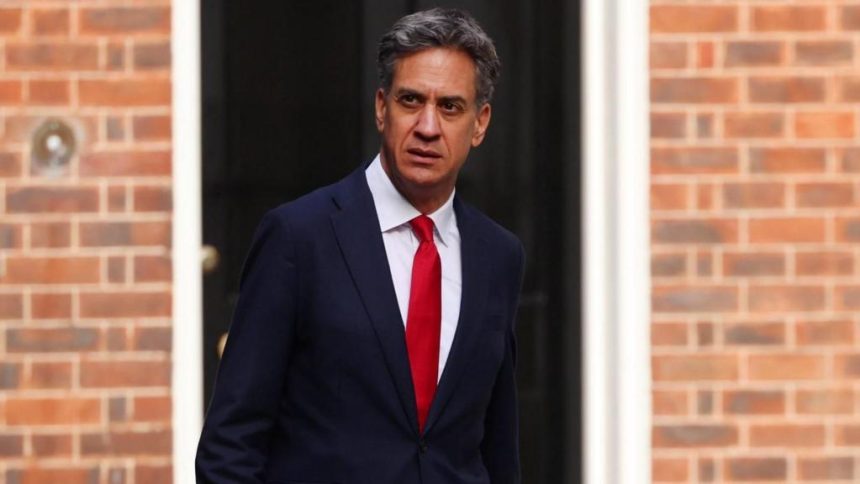
LONDON — The United Kingdom is expected to announce sweeping new measures targeting Israeli settlements in the occupied West Bank, including a ban on trade in goods produced in the settlements, in what would mark a major shift in Britain’s policy towards Israel.
Foreign Secretary Ed Miliband is expected to unveil the measures in Parliament on Tuesday as part of what the government has described as a broader reset of its relationship with Israel.
According to reports, the proposed measures could prohibit British trade in goods originating from Israeli settlements in the occupied West Bank. The package could also include sanctions against companies involved in the construction or expansion of the settlements, although the precise scope of the measures is yet to be formally confirmed.
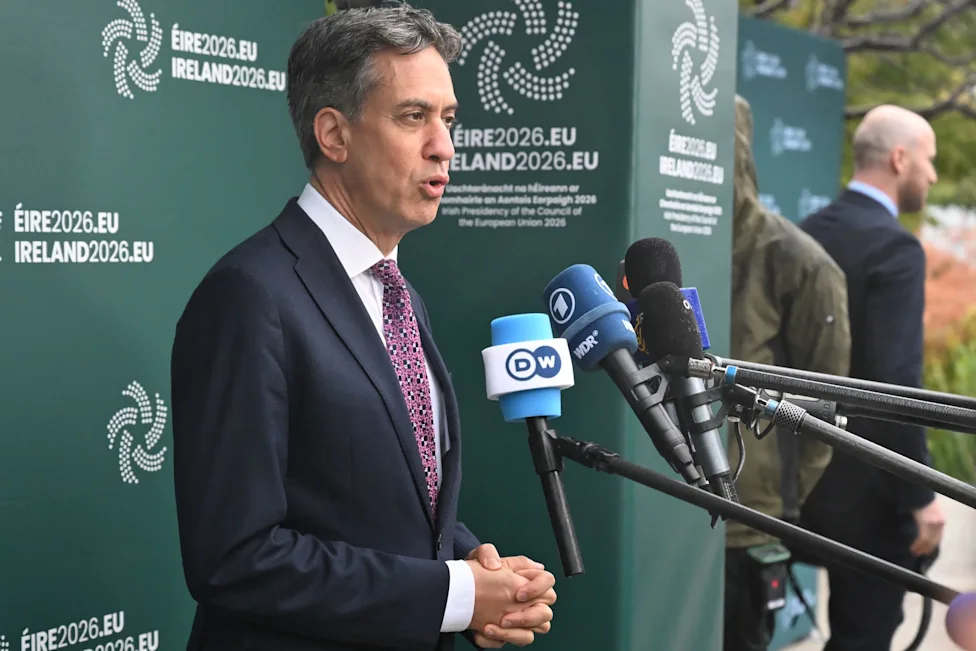
The move follows growing concern in London over Israel’s continued settlement expansion, particularly plans for development in the E1 area of the West Bank.
More Read

Miliband has previously described the E1 project as a serious threat to the viability of a future Palestinian state, arguing that construction in the strategically important area could effectively divide the West Bank from East Jerusalem.
In August, the British government condemned Israel’s decision to move ahead with a tender for new settlement housing in E1, calling it an “unacceptable and destructive act.”
The Foreign Secretary warned at the time that Britain would not stand by while the prospect of a two-state solution was undermined.
More Read

The UK government has also said it intends to prevent British companies from financing, constructing or advertising new Israeli settlements.
Settlement expansion at centre of dispute
Israeli settlements in the West Bank have long been a major source of international controversy.
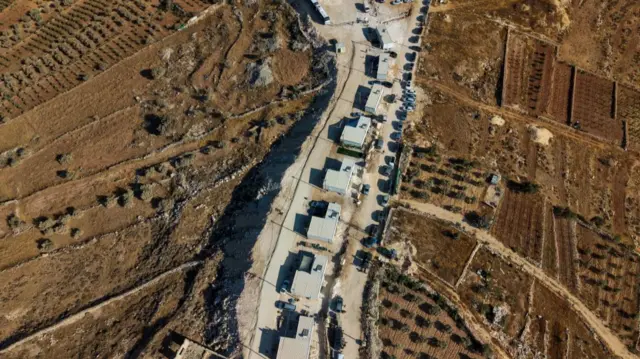
Israel captured the West Bank, along with East Jerusalem, during the 1967 Middle East war. The territory is home to about three million Palestinians as well as hundreds of thousands of Israeli settlers.
The United Nations and much of the international community consider Israeli settlements in territory occupied since 1967 to be contrary to international law, while successive Israeli governments have disputed aspects of that position.
Britain has traditionally opposed settlement expansion, arguing that it threatens the possibility of establishing a viable and contiguous Palestinian state alongside Israel.
The UK government’s latest position represents a move beyond diplomatic condemnation towards direct economic measures.
More Read

British officials have previously confirmed that settlement goods do not benefit from preferential trade arrangements under the UK-Israel Trade and Partnership Agreement. The government has also updated its business guidance to warn British companies against economic and financial activity in illegal settlements.
Israel threatens retaliation
The expected British announcement has already triggered a strong reaction from senior Israeli officials.
Israeli Foreign Minister Gideon Sa’ar previously warned that Israel would respond if Britain imposed new sanctions.
Finance Minister Bezalel Smotrich, a prominent figure in Israel’s settlement movement, has called for Britain to face diplomatic retaliation, including the possible expulsion of the British ambassador.
Other Israeli officials have also criticised London’s planned measures and accused the British government of adopting an increasingly hostile position towards Israel.
The proposed sanctions could therefore further strain relations between the two countries, which have deteriorated significantly over Britain’s increasingly critical stance on Israel’s policies in Gaza and the West Bank.
Pressure from Washington
The move is also expected to attract criticism from Israel’s strongest international ally, the United States.
British Prime Minister Andy Burnham spoke with US President Donald Trump on Monday, with the Middle East reportedly among the issues discussed.
Although Downing Street said the conversation covered Britain’s commitment to peace and security in the region and support for a two-state solution, Washington has been closely watching London’s planned measures.
The United States and Israel have historically maintained close diplomatic, military and intelligence ties, making Britain’s increasingly independent approach a potentially sensitive issue for its relationship with Washington.
A significant shift in British policy
The expected announcement would represent one of the most significant foreign-policy interventions by the new British government since Prime Minister Andy Burnham took office in July.
Previous British measures have included sanctions against individual Israeli settlers accused of violence against Palestinians, as well as restrictions on some arms export licences to Israel.
The new measures would go further by targeting the economic system surrounding Israeli settlements rather than focusing solely on individuals.
Analysts say Britain’s decision could also encourage other European countries to adopt tougher economic measures against settlement activity. Spain and the Netherlands have already taken steps to restrict imports from Israeli settlements.
However, the policy is not without opposition in Britain.
Conservative politicians have warned that broader sanctions could damage Britain’s national-security interests and cooperation with Israel, particularly in intelligence and counterterrorism.
Some Jewish community leaders have also expressed concern that restrictions aimed at settlement products could develop into a wider boycott of Israeli goods and potentially contribute to hostility towards British Jews.
Supporters of the government’s approach, meanwhile, argue that stronger action is necessary to prevent settlement expansion from permanently undermining the possibility of a negotiated Palestinian state.
As the British government prepares to unveil the measures, the announcement is expected to become a major test of Britain’s relations with Israel, the United States and its European allies — while signalling London’s determination to play a more active role in efforts to preserve the possibility of a two-state solution.