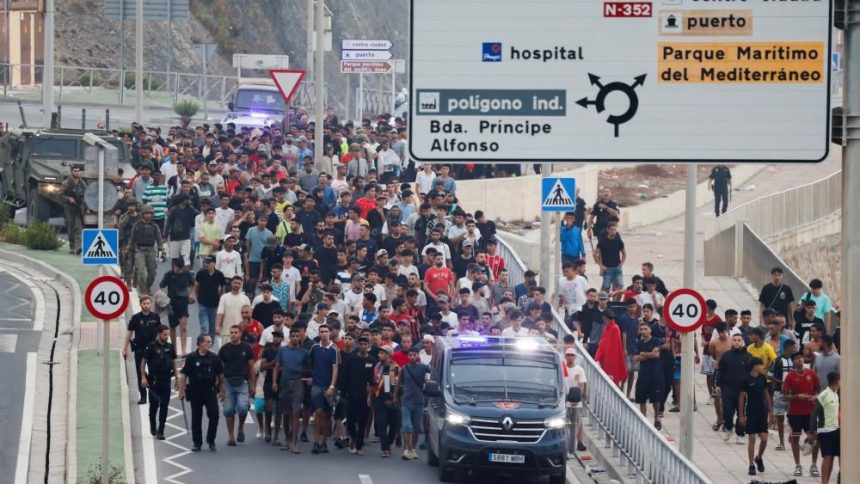
Madrid, Spain — Spain has condemned what it describes as the “selfish, polarising and unlawful” response of some European Union member states following the unprecedented influx of approximately 60,000 migrants from Morocco into the Spanish enclave of Ceuta.
The criticism comes as Spanish authorities say they have regained control of the situation, with officials confirming that almost all of the migrants who entered the North African enclave on 30 July have since returned to Morocco. However, the humanitarian toll continues to rise, with Spain’s Interior Minister, Fernando Grande-Marlaska, confirming on Saturday that at least 67 people lost their lives during the crisis.
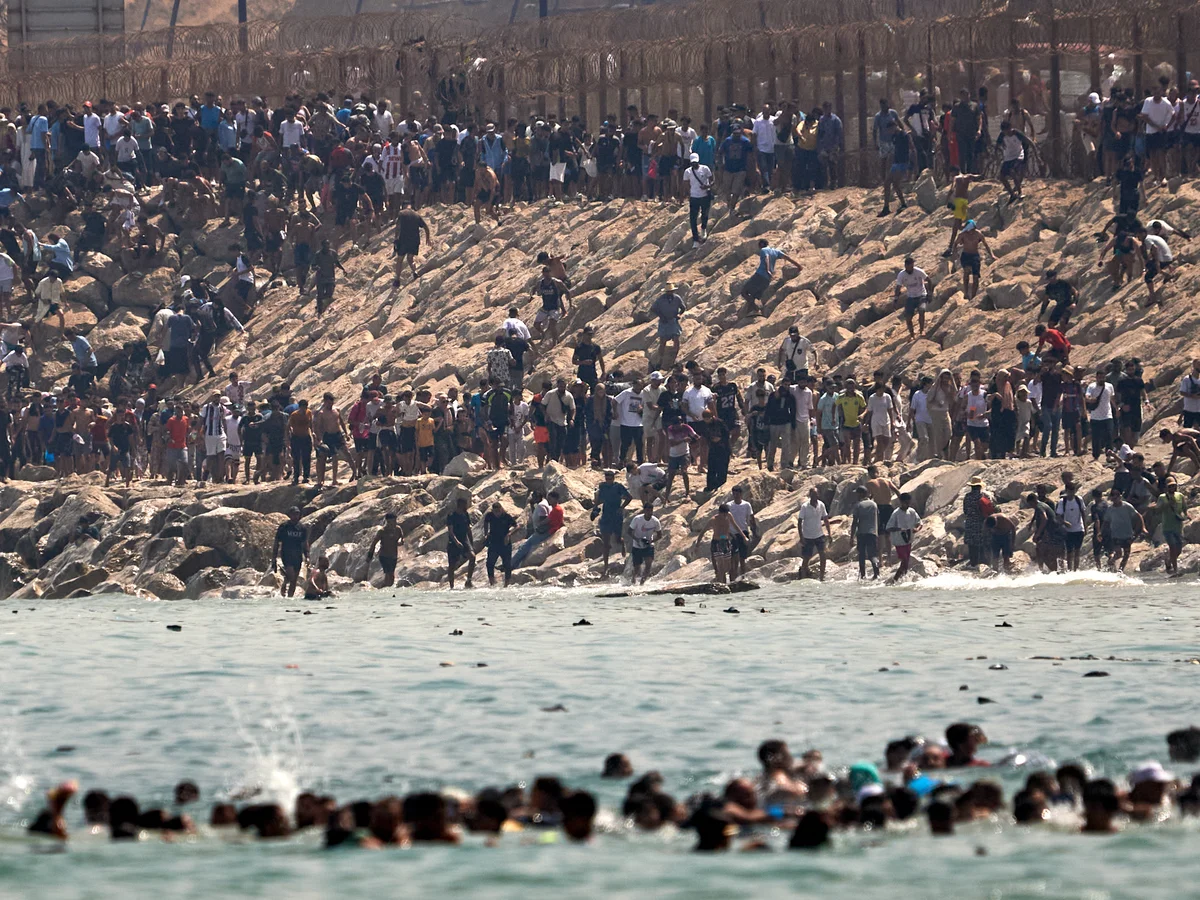
The migrant surge has triggered diplomatic tensions across Europe, prompting Italy to temporarily suspend the Schengen border-free travel arrangement with Spain. Italian Prime Minister Giorgia Meloni described the scenes in Ceuta as “shocking,” warning that uncontrolled migration posed a serious threat to national security.
Finland and Denmark voiced support for Italy’s decision, while Czech Prime Minister Andrej Babiš called for Spain’s temporary suspension from the Schengen Area.
More Read
In a strongly worded letter addressed to European Commission President Ursula von der Leyen, Spanish Prime Minister Pedro Sánchez expressed “serious concerns” over the reactions of several European governments.
Sánchez insisted that Spanish authorities restored effective control of the border in less than 48 hours and successfully prevented any unauthorized movement of migrants toward mainland Europe. He also reminded European leaders that Ceuta is not part of the Schengen Area.
“While many partners demonstrated solidarity and support, others chose to attack Spain, driven by prejudice, fake news, ignorance, or political interest,” Sánchez said.

“The European Union cannot afford this kind of selfish, polarising and unlawful reaction.”
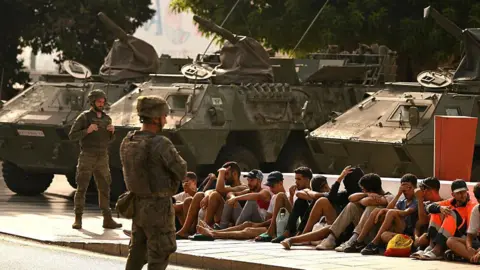
The Spanish leader called for an emergency meeting of EU interior ministers, urging member states to reaffirm that protecting the bloc’s external borders is a shared responsibility.
Backing Spain’s position, 22 of the EU’s 27 member states signed an open letter supporting emergency consultations. While welcoming cooperation between Spain and Morocco to facilitate the swift return of migrants, the countries said coordinated EU action was necessary to restore effective border control and prevent further irregular crossings.
Meanwhile, British Prime Minister Andy Burnham said he had spoken with Sánchez and pledged Britain’s support, saying the UK was “providing what help we can.”
Although conditions in Ceuta have largely stabilized, the political fallout continues to spread across Europe.
More Read

France has strengthened security along its border with Spain and deployed additional police officers, while Portugal said it was considering similar measures. Finland also announced preparations to restore internal border checks if necessary, and Denmark urged the European Union to examine all available options, including suspending Schengen cooperation.
European Commission President Ursula von der Leyen described images from Ceuta as “unacceptable,” stressing that entry into the European Union must occur in accordance with established rules.
German Chancellor Friedrich Merz voiced support for Spain’s efforts to stop irregular migration from reaching mainland Europe and called on Morocco to immediately accept the return of migrants who entered illegally.
In the United States, the State Department linked the incident to Spain’s migration policies, while President Donald Trump described the situation as “a catastrophe,” likening the mass crossings to an invasion.
Spain has defended its response, deploying troops, additional police officers, drones, patrol boats, and divers to reinforce security in both Ceuta and the nearby Spanish enclave of Melilla, where hundreds of attempted crossings were also reported.
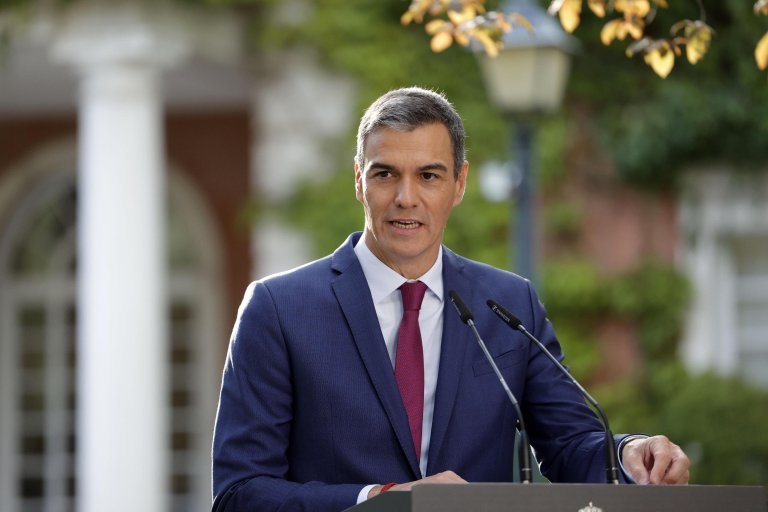
Following a visit to Ceuta, Sánchez blamed human trafficking networks for orchestrating the migrant surge, accusing them of exploiting a recent ruling by Spain’s Supreme Court concerning migrant returns.
“Trafficking mafias took a self-serving interpretation of a Supreme Court ruling, and misinformation spread like wildfire,” he said, describing the incident as a violation of Spain’s territorial integrity.
EU Commissioner Magnus Brunner later confirmed that, following discussions with Spanish Foreign Minister José Manuel Albares, “not a single person has crossed to mainland EU.”
The latest crisis follows a June ruling by Spain’s Supreme Court that migrants intercepted at sea while attempting to reach Ceuta or Melilla cannot be summarily returned to Morocco without due legal process.
Although this year’s influx is unprecedented in scale, Ceuta has long served as a major entry point for migrants seeking access to Europe. Similar scenes unfolded in 2021, when around 8,000 migrants entered the enclave within days, straining diplomatic relations between Spain and Morocco.
Together with Melilla, Ceuta represents the European Union’s only land border with Africa, making both territories key flashpoints in Europe’s continuing debate over migration policy, border security, and responsibility-sharing among member states.