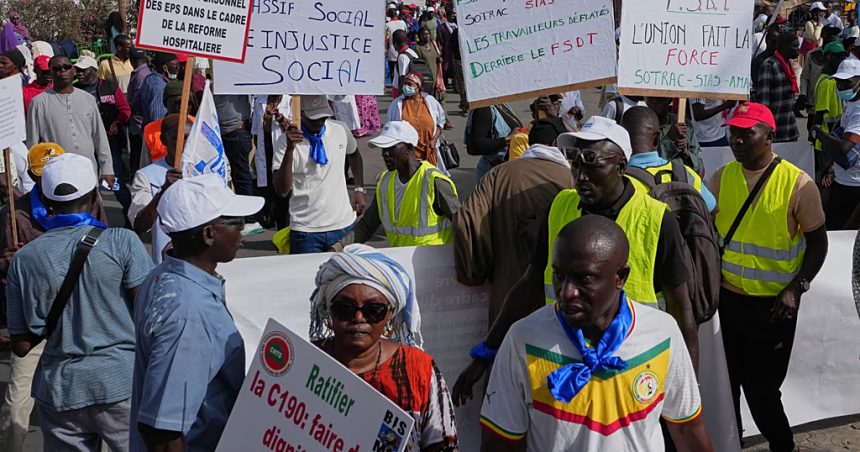
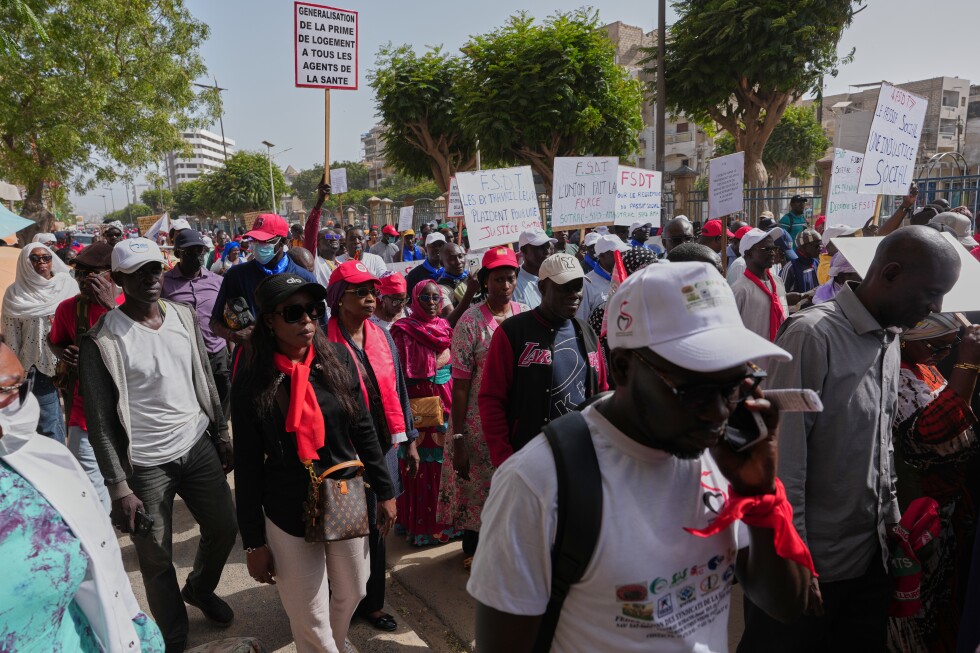
Dakar, Senegal — Hundreds of workers, union members, and opposition supporters took to the streets of Senegal’s capital, Dakar, on Wednesday, voicing growing frustration over rising living costs, mass layoffs, and what they describe as broken promises by the government.
The protest, organized by the country’s leading labor unions alongside the opposition coalition known as the Front for the Defense of Democracy and the Republic (FDR), marks the latest sign of deepening unrest in a nation grappling with a severe economic crisis.
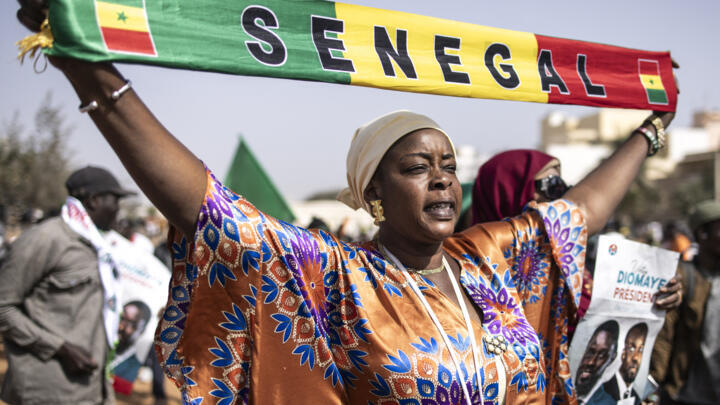
Wearing red scarves and union caps, demonstrators carried placards demanding the reinstatement of dismissed public sector workers and reductions in income taxes. Chants calling for the resignation of Prime Minister Ousmane Sonko echoed through the streets.
“The only problem we have with the country’s economy is Ousmane Sonko,” said opposition supporter Thierno Sylla. “He’s incompetent. He’s not capable of running the country. He should just resign.”
More Read

At the heart of the protests is a growing sense of betrayal among workers. Mody Guiro, secretary-general of the National Confederation of Senegalese Workers—the country’s largest labor union—accused the government of reneging on a key agreement reached last year. Under the deal, unions had agreed to suspend strikes in exchange for improved wages and working conditions.
“The government has failed to honor its commitments,” Guiro said, warning that trust between workers and authorities is rapidly eroding.
Government officials, however, argue that their hands are tied by a worsening fiscal situation. They point to a record debt crisis inherited from the previous administration, which has left the state with limited financial capacity.
More Read

A 2025 audit revealed that Senegal’s public debt had been significantly underreported, reaching approximately $13 billion. The country’s debt-to-GDP ratio has since surged to around 132%, placing it among the highest in Africa. Efforts to secure a new financial support program from the International Monetary Fund have stalled amid concerns about the country’s deteriorating fiscal outlook.
The economic strain is being felt most acutely by ordinary citizens, particularly the youth. With roughly 75% of Senegal’s population under the age of 35, unemployment and rising living costs have intensified public frustration.
“The country is at a standstill,” said Mohamed Fall, a youth activist who joined Wednesday’s protest. “It is essential that the government finds solutions to revive Senegal’s economy instead of picking fights everywhere.”
Recent months have seen a spike in unrest. In February, protests at Senegal’s main public university over unpaid student financial aid turned violent, resulting in the death of a student following clashes with security forces.
Job losses have further fueled discontent. More than 700 employees at the Port of Dakar have been laid off since early 2025 as part of a government-led restructuring of state institutions. While port authorities describe the move as a necessary cleanup of irregular contracts inherited from the previous administration, unions argue that the dismissals disproportionately targeted workers linked to the former government and were carried out unlawfully.
More Read

“This is not what they promised people,” said Pape Laobe Samb, who lost his job after more than a decade at the port. “They said they were going to create jobs and develop the country, but they did the complete opposite.”
President Bassirou Diomaye Faye and Prime Minister Sonko, who came to power in April 2024 on a wave of popular support, had pledged sweeping reforms aimed at tackling corruption, creating jobs, and ensuring Senegal benefits more from its natural resources.
However, those ambitions now face mounting obstacles as economic realities tighten and political tensions rise. Analysts say the opposition is seizing on the growing dissatisfaction to amplify its voice.
“The economic situation in Senegal remains difficult,” said Babacar Ndiaye, a political analyst at the WATHI Think Tank. “The opposition sees this demonstration as an opportunity to make its voice heard.”
As protests continue to simmer, pressure is mounting on the government to deliver tangible economic relief and restore public confidence—before the unrest deepens further.