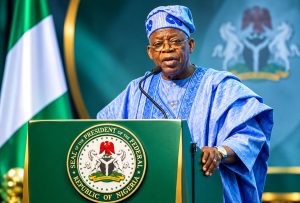
The Presidency has clarified why President Bola Ahmed Tinubu met victims of the recent attack in Jos at the airport rather than visiting affected communities directly, citing logistical and security challenges.
In a statement issued on Friday, Special Adviser to the President on Information and Strategy, Bayo Onanuga, explained that limitations at the Jos airport — particularly the absence of navigational aids for night operations — made it impractical for the President to travel into the city and return safely before dusk.

According to Onanuga, President Tinubu had initially planned to travel to Ogun State after hosting Chadian President Mahamat Idriss Déby Itno. However, following a briefing by Plateau State Governor Caleb Mutfwang on the security situation, the President swiftly altered his itinerary and arranged an urgent visit to Jos.
“The bilateral meeting with the Chadian leader, which focused on strengthening regional security cooperation, ran longer than expected and affected the President’s departure schedule,” the statement noted.
More Read

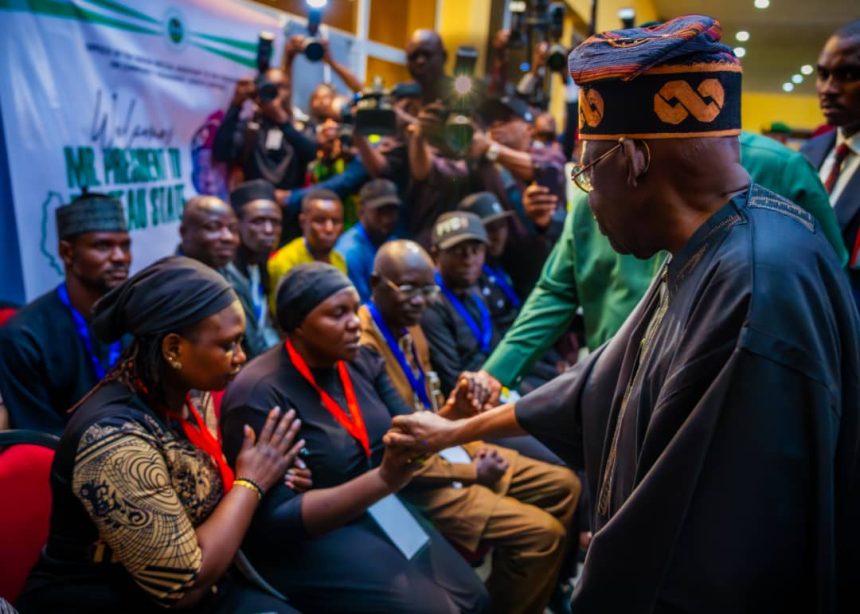
Upon arrival in Jos, officials determined that the roughly 40-minute journey from the airport to the city centre, combined with flight restrictions, posed a risk of being stranded after dark. As a result, victims and community representatives were brought to a hall near the airport to enable the President engage them promptly.
Onanuga added that top security officials, including the Chief of Army Staff and the Inspector-General of Police, had earlier visited the epicentre of the attack in Rukuba.
He emphasized that the President’s visit was not merely symbolic but part of a broader effort to address the root causes of recurring violence in Plateau State.
More Read

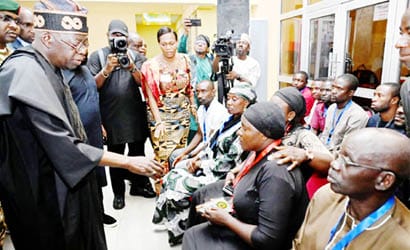
During the meeting, President Tinubu interacted with victims, listened to community leaders, and assured them of the Federal Government’s commitment to justice, peace, and long-term security.
As part of new security measures, the President announced plans to deploy 5,000 AI-enabled surveillance cameras across Jos to enhance monitoring and aid in identifying perpetrators of violence.
He also invited community leaders to Abuja for further consultations aimed at finding lasting solutions to the crisis.
The Presidency maintained that despite public criticism, the visit achieved its objective, stressing that sustainable peace must be built through collaboration with affected communities rather than imposed from above.