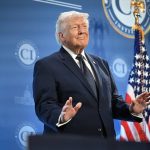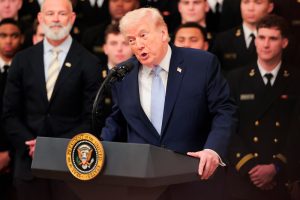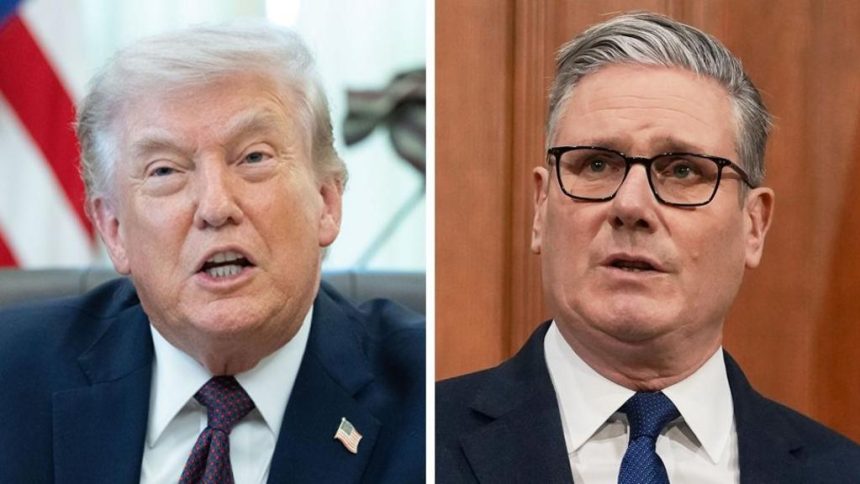
U.S. President Donald Trump has stirred fresh debate over transatlantic security after suggesting he is considering withdrawing the United States from the North Atlantic Treaty Organization (NATO), a move that could significantly reshape global defense alliances. His remarks come at a time of heightened geopolitical tension, as UK Prime Minister Keir Starmer announced that Britain will host urgent international talks aimed at de-escalating risks in the strategically vital Strait of Hormuz.
Speaking at a recent event, Trump reiterated long-standing criticisms of NATO, arguing that the alliance places an unfair financial burden on the United States while other member nations fall short of defense spending commitments. He indicated that a reassessment of U.S. participation in NATO would be “seriously considered” if such imbalances persist.

Trump’s comments have drawn swift reactions from political leaders and security experts, many of whom warn that a U.S. withdrawal could weaken the alliance’s collective defense framework and embolden adversaries. NATO, formed in 1949, has been a cornerstone of Western security, particularly in deterring aggression in Europe.
Meanwhile, across the Atlantic, Prime Minister Starmer confirmed that the United Kingdom will convene high-level talks involving key international stakeholders to address rising tensions in the Strait of Hormuz — a critical maritime chokepoint through which a significant portion of the world’s oil supply passes.
More Read

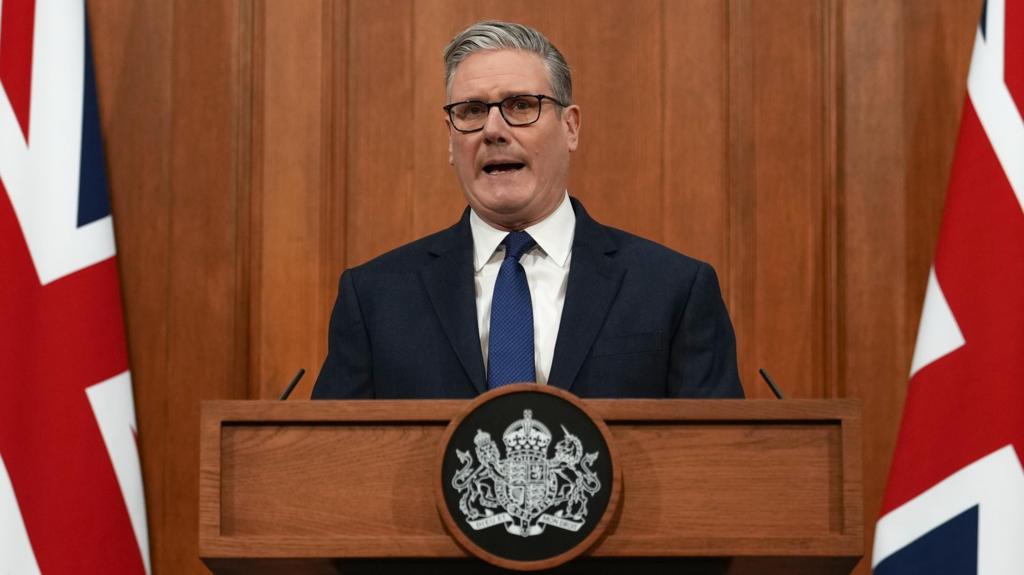
Recent incidents in the region, including threats to commercial shipping and increased military posturing, have raised concerns about potential disruptions to global energy markets and broader regional instability. Starmer emphasized the importance of diplomacy and coordination, stating that “ensuring the free flow of trade and preventing escalation is in the shared interest of the international community.”
Analysts note that the timing of Trump’s remarks adds another layer of uncertainty to an already volatile global landscape. The potential weakening of NATO cohesion, combined with instability in the Middle East, could complicate coordinated responses to emerging crises.
More Read

As preparations for the UK-hosted talks get underway, attention will remain focused on whether diplomatic efforts can ease tensions in the Gulf — and how discussions around NATO’s future may shape the broader geopolitical order in the months ahead.